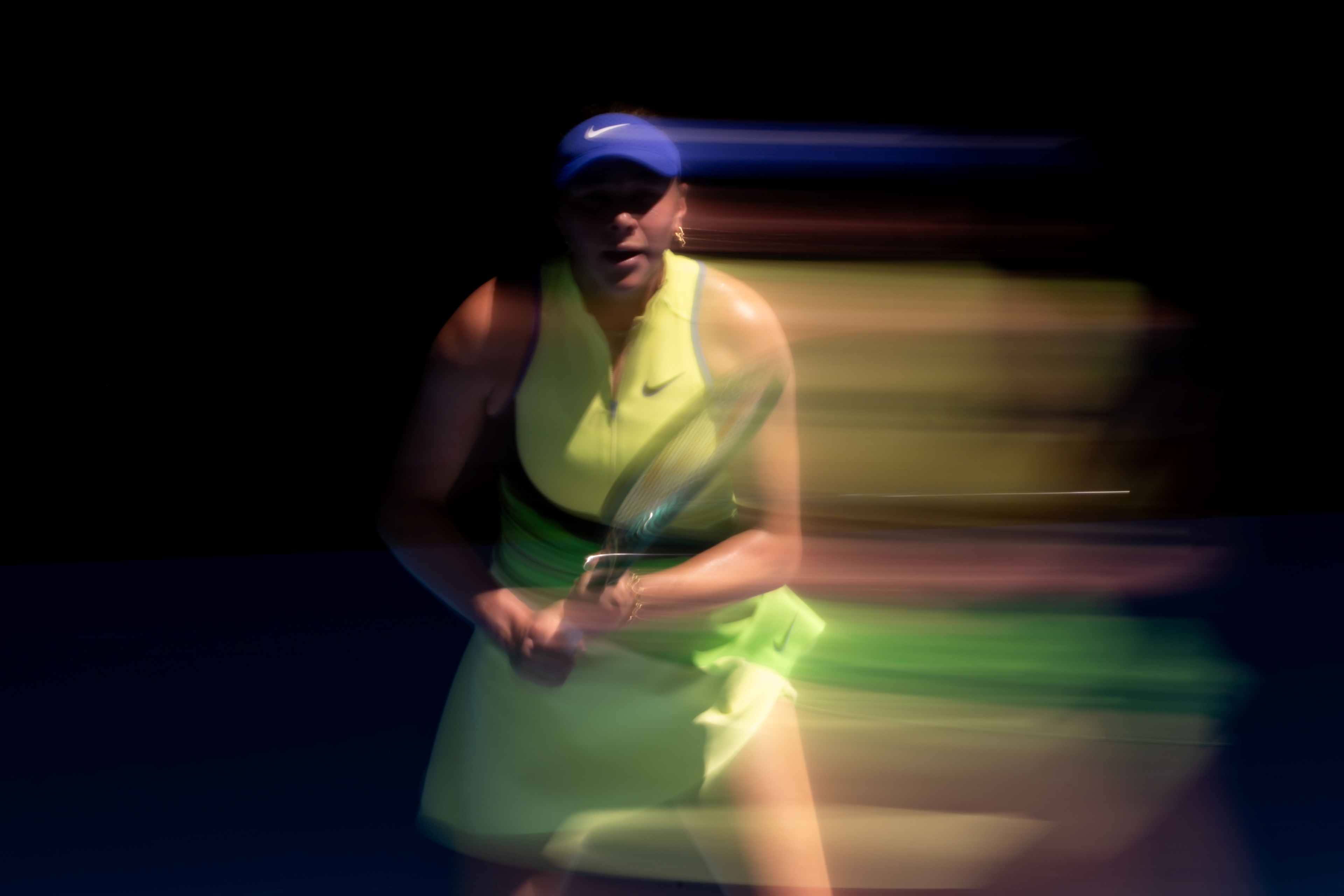
"Because tennis is thinly disguised psychological torture, it is not a surprise when a tennis player looks like they are having a bad time. Even by those standards, Amanda Anisimova, while on court, wears her emotions on her sleeve; she can also look like she is wrangling with a very bad time and come out of the match with a win anyway."
"Throughout the match, Wang looked totally outclassed on, to borrow a baseball term, the raw stuff. Most of the rallies, particularly on Anisimova's serve, were over before they could get started. Anisimova has the sort of pure ball-striking that makes "30 Minutes Of Amanda Anisimova Backhands"-style videos extraordinarily satisfying to watch. When she is on, her game has a terrifying geometric purity."
"Visibly struggling to handle Anisimova's groundstrokes, Wang tried to serve herself out of difficulty in her own service games. This was where Anisimova experienced the most frustration. While Anisimova's own serves went unreturned 40 percent of the time, Wang still had 35 percent of her serves unreturned, which is absurdly high in the context of women's tennis. (It would be nice to have tournament-wide context for unreturned serve percentage.)"
Amanda Anisimova dominated Wang Xinyu in the fourth round while visibly frustrated that she had not already finished the match. Anisimova's groundstrokes frequently ended rallies immediately, and her backhand and ball-striking displayed precise, geometric control when calibrated. Wang looked outclassed in raw power and attempted to rely on her serve to escape pressure. Both players recorded unusually high unreturned-serve percentages — Anisimova 40 percent, Wang 35 percent — which intensified Anisimova's frustration despite a comfortable position. The match showcased Anisimova's lethal shotmaking and occasional lapses in calibration that make her results unpredictable in appearance.
Read at Defector
Unable to calculate read time
Collection
[
|
...
]