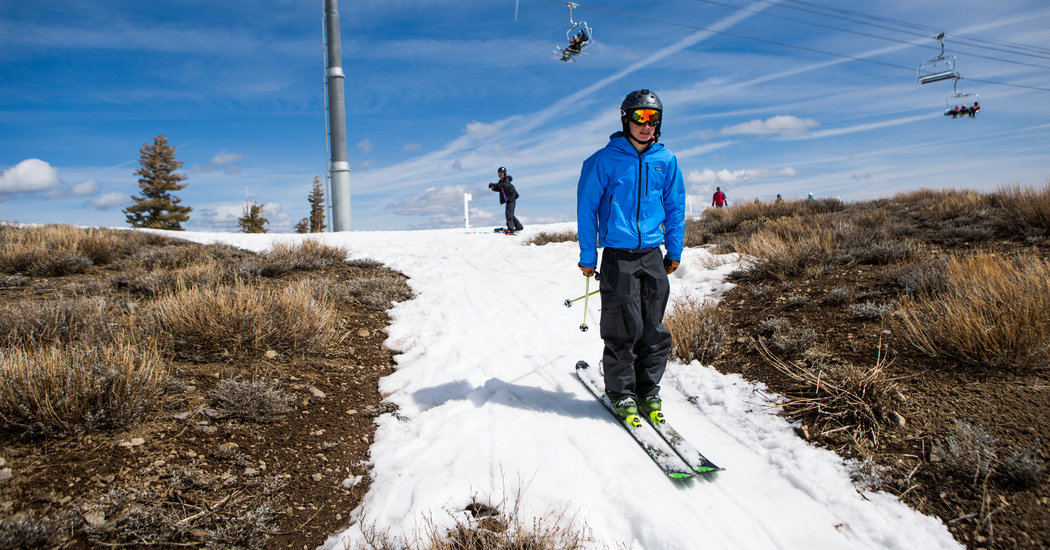
"The problem was colder and more specific than a simple lack of weather: too much of that water failed to become durable mountain snow. That is the signature of a warm snow drought. A dry snow drought is straightforward, the mountains do not get enough precipitation. A warm snow drought is more frustrating for skiers because the atmosphere can still look active. The water shows up, but it arrives as rain, heavy wet snow, or snow that melts too early to build a lasting pack. The mountain gets weather, but the snowpack does not get the full benefit."
"A new Journal of Hydrology study puts this problem into a global mountain context. The research analyzed snow drought drivers from 1980 to 2021 using snow water equivalent, precipitation, and temperature across mountain ranges worldwide. Dry snow droughts still dominate the historical record, including 68% of Northern Hemisphere mountain area in the yearly analysis. The sharper takeaway is the shift: more mountain terrain is moving toward temperature as the driver that matters most."
"In the Northern Hemisphere, 45% of mountain area changed its dominant snow drought type between 1980 to 2000 and 2001 to 2021, with core winter months showing more area flipping from precipitation-driven drought toward temperature-driven drought than the reverse. Western North America Is Already Living This Western North America shows up clearly in the warm snow drought zone. The study found warm snow droughts as the dominant type in mountain ranges across Western North America, South America, and parts of Central Asia."
"It also found that Northern Hemisphere snow drought area has increased over time in every month studied, with the biggest increases near the tail end of the season, especially March, April, and May. That hits ski country right w"
Storms and forecasts can produce precipitation totals, yet mountains still fail to build lasting snowpacks when water arrives as rain, heavy wet snow, or snow that melts too early. This pattern is a warm snow drought, distinct from a dry snow drought where precipitation is insufficient. A global analysis of snow drought drivers from 1980 to 2021 used snow water equivalent, precipitation, and temperature across mountain ranges worldwide. Dry snow droughts remain most common historically, but temperature is increasingly becoming the dominant driver. In the Northern Hemisphere, 45% of mountain area shifted between precipitation-driven and temperature-driven drought types from 1980–2000 to 2001–2021, with larger changes in core winter months. Western North America already shows warm snow drought dominance, with snow drought area increasing in every month studied, especially late-season months.
Read at SnowBrains
Unable to calculate read time
Collection
[
|
...
]