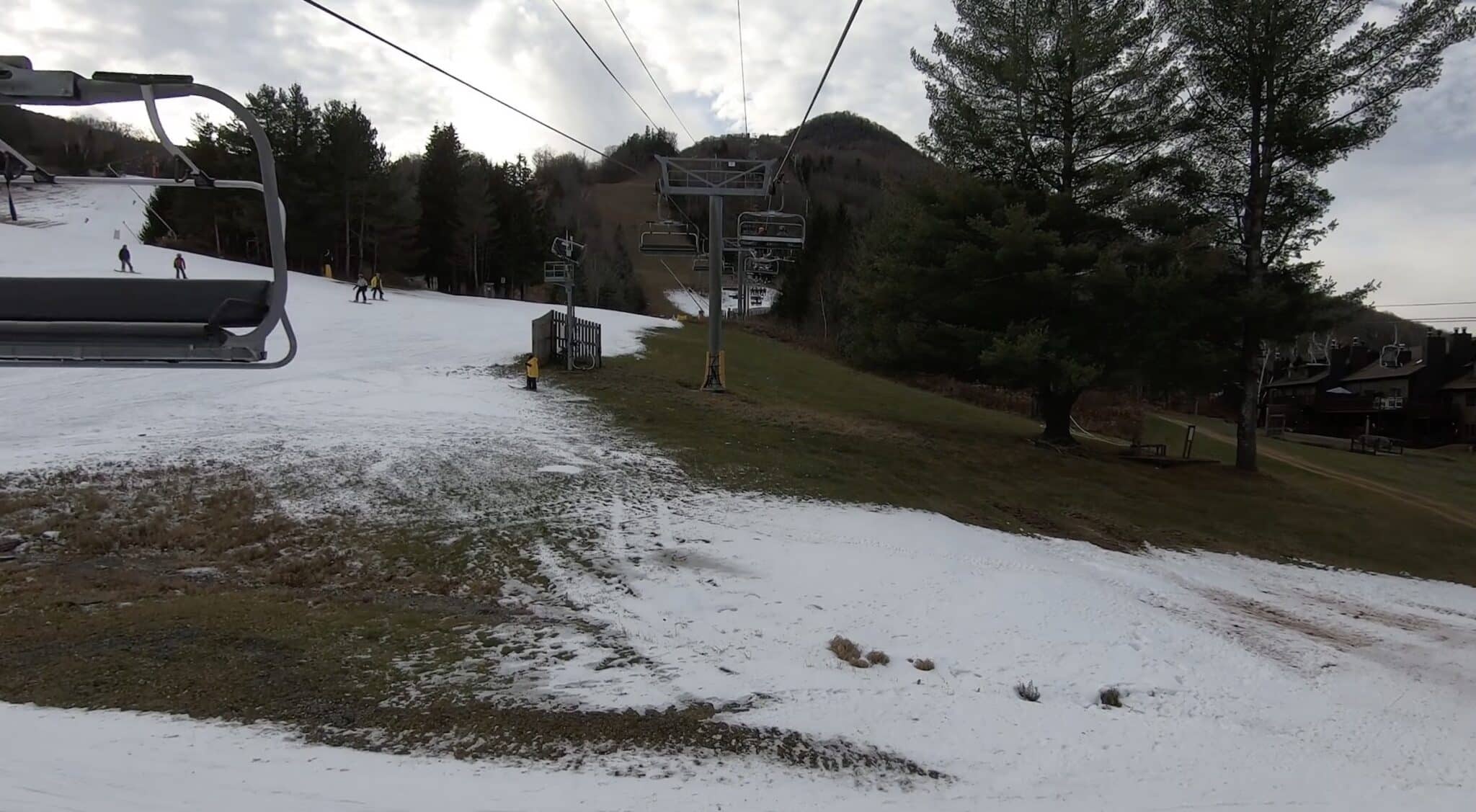
"While weather and snowpack obviously influenced snow and terrain quality, they also directly control crowd distribution. The most obvious example is early season when coverage is thin and only a few front side runs are open. Every person on the mountain ends up lapping the same narrow footprint of snow. Once the snowpack sets and resorts move into the core winter, different issues arise."
"At many resorts, certain terrain zones are not dependable for consistent openings. For example, high alpine bowls can regularly close due to wind or for avalanche mitigation. And low elevation terrain could close for significant periods of time due to low snow cover. This limits the amount of terrain skiers and riders can be on, and it puts pressure on the areas that remain open. Even an exceptional lift network on paper struggles when only half the mountain is spinning."
Weather and snowpack directly control crowd distribution at ski resorts. Early-season thin coverage concentrates skiers and riders onto a few open front-side runs, producing crowded laps on the same narrow snow footprint. In core winter, inconsistent openings of high alpine bowls from wind or avalanche mitigation and closures of low-elevation terrain from low snow or rain reduce available terrain. Reduced terrain availability concentrates traffic into remaining zones and overloads lift networks when only part of the mountain is operating. These weather-driven closures frequently generate long lift lines and viral crowding incidents, regardless of resort layout or popularity.
Read at Unofficial Networks
Unable to calculate read time
Collection
[
|
...
]