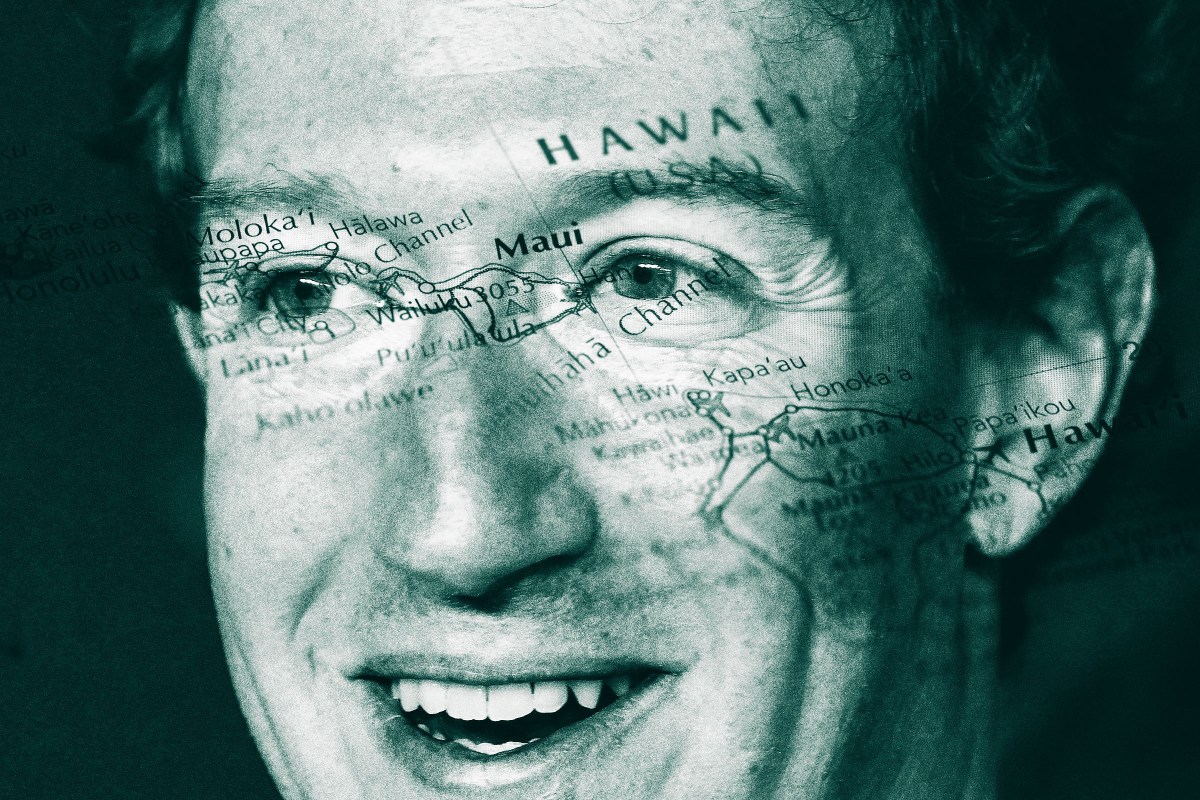
"Starting in 2014, the Facebook co-founder set about acquiring land on the Hawaiian island of Kaua'i one parcel at a time. According to the latest reporting on his land acquisitions, reported by Wired in 2025, Zuckerberg now owns $311 million worth of land on Kaua'i, weighing in at over 2,300 acres - roughly three times the size of New York City's iconic Central Park, for scale."
"He's accomplishing that with a careful amalgamation of Hawaiian-sounding shell companies, through which he's sued hundreds of descendants of Native Hawaiian land owners, . These lawsuits first made waves in 2017, when it was reported that Zuckerberg was suing over 100 families for the right to bid on just eight combined acres of family-held land."
"Many of Zuckerberg's lawsuits targeted owners of kuleana lands, small tracts of lands originally granted to Native Hawaiians in an 1850 decree. As precious family heirlooms, the rights to these plots have been passed down for generations, and are meant to stay with the descendants of the original Hawaiian owners."
"Unfortunately, the records of those long-held property rights haven't always been maintained, because prior to colonization, Native Hawaiians "did not conceive land as exclusive and alienable, but as communal and shared," as Hawaiian law scholar Melody Kapilialoha MacKenzie explained in a 2011 research paper. This means that identifying the individual owner of a kuleana parcel can be difficult, as many Hawaiian descendants have inherited the land title over the past 176 years."
Zuckerberg began acquiring land on Kaua'i in 2014, purchasing parcels one at a time. He now owns about $311 million worth of land there, totaling over 2,300 acres. The acquisitions rely on Hawaiian-sounding shell companies. Lawsuits have targeted hundreds of descendants of Native Hawaiian land owners, including families connected to kuleana lands. Kuleana lands are small tracts originally granted to Native Hawaiians in an 1850 decree and are intended to remain with descendants. Property records are difficult to trace because Native Hawaiians historically viewed land as communal rather than exclusive and alienable. Quiet Title actions have been used to force determinations of ownership under these older practices.
Read at Futurism
Unable to calculate read time
Collection
[
|
...
]