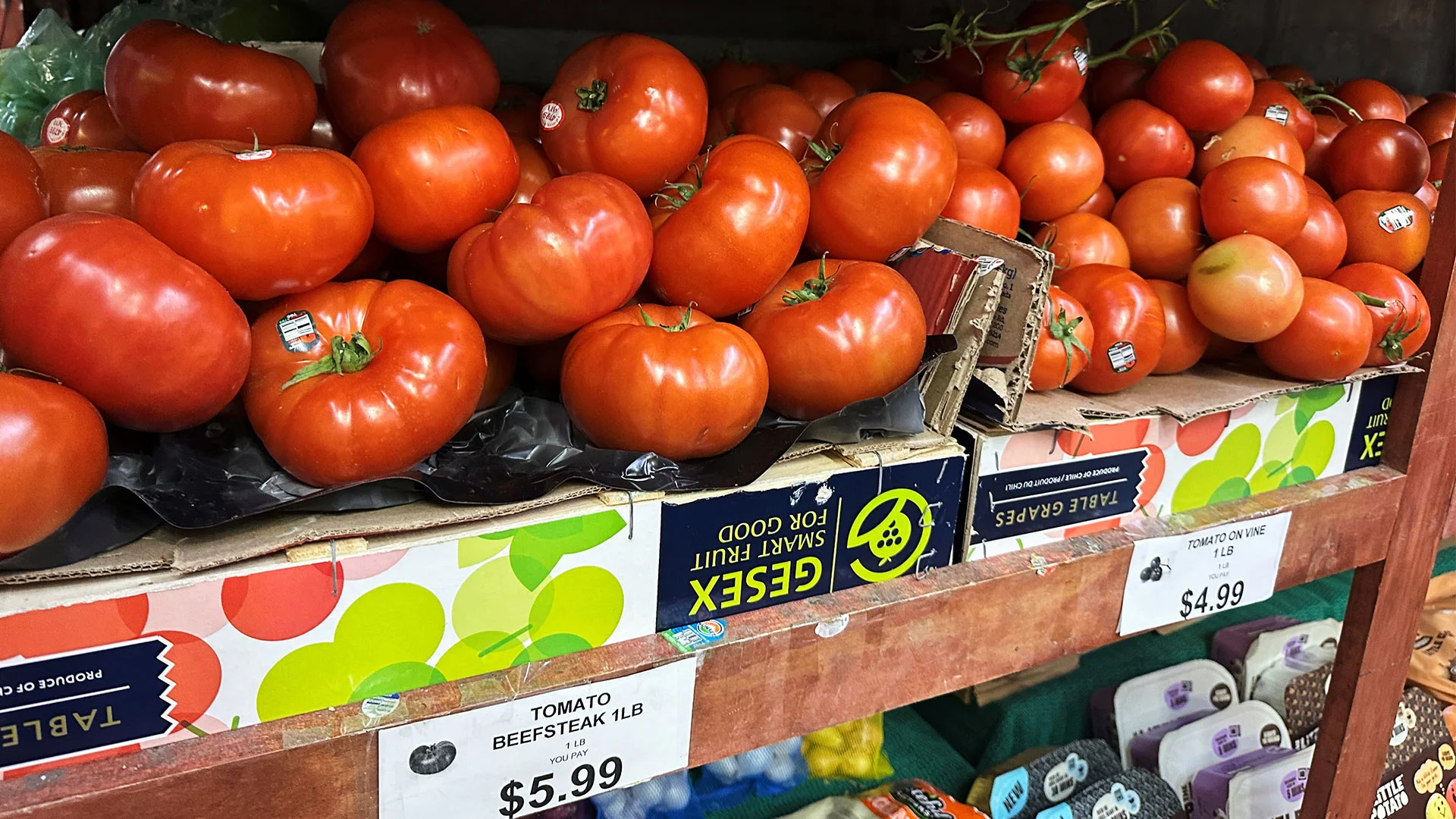
Tomato prices have increased about 40% over the past year, making them one of the most noticeable consumer cost pressures. Overall prices rose 3.8% in April compared with a year earlier, the highest reading in nearly three years. Economists link tomato inflation to a combination of extreme weather, trade policy, and Middle East policy. The Iran war has raised gas prices and shipping costs. The United States also withdrew from a deal that allowed duty-free tomato imports from Mexico, which supplies much of the country’s tomatoes. After the withdrawal, imports increased temporarily before tariffs took effect, including a 17% tariff on arriving tomatoes.
"“The tomato has become a symbol of something much deeper,” says Isaac Bernal Carbajo, a New York City chef who lamented life's “simplest pleasures” falling victim to price increases. “Something as basic as buying fresh vegetables is starting to become a serious financial decision for many families.” Tomato prices are up about 40% over a year ago, according to the latest Consumer Price Index, dwarfing increases for other groceries, including coffee (up 18.5%), beef roasts (up 17.8%) and frozen fish and seafood (up 12%), among other products that have become symbols of America's affordability squeeze."
"A separate inflation gauge released Thursday showed that overall prices increased 3.8% in April from a year earlier, the highest reading in nearly three years. Alongside crop yields, experts blame price increases for tomatoes, in part, on two pillars of President Donald Trump's second-term policies: the Iran war and tariffs. The war spiked gas prices and increased shipping costs. Meantime, the U.S. withdrew from a deal allowing duty-free imports of tomatoes from Mexico, which grows most of America's supply."
"Usha Haley, a Wichita State University economist, says it's “a perfect storm of trade policy, extreme weather and Mideast policy.” American tomato farmers cheered the withdrawal from the tomato deal last July, saying it would help rebuild their shrinking industry. But for consumers, it's been painful. Though the U.S. withdrew from the Mexico tomato deal in July, it took time to see the impact in the produce aisle, with more imports in late winter and early spring."
"When the tomatoes arrived, they were slapped with a 17% tariff. “Tariff”"
Read at Fast Company
Unable to calculate read time
Collection
[
|
...
]