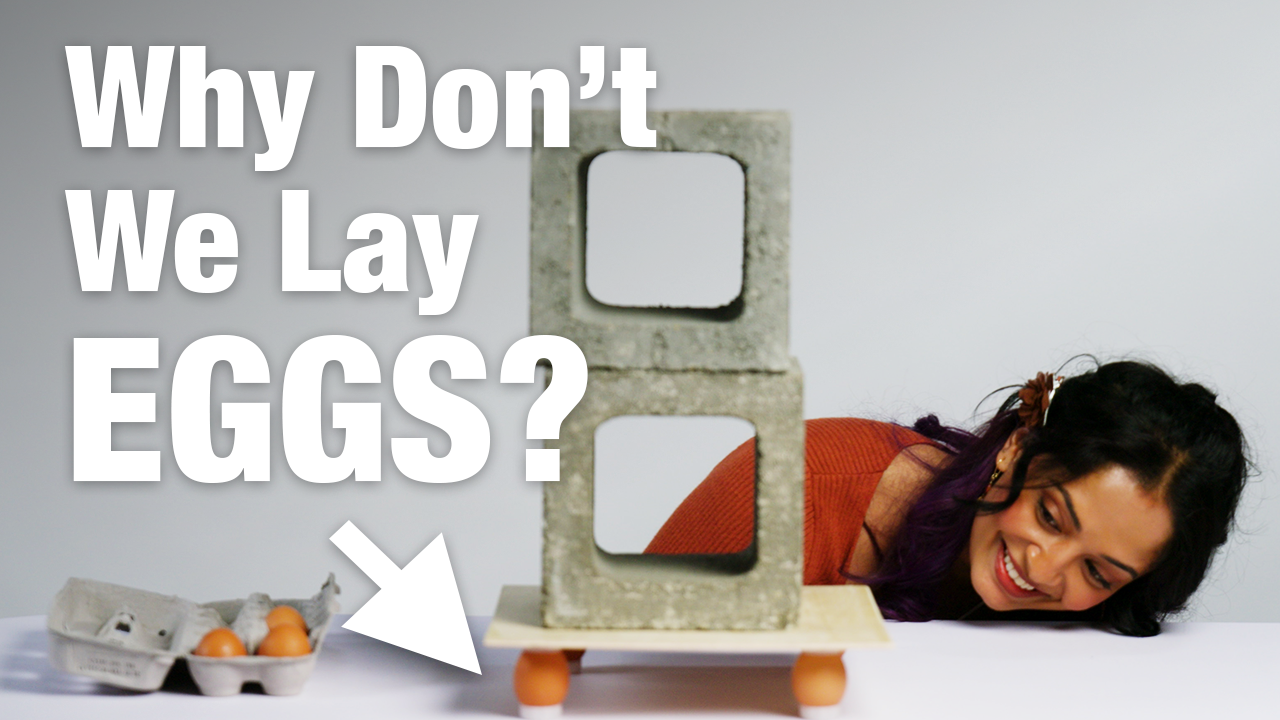
Eggs represent one of evolution's most significant innovations, originating in ancient marine organisms like sea sponges and comb jellies hundreds of millions of years ago. While the vast majority of animal species—including most insects, fish, amphibians, reptiles, and birds—continue to lay eggs, most mammals evolved a different reproductive strategy: internal gestation and live birth. Human ancestors laid eggs for millions of years before this evolutionary shift occurred. Eggs themselves have continuously evolved, becoming increasingly complex structures with specialized features. The transition from external egg-laying to internal development represents a major evolutionary adaptation that fundamentally changed how mammals, including humans, reproduce and care for their offspring.
"The vast majority of animal species on this planet lay eggs, most insects, most fish, most amphibians, most reptiles, all birds, and even a few mammals lay eggs to reproduce. And if you go back far enough, you can see that our ancestors laid eggs for millions of years too."
"The strategy of animals reproducing using an egg was first hatched not in a nest on land, but actually in the sea. Researchers think the first animals to make eggs were ancient marine organisms, like sea sponges or possibly comb jellies. They were broadcast spawners, meaning they release their sperm and eggs right into the water."
Read at Kqed
Unable to calculate read time
Collection
[
|
...
]