"Most cutting-edge science happens in anonymous lab buildings that could be anything from offices to data centers. Fields like protein folding, which quietly underpin medicine and biotech, rarely get a public face. Architecture could act as a billboard or sculpture for that work, making invisible processes more legible to everyone outside, but most research centers settle for glass boxes with vague names on the lobby wall."
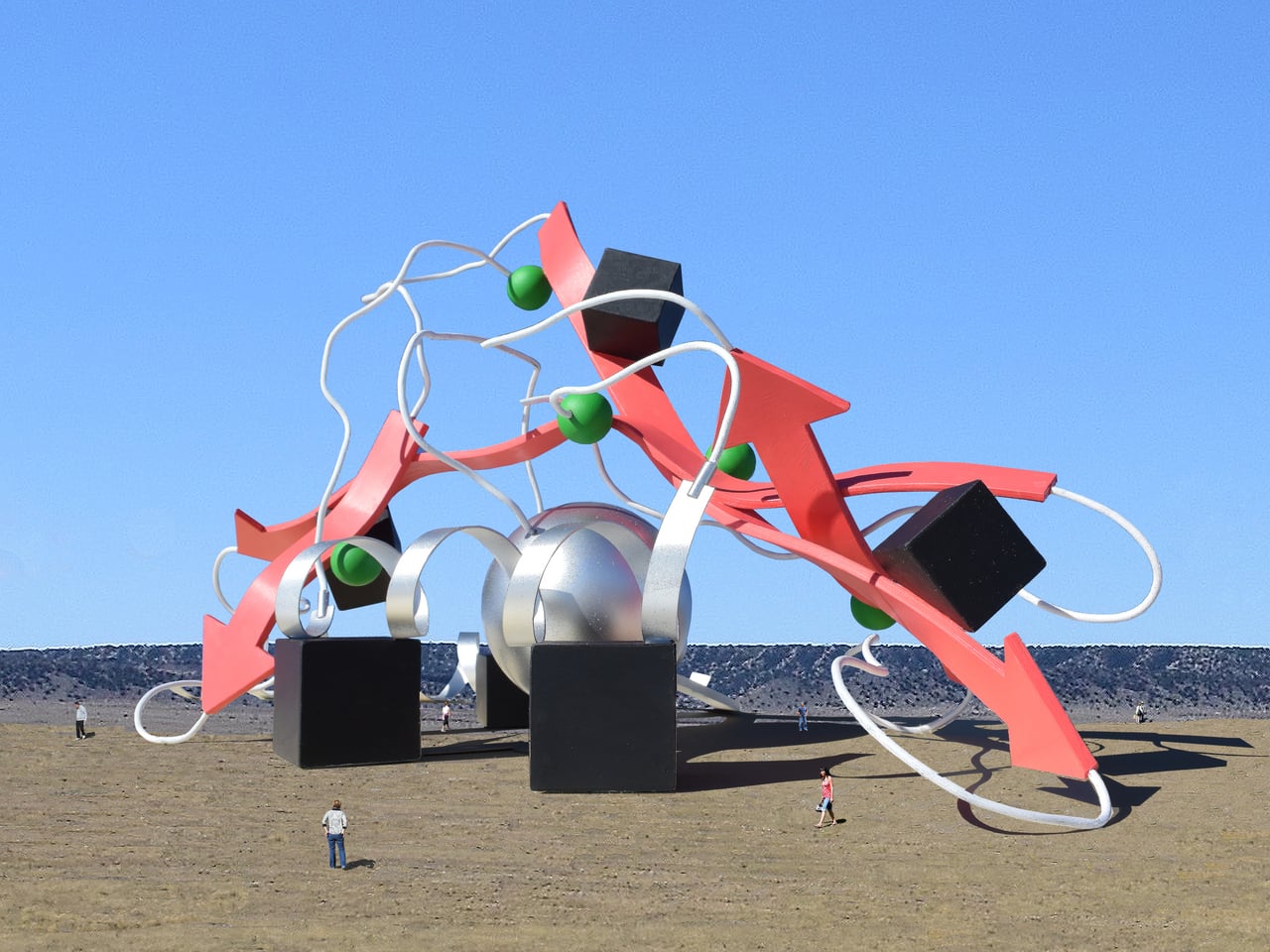
"Michael Jantzen's Folded Protein Molecule Research and Exhibition Center is part of his Fantasy Art, Architecture, Science series and proposes a facility where scientists researching protein folding could work and exhibit findings. The twist is that the entire complex is shaped like an exploded protein diagram, using the same coils, arrows, and rods that researchers use to visualize molecules. The building becomes its own subject matter, scaled up so you can walk through it."
"The arrows and coils arch over the complex like a frozen moment in a folding process, creating a canopy you move under. A long ribbon-like path leads toward a central entrance and follows the molecule's curves into the interior. Inside, the coils and arrows become corridors, balconies, and exhibits. The design turns representation into inhabitable structure that stages the science as both workplace and public gallery."
A Folded Protein Molecule Research and Exhibition Center shapes a complex like an exploded protein diagram, using coils, arrows, and rods as architectural elements. Functional research spaces occupy solid geometric volumes such as black cubes and a silver sphere for exhibition, while symbolic elements wrap around and pierce those solids. Arrows and coils arch overhead as a frozen folding moment, forming a canopy and a ribbon-like path to a central entrance. Interiors convert representational coils and arrows into corridors, balconies, and exhibits, staging science as both workplace and public gallery.
Read at Yanko Design - Modern Industrial Design News
Unable to calculate read time
Collection
[
|
...
]