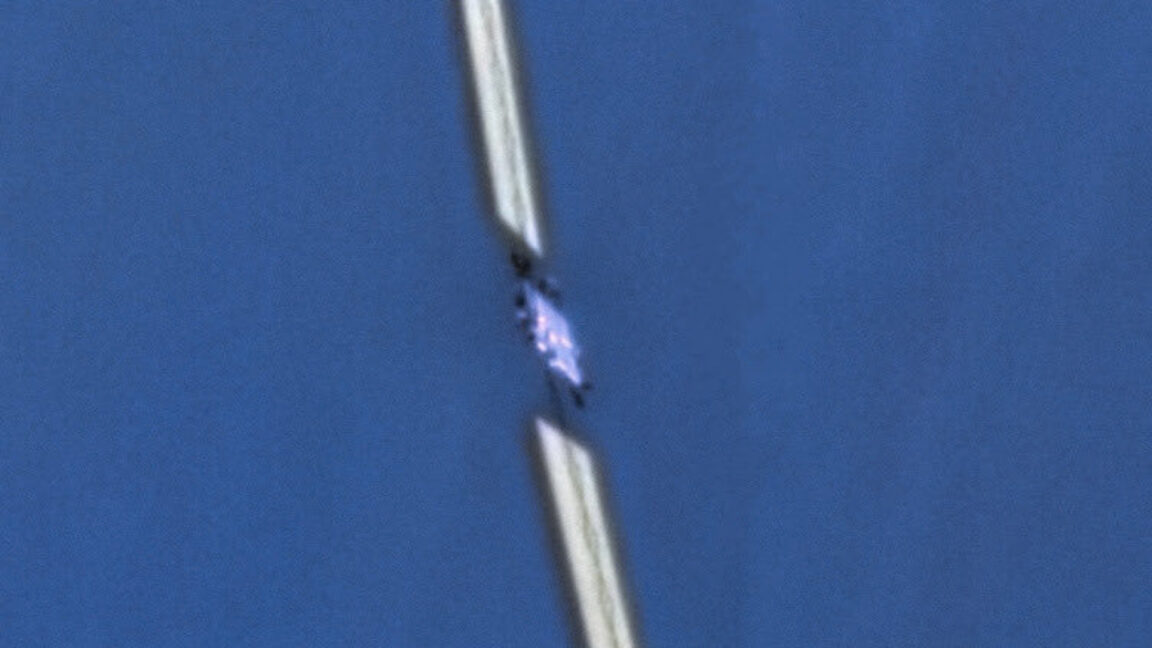
"The maneuvers will be undertaken by SpaceX, the owner of the largest satellite fleet in orbit. About 4,400 of the company's Starlink Internet satellites will move from an altitude of 341 miles (550 kilometers) to 298 miles (480 kilometers) over the course of 2026, according to Michael Nicolls, SpaceX's vice president of Starlink engineering. "Starlink is beginning a significant reconfiguration of its satellite constellation focused on increasing space safety," Nicolls wrote Thursday in a post on X."
"The maneuvers undertaken with the Starlink satellites' plasma engines will be gradual, but they will eventually bring a large fraction of orbital traffic closer together. The effect, perhaps counterintuitively, will be a reduced risk of collisions between satellites whizzing through near-Earth space at nearly 5 miles per second. Nicolls said the decision will "increase space safety in several ways.""
"There are fewer debris objects at the lower altitude, and although the Starlink satellites will be packed more tightly, they follow choreographed paths distributed in dozens of orbital lanes. "The number of debris objects and planned satellite constellations is significantly lower below 500 km, reducing the aggregate likelihood of collision," Nicolls wrote."
About 4,400 Starlink satellites will be lowered from 341 miles (550 km) to 298 miles (480 km) during 2026. The maneuvers will use plasma engines and will be carried out gradually. Concentrating a large fraction of satellites at lower altitudes is expected to reduce aggregate collision risk because there are fewer debris objects and fewer planned constellations below about 500 km. The satellites will follow choreographed orbital lanes to manage traffic. Declining solar activity after the 2024 peak is reducing upper-atmosphere density and drag, making the altitude change more practical. At the end of 2025 SpaceX had nearly 9,400 working satellites, including over 8,000 Starlinks.
Read at Ars Technica
Unable to calculate read time
Collection
[
|
...
]