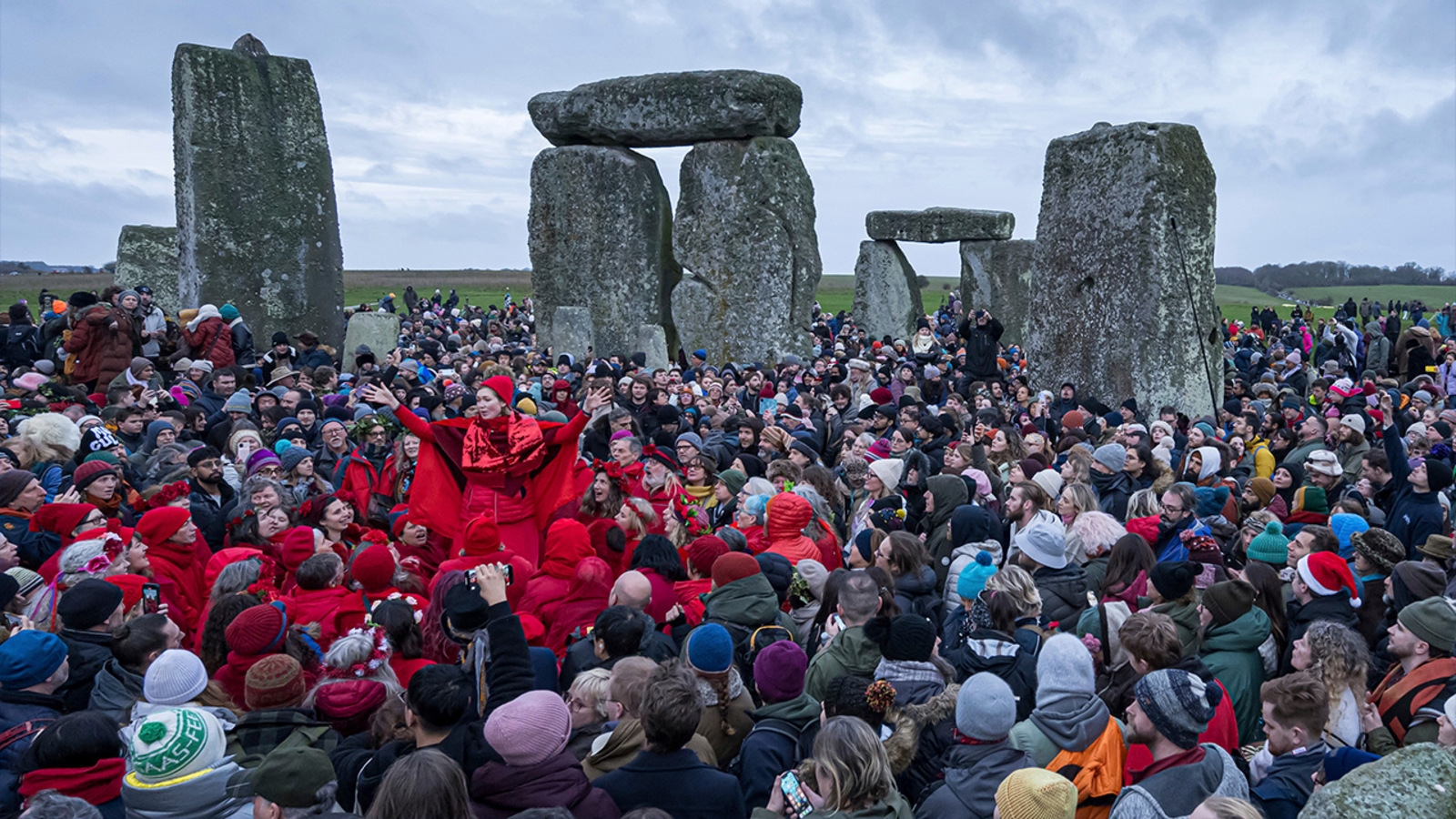
The winter solstice marks the shortest day and longest night in the Northern Hemisphere when the Earth's axis tilts maximally away from the sun, producing the sun's lowest, shortest arc. After the solstice, the sun's apparent path begins to climb and daylight increases each day until the June solstice. In the Southern Hemisphere the solstice is reversed, producing the longest day and the start of summer. Solstices occur because Earth's orbit is tilted, causing unequal sunlight across hemispheres. Humans have long marked solstices with celebrations and monuments aligned to the sun's path, such as Stonehenge.
"The word "solstice" comes from the Latin words "sol" for sun and "stitium" which can mean "pause" or "stop." The solstice is an end of the sun's annual march higher or lower in the sky. The winter solstice is when the sun makes its shortest, lowest arc. The good news for sun lovers: It then starts climbing again and days will get a little longer every day until late June."
"As the Earth travels around the sun, it does so at an angle, making the sun's warmth and light fall unequally on the northern and southern halves of the planet for most of the year. The solstices mark the times when the Earth's tilt toward or away from the sun is at its maximum. This means the hemispheres are getting very different amounts of sunlight - and days and nights are at their most unequal."
Read at ABC7 Los Angeles
Unable to calculate read time
Collection
[
|
...
]