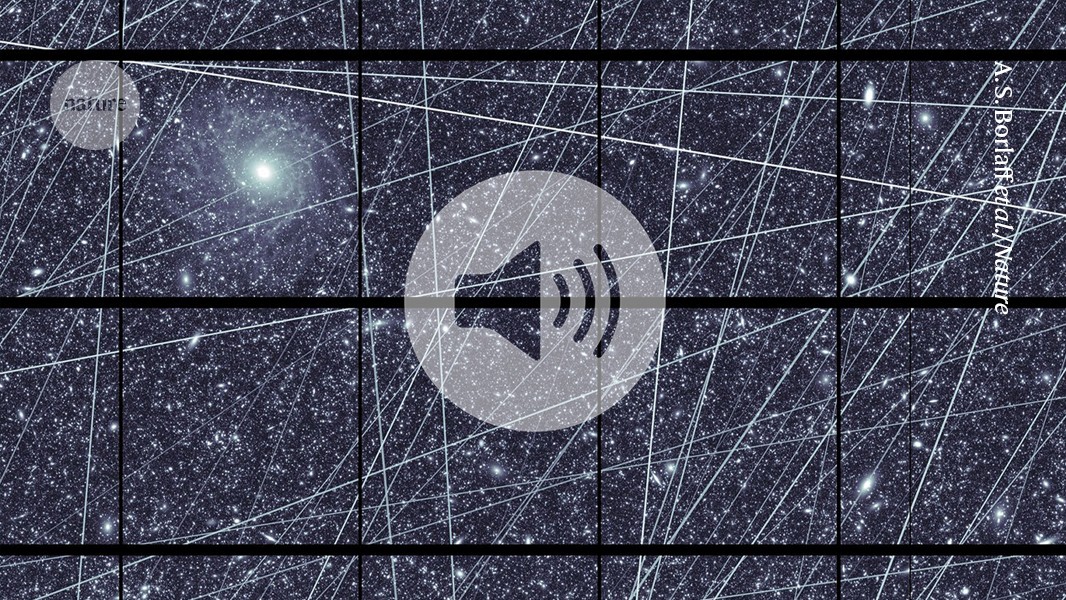
Satellite streaks of reflected sunlight already appear in telescope images. Planned launches could raise satellite numbers from about 15,000 to more than half a million. Computer modelling indicates such an increase would render images from instruments like the Hubble Space Telescope unusable. The researchers propose several mitigation strategies to prevent that outcome. Laser cooling advances have accelerated trapping of antimatter atoms. Hydrogen fuel produces emission benefits that vary considerably between sectors. Brief glitches in video calls can reduce hiring likelihood and are associated with lower parole grant rates. Visual errors in calls can break the illusion of face-to-face interaction and impair judgement about information quality.
"The ability of space-based telescopes to image the distant Universe could be in peril, according to new research investigating the impacts of light-pollution from future satellites. Streaks of reflected light from satellites currently in low-Earth orbit are already seen in telescope images, and planned launches could raise the number of satellites from around 15,000 to more than half-a-million. Computer modelling revealed that this drastic increase would result in images taken by instruments such as the Hubble Space Telescope becoming unusable by astronomers."
"Glitches in video calls are an annoying feature of everyday life, but these brief interruptions could have serious real-world impacts, according to analysis from a team of researchers. In one experiment, the team found that video calls with glitches decreased the likelihood of someone being hired for a job. Analysis of other data suggested glitchy calls were associated with lower chances of individuals being granted parole."
Read at Nature
Unable to calculate read time
Collection
[
|
...
]