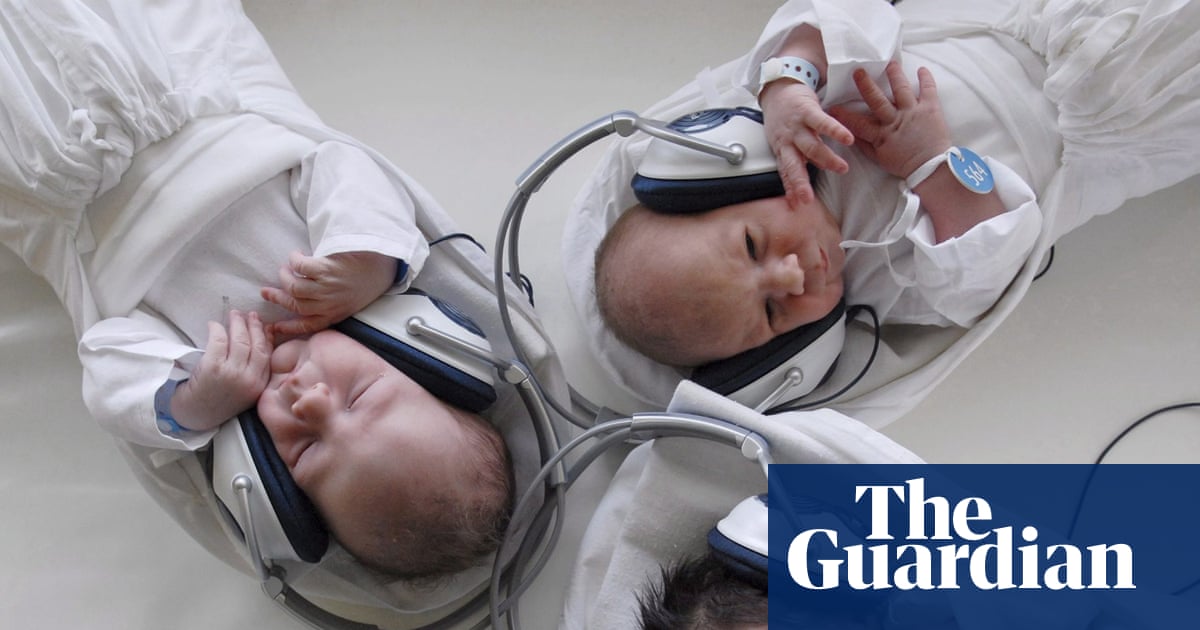
"Babies in the womb begin to respond to music by about eight or nine months, as shown by changes in their heart rate and body movements, said Dr Roberta Bianco, the first author of the research who is based at the Italian Institute of Technology in Rome. Previous research has also shown that aspects of musical memory can carry over from the womb to birth, she added. However, it was unclear how deeply different aspects of music were processed by such young brains."
"The babies were played, in random order, original pieces of music composed by Bach, as well as versions where pitches and note timings were shuffled. Bianco said the team used computer models to estimate how surprising each note in a piece was based on the preceding rhythmic or melodic structure of the music. They then analysed the EEG signals from 49 newborns to see if the surprises were reflected in their brain activity."
Newborn babies begin responding to music in the womb around eight to nine months gestation, shown by heart-rate and movement changes. Newborns can detect and predict rhythmic patterns in music but do not show the same predictive responses to melody. Rhythm sensitivity appears rooted in ancient auditory abilities shared with other primates, while melody depends on human-specific brain specialisations that develop through postnatal learning. This distinction helps explain widespread cultural variability in melodies compared with more universal rhythmic patterns. EEG recordings from sleeping newborns exposed to original and shuffled musical pieces revealed brain responses reflecting rhythmic surprises.
Read at www.theguardian.com
Unable to calculate read time
Collection
[
|
...
]