#eeg
#eeg
[ follow ]
#brain-computer-interface #wearable-technology #neuroscience #open-plan-offices #neuromarketing #mental-health
#brain-computer-interface


fromWIRED
7 months agoArtificial intelligence
This Startup Wants to Put Its Brain-Computer Interface in the Apple Vision Pro
Cognixion integrates its EEG-based AI communication app with Apple Vision Pro to enable menu selection via visual fixation signals and individualized AI for users with severe mobility disabilities.






fromMail Online
3 months agoBorn to dance! Babies have a sense of rhythm from birth, study claims
For the study, a team from the Italian Institute of Technology played J.S. Bach's piano compositions for an audience of 49 sleeping newborns. This included 10 original melodies and four shuffled songs with scrambled melodies and pitches. While the babies listened, the researchers used electroencephalography - electrodes placed on their heads - to measure their brainwaves. When the babies showed signs of surprise, it meant they expected the song to go one way, but it went another.
Science
fromwww.theguardian.com
3 months agoPart of our biological toolkit': newborn babies can anticipate rhythm in music, researchers find
Babies in the womb begin to respond to music by about eight or nine months, as shown by changes in their heart rate and body movements, said Dr Roberta Bianco, the first author of the research who is based at the Italian Institute of Technology in Rome. Previous research has also shown that aspects of musical memory can carry over from the womb to birth, she added. However, it was unclear how deeply different aspects of music were processed by such young brains.
Science
fromNature
3 months agoStill conscious? Brain marker signals when anaesthesia takes hold
They then used emerging mathematical methods to isolate signals originating from nine brain regions previously implicated in mediating consciousness and examined connections between pairs of these regions. Among them were the parietal cortex, which is at the top of the brain about halfway between the forehead and the back of the skull; the occipital cortex, at the back of the head; and several small, deeper structures, such as one called the thalamus.
Medicine
fromFast Company
3 months agoHow to train your brain like your muscles, according to a neurologist
It might come as a surprise to learn that the brain responds to training in much the same way as our muscles, even though most of us never think about it that way. Clear thinking, focus, creativity, and good judgment are built through challenge, when the brain is asked to stretch beyond routine rather than run on autopilot. That slight mental discomfort is often the sign that the brain is actually being trained, a lot like that good workout burn in your muscles.
Science
fromEngadget
4 months agoThe CES companies hoping your brain is the next big thing in computing
An Electroencephalogram (EEG) is a clinical tool to monitor the electrical activity of our brains. Put very simply, our minds are constantly moving ions around, and when they reach the scalp, it's possible to measure those ions. By placing electrodes on the scalp, you can record the changes in voltages pushed out by our brains more or less in real time. These voltages are commonly grouped into categories, which are often described as brain waves.
Wearables
fromBig Think
6 months agoCan neuroscientists read your mind?
In philosophy, physicalism is the idea that everything can be explained in physical terms. Whether through atoms, electrons, quarks, fields, or other physical processes, physicalism holds that every phenomenon ultimately depends on the physical world. In the philosophy of mind, this means that everything about the mind can, in principle, be explained by the physical processes of the brain. We don't yet know all the details, but physicalism maintains that a complete explanation is possible.
Philosophy
Mental health
fromwww.scientificamerican.com
6 months agoNot Everyone with Schizophrenia Hears Voices. Here's Why
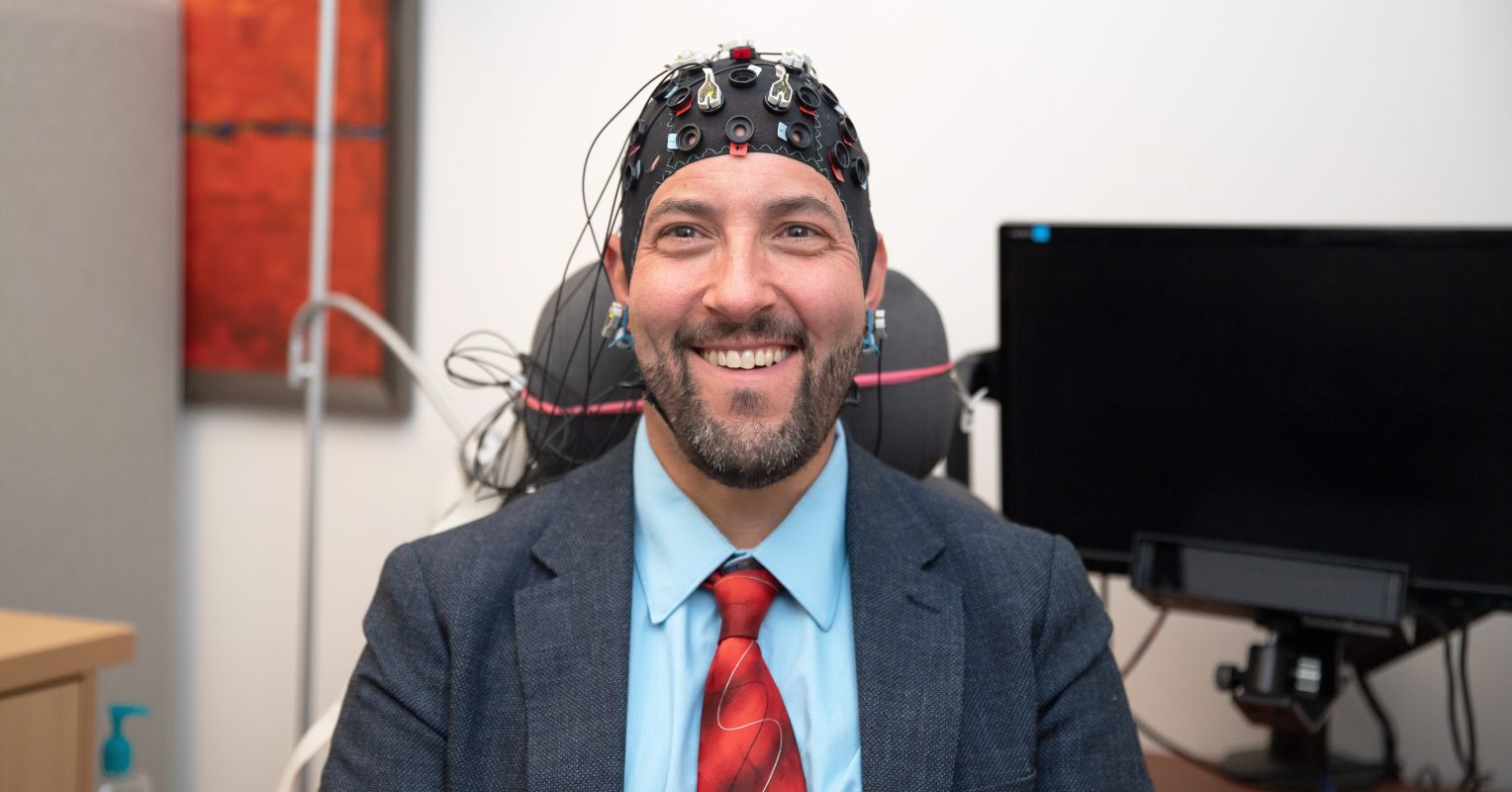
Inner speech normally suppresses auditory cortex activity, but in schizophrenia-spectrum auditory hallucinations inner speech instead increases auditory cortex responses, causing voices to be perceived as external.

fromNature
7 months agoDisconnecting part of the brain sends it into a deep sleep
The team wanted to find out whether the disconnected part has some form of awareness - or was capable of exhibiting consciousness, says co-author Marcello Massimini, a neurophysiology researcher at the University of Milan in Italy. "The question arises because we have no access" to the disconnected region, he says, adding that it was unclear what happens once part of the brain is isolated.
Medicine
fromPsychology Today
7 months agoLet Music Be Your Medicine
The brain generates rhythms naturally. One way to confirm this is to record the brain's electrical activity. This electrical activity results from the passage of ions (particles with positive or negative charge, such as sodium and chloride, the components of salt) across brain cell membranes. EEG (electroencephalography), a painless and harmless technique using wires (electrodes) placed on the scalp to record this activity, has been around for nearly a century. EEG reveals that much of a healthy brain's electrical activity is rhythmic, not random.
Medicine
fromYanko Design - Modern Industrial Design News
7 months agoWorld's First AI Sports Headband Nuromova N1 Makes Mental Fitness Part of Your Game - Yanko Design
Athletes know that performance isn't just about physical strength or stamina. Mental focus, resilience, and emotional control are just as critical when the pressure is on. Yet most wearables on the market still focus on heart rate, steps, or calories, leaving the brain's role in training largely invisible. For anyone who's ever lost focus at a crucial moment or wondered why a session just didn't click, there's finally a new tool that brings mental fitness into the spotlight.
Wearables
[ Load more ]