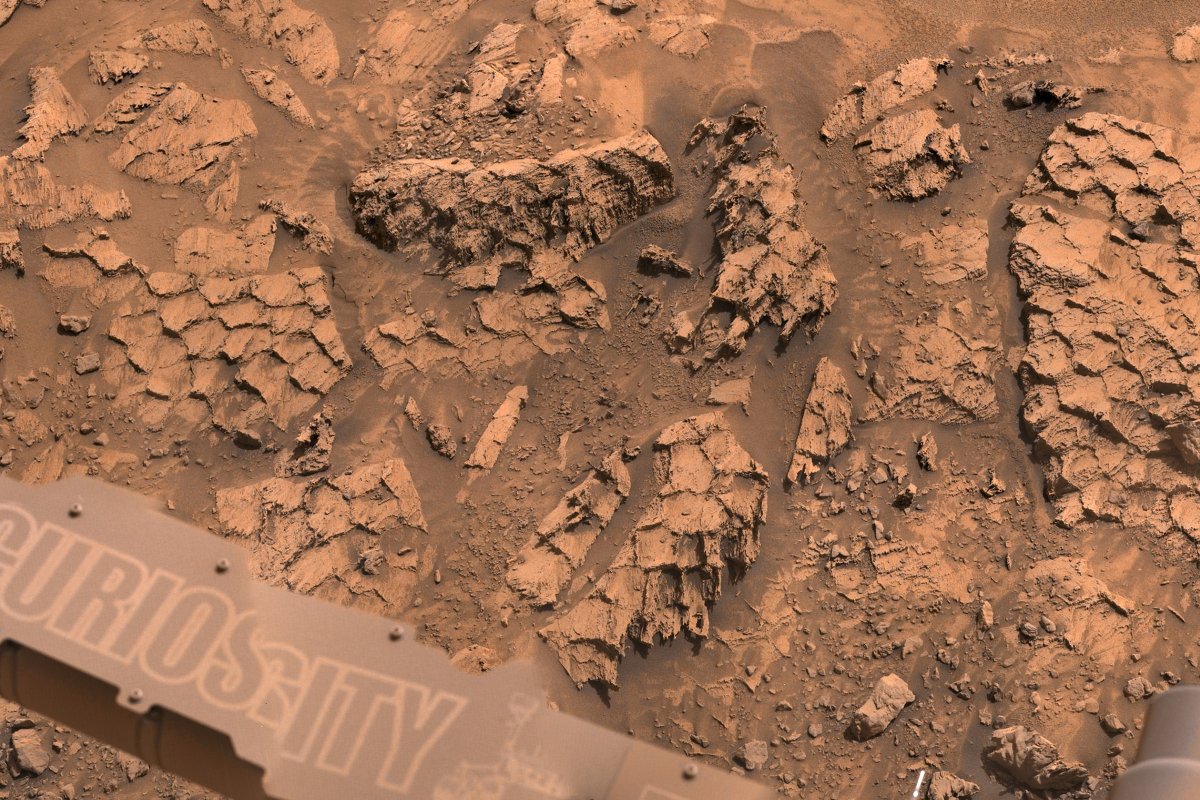
""We've seen polygon-patterned rocks like these before, but they didn't seem quite this dramatically abundant, stretching across the ground for meters and meters in our Mastcam mosaics.""
""One intriguing theory on the origin of these textured scales is that they're ancient cracked mud banks that went through frequent seasonal cycles of being wet and dry due to the influence of flowing water, back around 3.8 to 3.6 billion years ago when Mars was wetter and warmer.""
""Researchers think the crater could hold traces of organic chemicals - major keys to the existence of ancient organisms.""
NASA's Curiosity Rover captured images of a unique polygonal rock surface on Mars, resembling reptile scales. This feature, observed during its journey to a crater, has scientists puzzled about its origin. The rover has been exploring Mars since 2012 and has encountered similar rocks before, but this formation is notably abundant. One theory suggests these textures are remnants of ancient cracked mud banks from a wetter Mars, dating back 3.8 to 3.6 billion years. The rover is also heading towards a crater that may contain organic chemicals linked to ancient life.
Read at Futurism
Unable to calculate read time
Collection
[
|
...
]