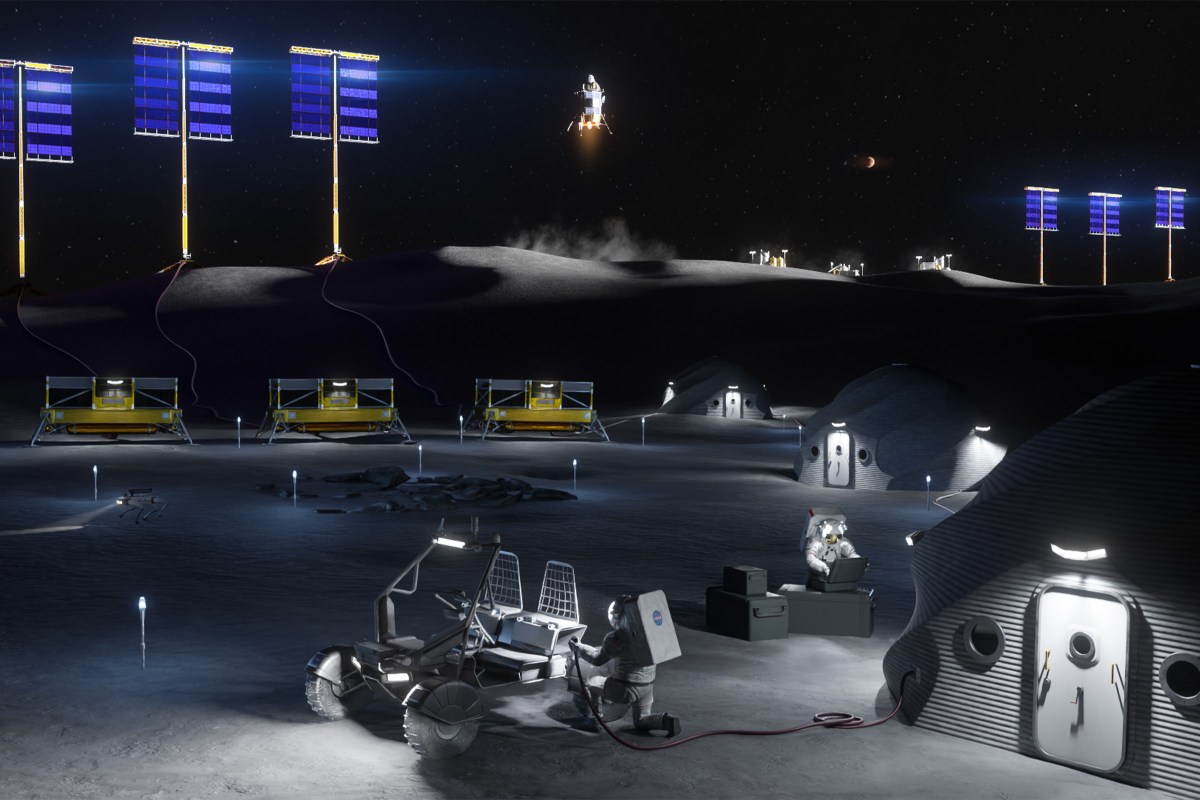
NASA plans a permanent Moon presence through new contracts for Moon base infrastructure, including lunar rovers and development timelines for upcoming exploration missions. Before the end of 2026, NASA intends to send two Blue Origin Blue Moon lunar landers to deliver two lunar terrain vehicles developed by Astrolab and Lunar Outpost. Firefly Aerospace will develop drones to explore rugged lunar terrain after its Blue Ghost lander touched down in March 2025. Artemis 4 is tentatively scheduled for 2028 as the first planned crewed landing in over half a century. Artemis 3 will test Blue Moon and/or SpaceX Starship in low-Earth orbit next year. NASA’s Moon Base missions include instrument delivery in fall 2026 and additional cargo deliveries on Astrobotic’s Griffin lander, plus further scientific payloads from international partners.
"Before the end of this year, NASA wants to send two of Blue Origin's Blue Moon lunar landers to the Moon's surface to deliver two lunar terrain vehicles being developed by commercial partners Astrolab and Lunar Outpost."
"Meanwhile, Firefly Aerospace, whose Blue Ghost lander successfully touched down on the Moon in March 2025, will develop drones to explore the rugged surface."
"And that's just the buildup to NASA's Artemis 4 mission, the first planned crewed landing in over half a century, which is tentatively slated for 2028. Artemis 3, which was originally envisioned as a landing attempt, will now involve the testing of either or both Blue Origin's lander and SpaceX's Starship in low-Earth orbit sometime next year."
"The agency laid out plans for three "Moon Base missions," starting with a Blue Moon delivery of scientific instruments in "fall 2026," followed by a delivery of "more than 1,100 pounds of cargo on Astrobotic's Griffin lander," including a rover. The third mission, which is "also targeted for this year," will deliver even more scientific payloads, including ones being developed by the European Space Agency and the Korea Astronomy and Space Science Institute."
Read at Futurism
Unable to calculate read time
Collection
[
|
...
]