"The trek requires conducting what NASA operators call a gravity assist flyby of Marsa maneuver that will give the spacecraft a little extra speed and align it with Psyche's slightly tilted orbit around the sun. But mission personnel are making the most of the maneuver, using it not only to adjust the spacecraft's trajectory but also to field-test its instruments and gather some unique science data."
"It's just a really beautiful moment for all the instruments to practice, says Lindy Elkins-Tanton, a planetary scientist at the University of California, Berkeley, and principal investigator of the Psyche mission. The instrument teams wanted to do so much practice that the spacecraft team had to say, We can't quite let you all practice as much as you want because we actually have to do the Mars gravity assist.'"
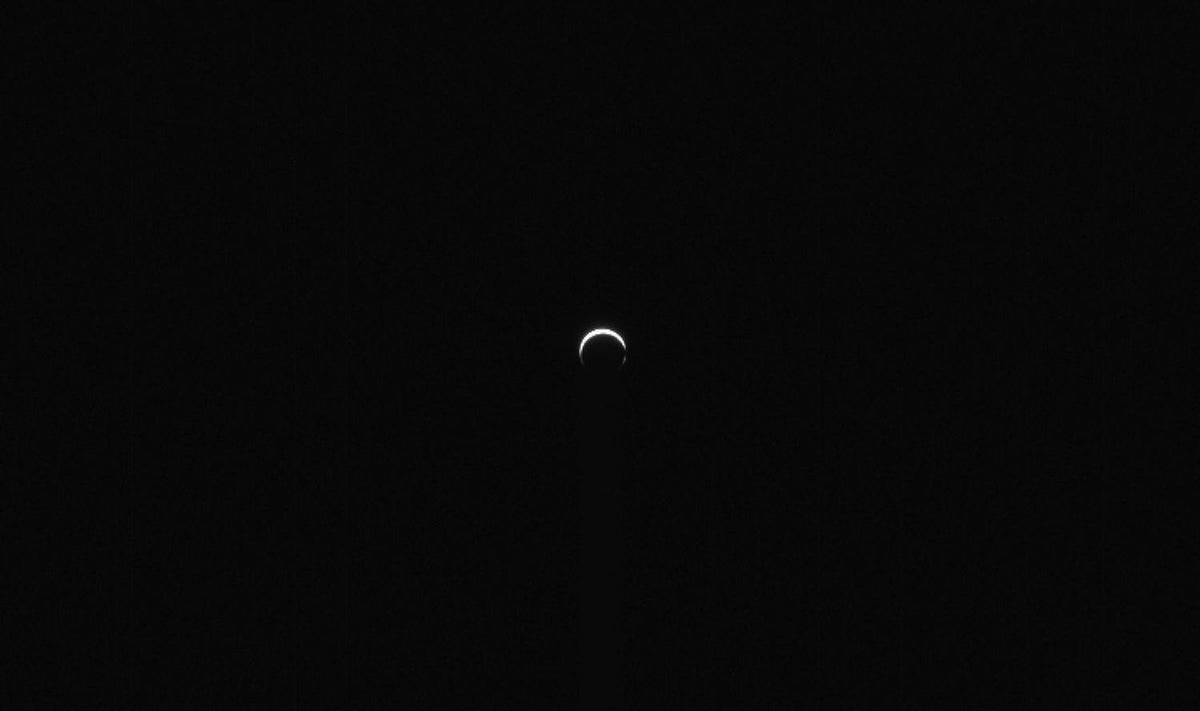
"The Psyche spacecraft will make its closest approach to Mars on Friday at 3:28 P.M. EDT, when it will pass approximately 2,800 miles above the planet's surface. (For comparison, the Artemis II crew came within about 4,000 miles of the moon's surface during their mission last month.) Mars has been in Psyche's sights since early May, with the planet appearing as a steadily growing and surprisingly bright crescent in the approaching spacecraft's view."
The Psyche spacecraft launched in 2023 and is traveling about 2.2 billion miles to reach the metallic asteroid Psyche in August 2029. The route requires a gravity-assist flyby of Mars to add speed and adjust the spacecraft’s trajectory so it matches Psyche’s slightly tilted orbit around the Sun. Mission teams plan to use the maneuver for more than navigation by practicing instrument operations, field-testing instruments, and collecting unique science observations. The spacecraft will pass Mars at its closest approach on Friday at 3:28 P.M. EDT, flying about 2,800 miles above the planet’s surface. Mars has been visible in the spacecraft’s view since early May as a bright crescent shaped by sunlight-scattering dust in the Martian atmosphere.
Read at www.scientificamerican.com
Unable to calculate read time
Collection
[
|
...
]