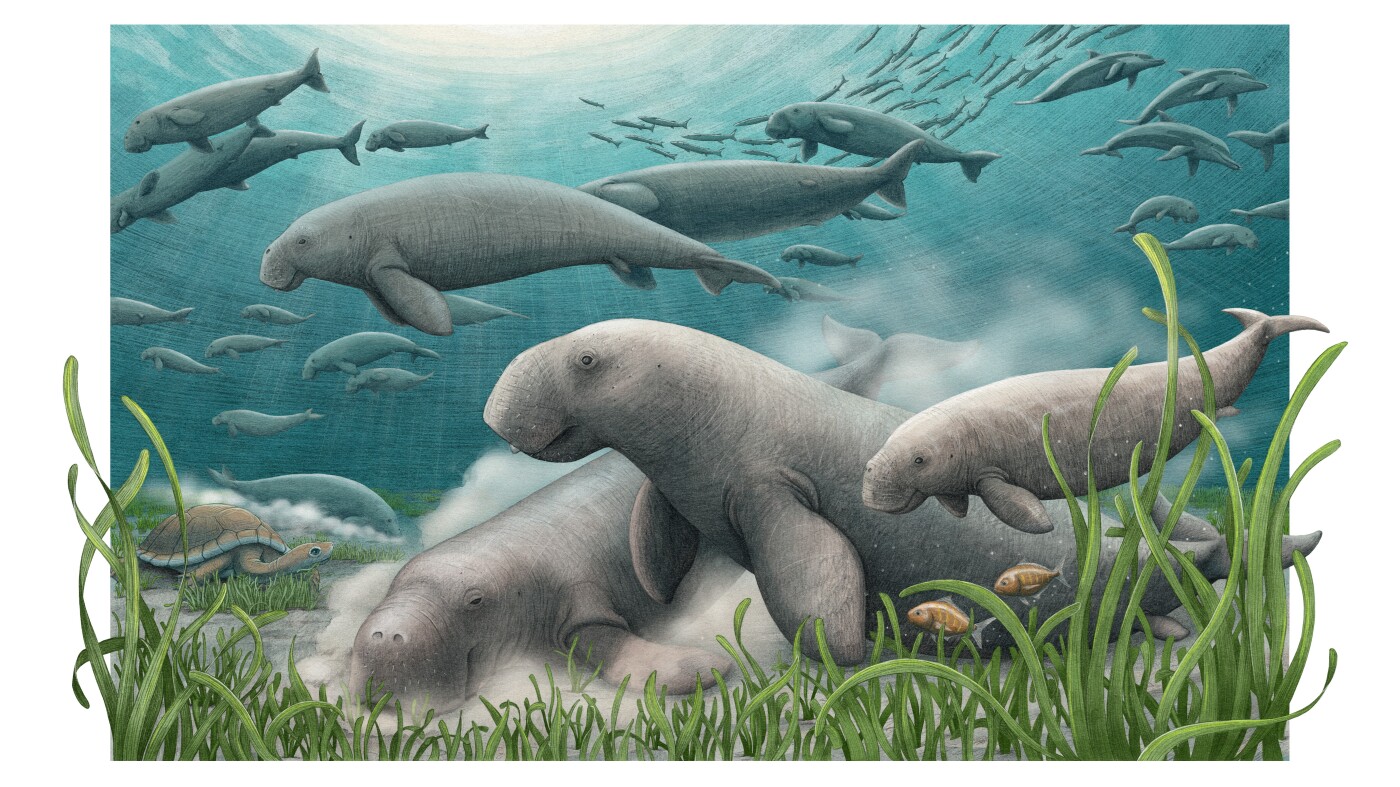
"This long-extinct sea cow's fossil remains were discovered in Al Maszhabiya, Qatar, which is now known to be the richest fossil sea cow deposit in the world. Like today's manatees and dugongs, it mainly grazed on seagrass and was considered an "ecosystem engineer" in the coastal waters of the Persian Gulf, where it primarily lived. With their fleshy muzzles, these mammals would browse the seafloor, grab the plants, and use their tusks to snip the roots and eat them."
"In the process, they lift up nutrients from the seafloor that would otherwise be buried, which other animals in the ecosystem can use. These nutrients, in addition to the sea cow's excrement, help cultivate a healthier and more diverse ecosystem. "Supporting seagrass communities through ecosystem engineering is a great natural climate solution, because seagrass communities store an incredible amount of carbon," says Nicholas Pyenson, curator of fossil marine mammals at the Smithsonian's National Museum of Natural History."
"The name of the new species, Salwasiren qatarensis, honors the fossil's discovery site in Qatar, and the Bay of Salwa in the Persian Gulf, where the largest herd of dugongs can be found today. But Pyenson says Salwa, an Arabic word which roughly translates to "solace," is also a nod to the potential for the new species to "elevate the visibility and protection of natural heritage," add"
Fossils of a long-extinct sea cow, Salwasiren qatarensis, were recovered from Al Maszhabiya, Qatar, identified as a very rich sea cow fossil deposit. The species primarily grazed on seagrass in the Persian Gulf and functioned as an ecosystem engineer by browsing the seafloor with fleshy muzzles and using tusks to snip roots. These activities lifted buried nutrients and distributed excrement, enriching seagrass beds and supporting greater biodiversity. Healthy seagrass communities store substantial carbon, making sea cow-mediated habitat engineering a notable natural climate solution. The species name honors Qatar's Bay of Salwa and regional dugong populations.
Read at www.npr.org
Unable to calculate read time
Collection
[
|
...
]