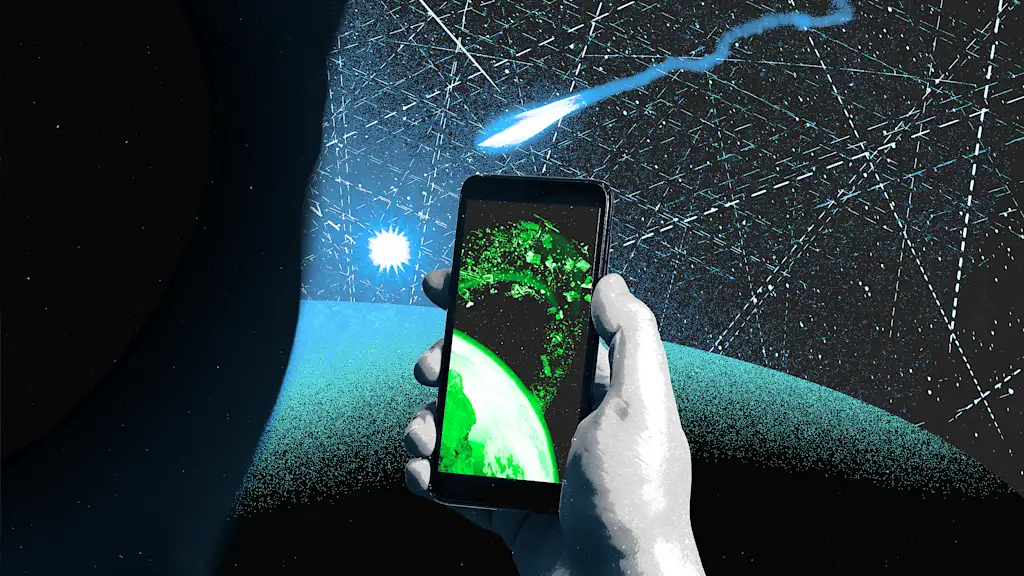
"The fiercest space race is not about getting back to the moon-it's about allowing you to post a TikTok or watch Netflix on your phone anywhere around the globe, from the Atacama Salt Flats to the Khongor sand dunes in the Gobi Desert. To make this happen, two distinct design philosophies are at war, as companies build out the infrastructure needed to ensure every phone on the planet is permanently connected to the internet."
"On one side is Elon Musk's SpaceX/Starlink and the copycat companies that have followed in Starlink's wake. Their approach is to invade space with tens of thousands of small satellites, creating a network of objects that blanket low Earth orbit. On the other side is a small Texas-based company called AST SpaceMobile, which believes it can provide better service with fewer than 100 gigantic satellites in space."
"SpaceX, which owns Starlink, launched its first satellite in 2019, providing broadband internet access to anyone with a large Starlink antenna and modem on the ground. Since then, it has put more than 9,000 satellites into orbit. The company projects it will eventually have a constellation of 34,000 satellites. After Starlink's initial launch, competitors followed suit, including Jeff Bezos and his Project Kuiper-now called Amazon Leo-and the Chinese, whose plans include two large satellite constellations."
Two principal satellite design philosophies are competing to deliver ubiquitous mobile internet: thousands of small low-Earth-orbit satellites versus a handful of very large satellites. SpaceX's Starlink pioneered the mega-constellation approach, launching over 9,000 satellites and planning as many as 34,000, with competitors from Amazon and China following. AST SpaceMobile proposes achieving wide coverage and native cellphone connectivity with fewer than 100 giant satellites. Key success factors include speed, geographic coverage, 5G compatibility, and operational costs. The eventual victor will shape global wireless communications markets and carry implications for orbital congestion and environmental impacts on the planet.
Read at Fast Company
Unable to calculate read time
Collection
[
|
...
]