"Laboratories turned to a smart workaround when COVID‑19 testing kits became scarce in 2020. They mixed samples from several patients and ran a single test. If the test came back negative, everyone in it was cleared at once. If it was positive, follow-up tests would zero in on who was infected. That strategy, known as group testing, saved valuable time, money, and resources."
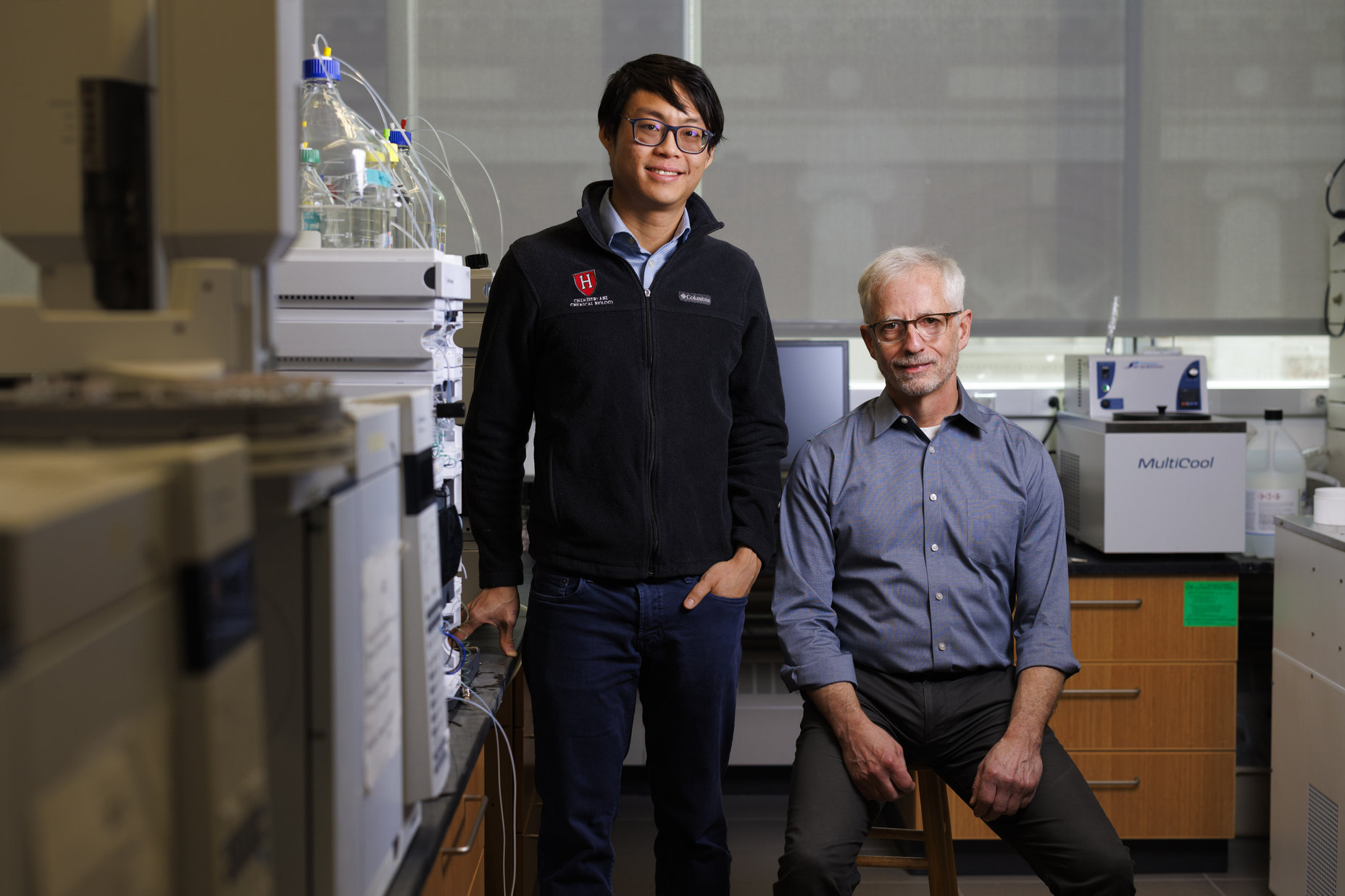
"In a new Nature paper, a team led by Eric Jacobsen, Sheldon Emery Professor of Chemistry in the Department of Chemistry and Chemical Biology, described an experimental and computational framework that uses pooled tests to hunt for cooperative interactions between catalysts, substances that can speed reactions and reduce the energy needed for reactants to transform into products. This approach dramatically cuts down the number of reactions chemists need to run while still revealing which combinations perform well together."
Laboratories used pooled sample testing during COVID-19 to save time, money, and resources. Academic chemists collaborating with industry scientists adapted group-testing to chemical catalyst screening. The framework pairs pooled experimental assays with computational deconvolution to identify cooperative interactions between catalysts. The method reveals catalyst pairs that enhance reactivity, selectivity, or enable milder conditions while drastically reducing the number of individual reactions required. The approach accelerates discovery and optimization of catalysts for drug and chemical production by conserving reagents, reducing experimentation time, and uncovering unanticipated cooperative effects.
#group-testing #catalyst-cooperativity #pooled-experiments #high-throughput-screening #drug-development
Read at Harvard Gazette
Unable to calculate read time
Collection
[
|
...
]