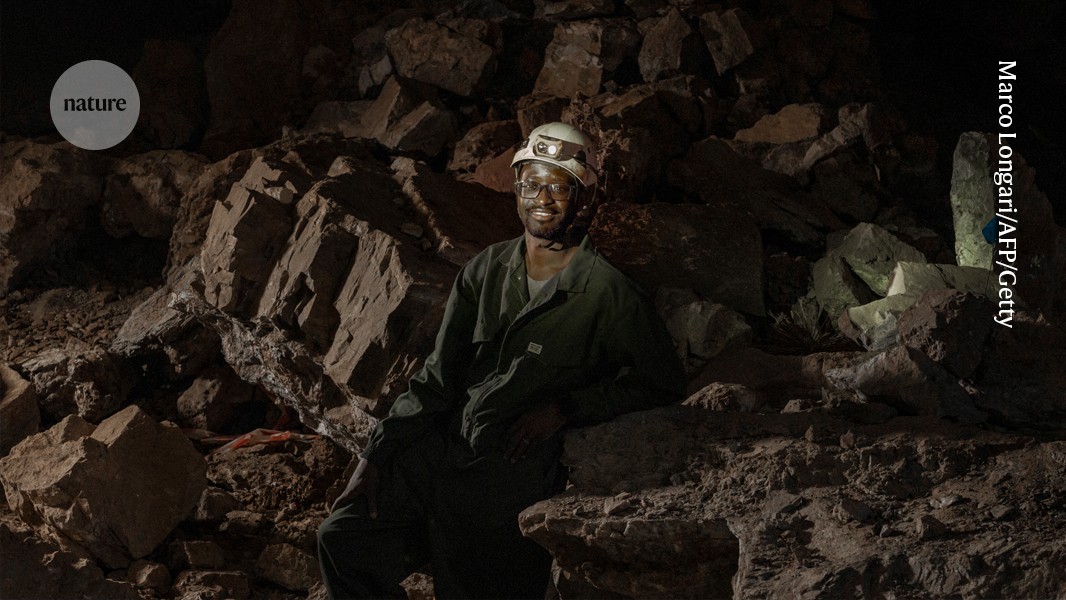
"The Cradle of Humankind is a complex system of limestone caves that has the world's highest concentration of ancient human fossils. It's located about 50 kilometres northwest of Johannesburg, South Africa. When I started working there as a PhD student ten years ago, I never thought that I would be the person making discoveries. I always saw myself as a support person who helped the palaeontologists and archaeologists."
"Before 2013, none of the geology research here was done by local researchers. Instead, people would fly in from the United States, Australia and France for a week, map a section of cave where fossils were excavated, collect samples and then do their analyses abroad. This photo was taken in the Rising Star Cave, which was mined heavily from around the early 1900s until the late 1940s. Researchers typically look for blocks of rock left over from mining activity,"
A complex limestone-cave system called the Cradle of Humankind contains the world's highest concentration of ancient human fossils and lies about 50 kilometres northwest of Johannesburg, South Africa. A researcher who began work as a PhD student later became a senior geologist at four sites within the area. Prior to 2013, most geology research at the sites was conducted by visiting teams from overseas who mapped small cave sections and exported samples for analysis. The Rising Star Cave underwent heavy mining from the early 1900s to the late 1940s. Investigation beyond mining spoil into presumed bedrock yielded exceptional fossil material and missing skeletal elements.
Read at Nature
Unable to calculate read time
Collection
[
|
...
]