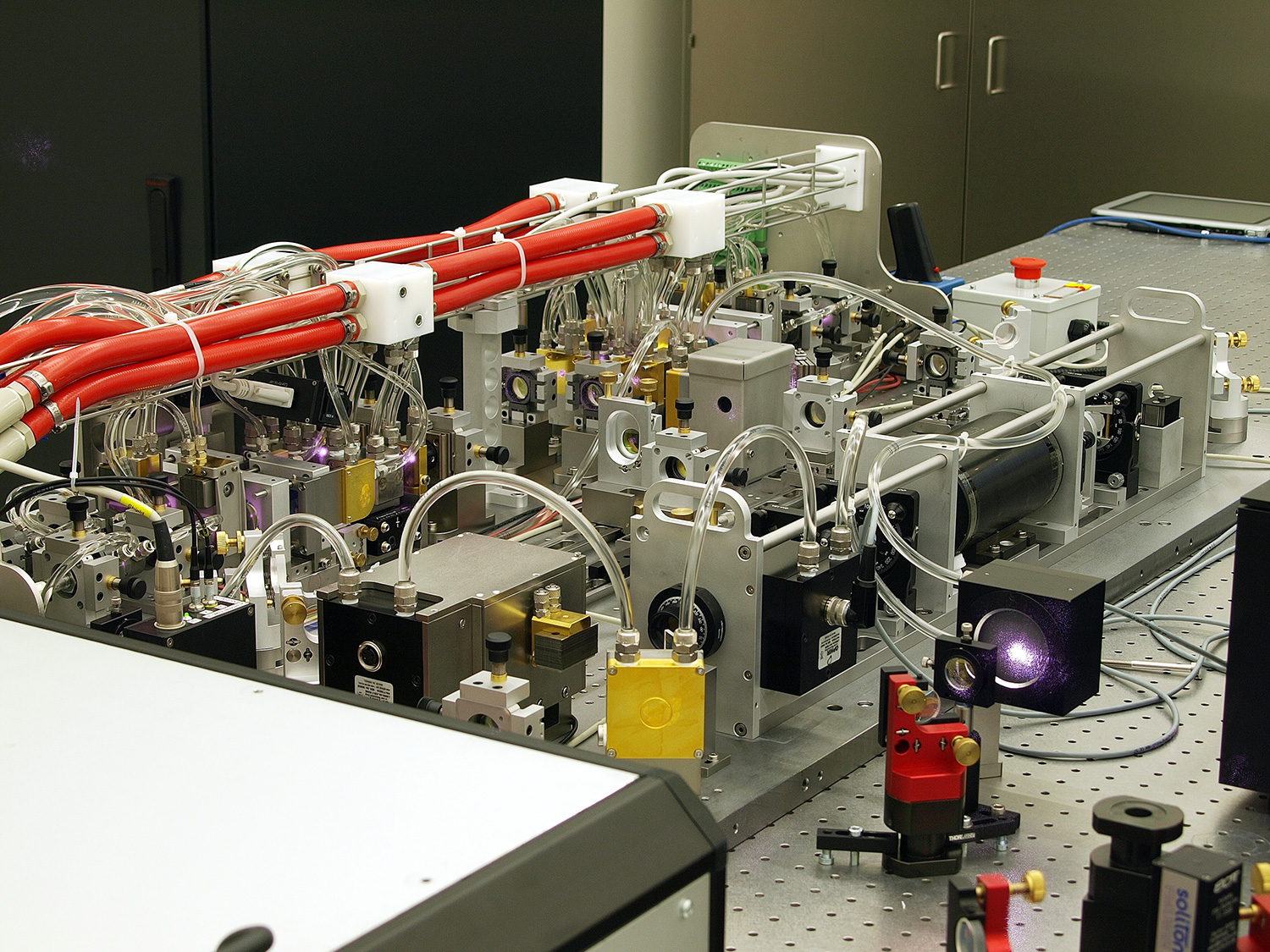
"The [device used in this work] may also be interesting for applications as it has been shown that it can outperform causally ordered processes at a wide variety of tasks such as channel discrimination, promise problems, communication complexity, noise mitigation, various thermodynamic applications, quantum metrology, quantum key distribution, entanglement generation, and distillation, among others."
"The results were 18 standard deviations away from what you'd expect based on Bell's theorem, which is a strong indication that superposition of temporal order is a fundamental feature of quantum mechanics."
The experiment showed results 18 standard deviations away from expected outcomes based on Bell's theorem, indicating superposition of temporal order in quantum mechanics. However, significant loopholes remain, such as photon loss and insufficient distance to rule out sub-light-speed influences. Despite these challenges, the findings suggest potential for future experiments to address these issues. The device used has practical applications, outperforming causally ordered processes in various tasks, including communication complexity and quantum key distribution, indicating that confusion about time may have useful implications.
Read at Ars Technica
Unable to calculate read time
Collection
[
|
...
]