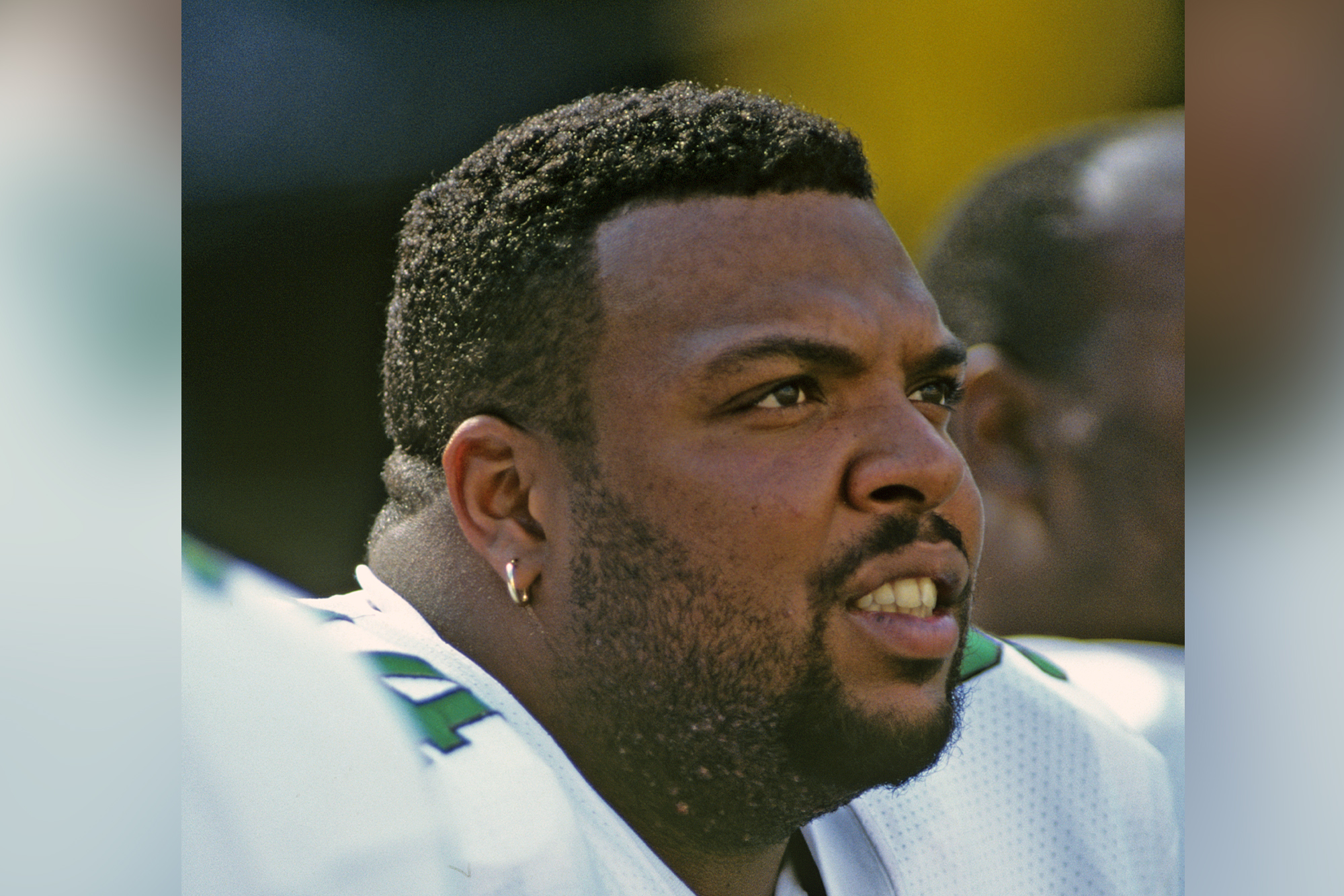
"The condition is the result of repeated traumatic brain injuries, which can happen repeatedly over the course of a football season. According to Dr. Daniel Daneshvar, a Harvard University professor and co-director of sports concussion at Mass General Brigham in Boston, CTE easily flies under the radar because it can only be diagnosed via brain analysis after a person's death."
"Before his death, Martin had experienced mental health challenges that affected his personal and professional life, according to his former agent Brian Murphy. On the night of his arrest, his parents had been seeking medical assistance for him. He fled his home and entered a neighbor's two doors down, where he was taken into police custody. Daneshvar told KQED at the time that it's common for people suffering from CTE to experience depression or emotional dysregulation."
Investigators believe he had been living at an encampment in the Willowbrook area of South Los Angeles. Friends said he had health issues later in life that contributed to his situation. Some suspected those issues could have been chronic traumatic encephalopathy (CTE), a degenerative brain disease common among former football players. CTE results from repeated traumatic brain injuries and can only be diagnosed via brain analysis after death, said Dr. Daniel Daneshvar. After another former Raiders player, Doug Martin, died in custody, investigators preserved his brain for CTE testing. CTE can cause depression, emotional dysregulation, and problems with thinking, decision-making, and memory. It is unclear whether he will be evaluated for CTE. No motive or suspect information has been released.
Read at Kqed
Unable to calculate read time
Collection
[
|
...
]