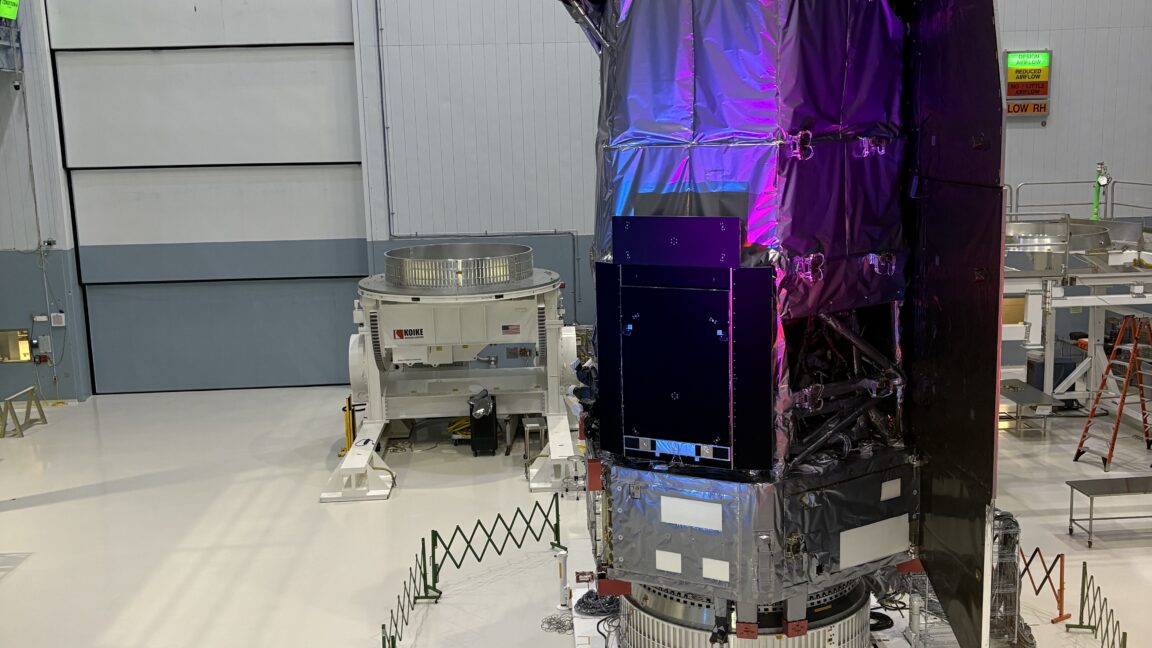
"The Roman Space Telescope, named after a key figure in the planning of the Hubble Space Telescope, is designed around a wide-field view and massive imaging system that will allow it to send back 1.4 terabytes of data to Earth every day."
"NASA eventually adopted the idea as a priority in the form of WFIRST, the Wide Field Infrared Survey Telescope, to address the need for a survey telescope capable of imaging large swaths of the sky simultaneously."
"Many of the gases in our atmosphere absorb infrared wavelengths, contributing to the greenhouse effect that has helped keep the planet habitable for us, making infrared astronomy from Earth extremely difficult."
"The National Reconnaissance Office decided that two of its spy satellites were surplus to requirements and offered the hardware to NASA, which recognized the potential for infrared astronomy."
The Nancy Grace Roman Space Telescope is set to launch in September, designed for wide-field infrared observations. It will transmit 1.4 terabytes of data daily, enabling the study of phenomena like early galaxies and exoplanet atmospheres. Traditional infrared telescopes focused on high-resolution imaging of small areas, but the Roman Space Telescope aims to survey large portions of the sky. The project emerged from NASA's collaboration with the National Reconnaissance Office, which provided surplus spy satellite hardware for this purpose.
Read at Ars Technica
Unable to calculate read time
Collection
[
|
...
]