An agent-based global economic simulator would represent every company and simulate realistic, adaptive decisions to produce emergent, high-fidelity forecasts. Such forecasts could prevent or mitigate financial crises and make policies—such as climate interventions—far more effective. Advances in complexity science and computing reduce costs, yielding an estimated build price of about $100m. A simulator with modest predictive power could deliver enormous returns by averting a fraction of losses from events like the 2008 financial crash, where losses totaled roughly $10tn. Past successes using computing to beat casinos and financial markets support the technical plausibility of building retrospective models.
"It's a mind-blowing idea: an economic model of the world in which every company is individually represented, making realistic decisions that change as the economy changes. From this astonishing complexity would emerge forecasts of unprecedented clarity. These would be transformative: no more flying blind into global financial crashes, no more climate policies that fail to shift the dial. This super simulator could be built for what Prof Doyne Farmer calls the bargain price of $100m, thanks to advances in complexity science and computing power."
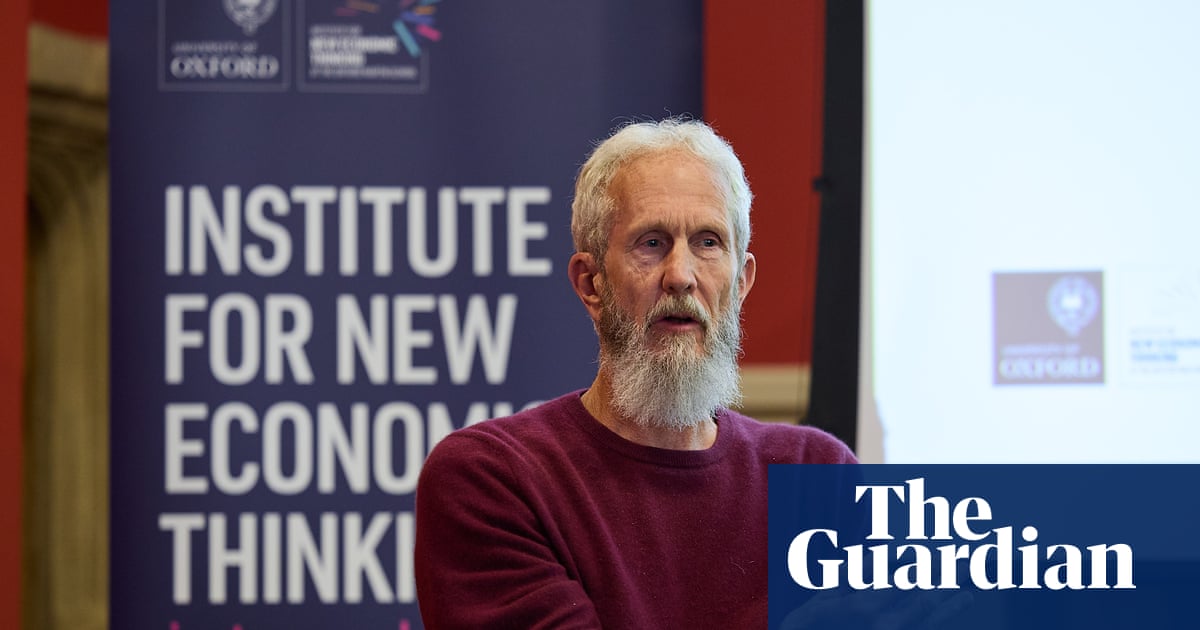
"If you are thinking this sounds crazily far-fetched, then you're betting against a man who, with friends, beat the casino at roulette in the 1970s using the first wearable digital computer and beat Wall Street in the 1990s with an automated rapid-trading computer company that was later sold to the bank UBS. Farmer, now at Oxford University, is a softly spoken polymath, whose academic adventures have taken him from cosmology to chaos theory to theoretical biology."
"The global financial crash in 2008, sparked by a real estate collapse in the US, cost the world about $10tn. If in 2006 the US central bank had the model we could build now, they would have said: Wow, this is really going to be a disaster we've got to act now and save the world a lot of pain'. If the $100m model had given enough foresight to cut just 1% of the losses, it would have paid back the investment 1,000 times over."
Read at www.theguardian.com
Unable to calculate read time
Collection
[
|
...
]