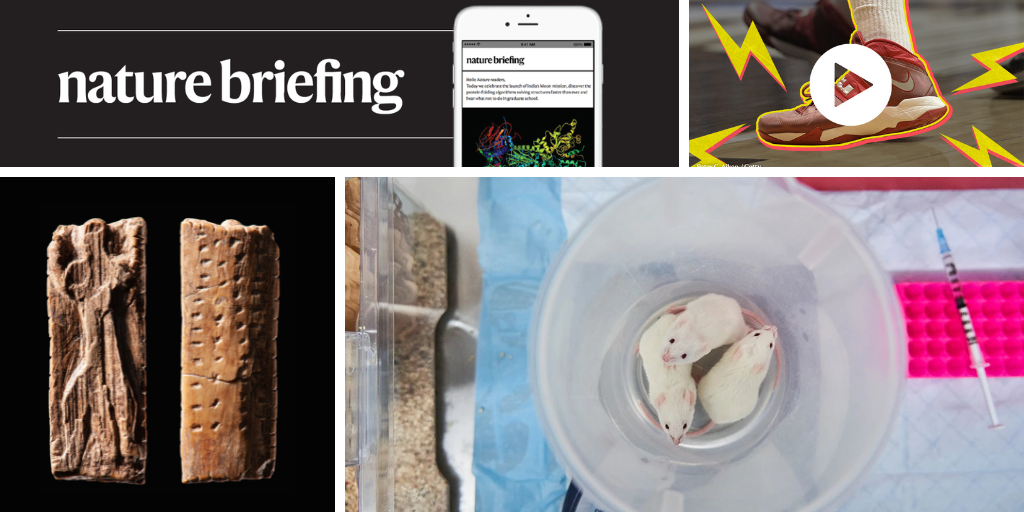
"Mini 3D 'organoids' are slowly phasing out animal testing in some areas of research. These laboratory-grown tissue structures can model human biology more accurately than traditional animal models, reducing the need for animal experimentation while providing more relevant data for drug development and disease research."
"A new publishing initiative aims to connect policymakers with clear evidence to inform fresh policies using 'pop-up' journals - those that publish articles focused on a single question for a short period of time before closing submissions. Backed by around US$1 million in funding, the Pop-Up Journal Initiative could help policy-relevant research cut through the flood of papers published every day."
"Fresh evidence from rocks in China is contributing to debate about what caused the 'Great Unconformity' - a one-billion-year gap in the geological record that exists all over the world. Theories abound: it might have been caused by abrasive worldwide glaciers during a period of 'Snowball Earth', or by erosion after the break-up of the supercontinent Rodinia."
Recent scientific developments span multiple fields. Three-dimensional organoids and similar alternative methods are gradually replacing animal testing in certain research areas. A new publishing initiative uses 'pop-up' journals to help policy-relevant research reach policymakers more effectively, though researchers may hesitate to publish in these temporary journals over established ones. Geological research from China provides new evidence regarding the 'Great Unconformity,' a billion-year gap in Earth's rock record found worldwide. Scientists debate whether glaciation during 'Snowball Earth' or erosion from supercontinent breakup caused this gap, which notably precedes the Cambrian explosion when life suddenly diversified.
#organoids-and-alternative-testing #scientific-publishing-innovation #geological-history #research-methods #policy-relevant-science
Read at Nature
Unable to calculate read time
Collection
[
|
...
]