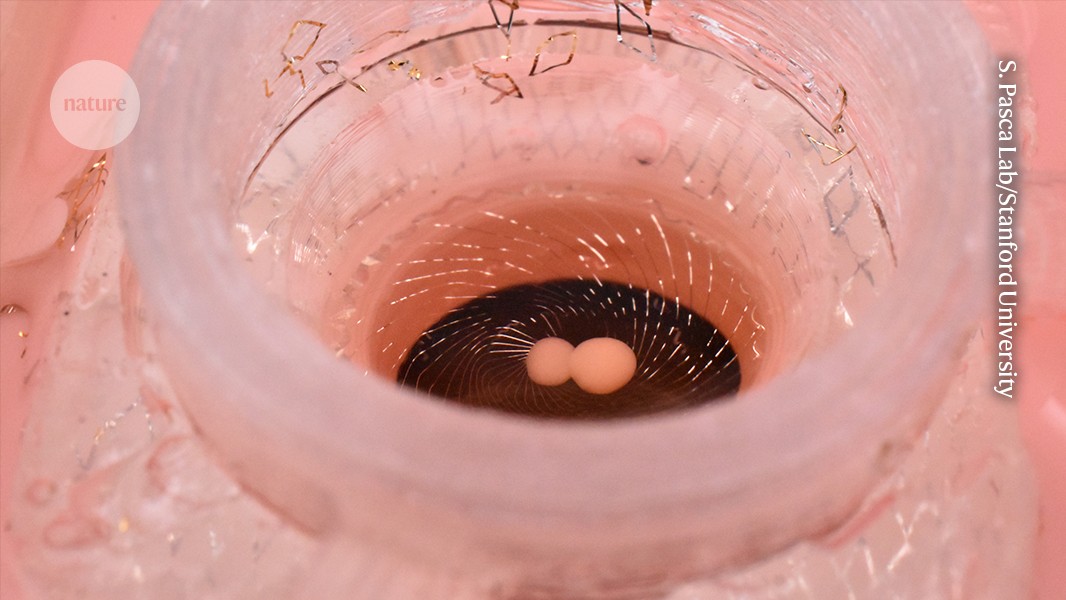
Organoids are tiny, functioning models of brain parts created from human stem cells, providing essential research material. They self-organize and mimic brain development in 3D, overcoming limitations of animal models and 2D cultures. Advances in organoid technology have increased their complexity, aiding neuroscientists in understanding human brain development. However, ethical and social implications of organoid research are emerging, highlighting the need for public discussions and guidelines to ensure responsible use before challenges arise.
"Brain organoids are tiny spheres of simple brain-like structures that are made from human stem cells. They self-organize in a dish much as they would during development and provide a much-needed source of research material."
"Improved techniques have allowed organoids to be made more reliably and endowed with ever-greater complexity, representing several brain areas. As a result, neuroscientists are slowly beginning to piece together the vast and intricate sequence of molecular steps that underlie human brain development in the womb."
"As neuroscientists strive for greater improvements to better mimic particular brain systems, ethical and social considerations of the work are becoming apparent that require serious - and prompt - attention."
Read at Nature
Unable to calculate read time
Collection
[
|
...
]