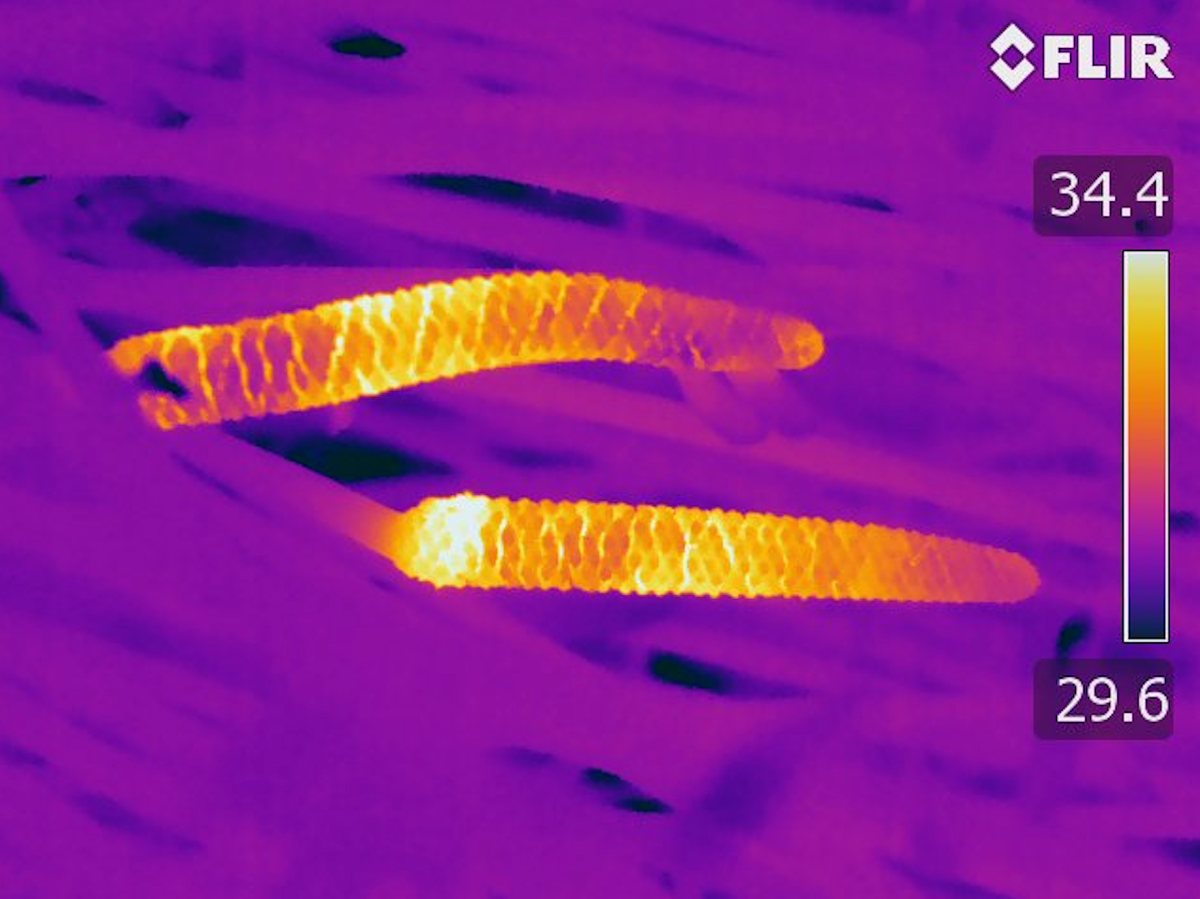
"The words pollination and flower may seem inseparable, but plants began courting insects millions of years before they evolved flashy petals. Now we know how they may have done it: not with dazzling color but with radiant heat. A study published today in Science reveals that cycads, tropical plants that resemble palms, attract beetles using infrared radiation generated by their conelike reproductive structures."
"Given that cycads are the world's oldest animal-pollinated plant group, co-senior author Nicholas Bellono, a Harvard University molecular biologist, says the results offer a window into the earliest form of pollinationa prototype for what is today one of the most transformative ecological interactions on Earth. Cycads are thermogenic, meaning they generate serious heatsome species reach up to 15 degrees Celsius (27 degrees Fahrenheit) above ambient temperature."
"Wondering why they'd expend all that energy, lead author Wendy Valencia-Montoya, a Ph.D. student in Bellono's lab, devised an experiment: she smeared cycad cones with ultraviolet-fluorescent dye so that incoming beetles would become coated with it and leave visible tracks on the next cone they touched. In the new paper, she and her colleagues found that the beetles preferentially visited the warmest regions of the cones."
Cycads produce infrared radiation from their conelike reproductive cones and use radiant heat to attract beetle pollinators. Many cycad species are thermogenic and can raise cone temperatures up to 15 degrees Celsius above ambient. Beetles visiting cones become coated with ultraviolet-fluorescent dye and leave traces on subsequent cones, revealing movement patterns. Beetles preferentially visit the warmest regions of cones, indicating infrared heat functions as an attraction cue. Thermogenesis also elevates humidity, disperses scent, and provides sheltered, warm sites for beetle mating and reproduction. Cycads represent an ancient animal-pollinated plant lineage and offer insight into early pollination mechanisms.
Read at www.scientificamerican.com
Unable to calculate read time
Collection
[
|
...
]