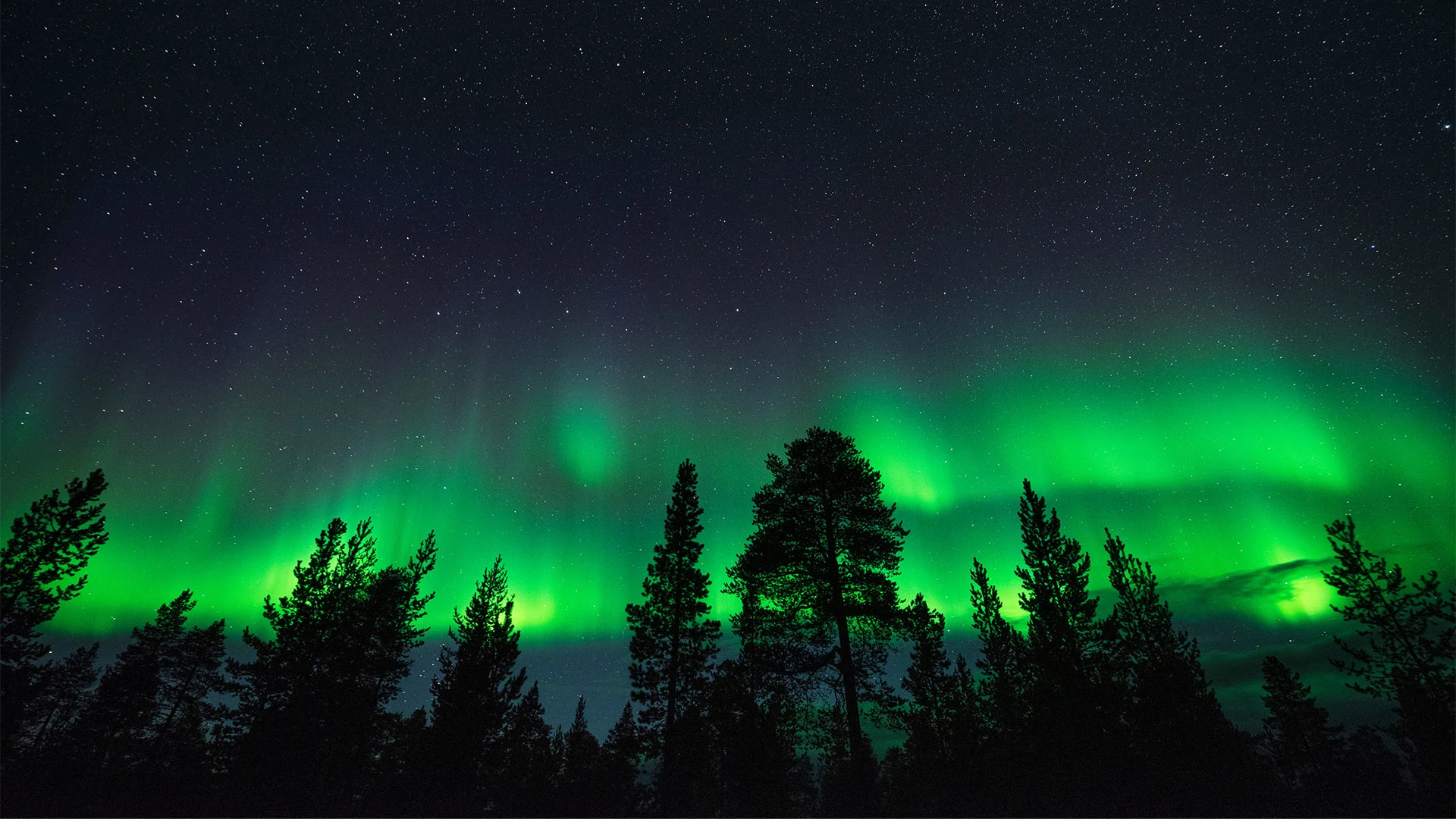
"The Northern Lights, also known as aurora borealis, may be visible in more than a dozen U.S. states Tuesday, December 9, according to the National Oceanic and Atmospheric Administration's Space Weather Prediction Center (NOAA). A full-halo coronal mass ejection (CME) is expected to reach Earth early to midday on Tuesday, potentially causing periods of "strong" G3 geomagnetic storms (on a scale of G1 to G5)."
"The aurora borealis is the result of a geomagnetic storm that occurs when a coronal mass ejection (CME), an eruption of solar material, reaches Earth and causes swaths of purple, blue, and green in the night sky. This year's increased solar activity (and thus, more frequent northern lights activity) is likely the result of an 11-year sun cycle peak. For the best viewing, the NOAA recommends facing north, in a spot away from light pollution, between 10 p.m. and 2 a.m. local time."
NOAA's Space Weather Prediction Center forecasts a full-halo coronal mass ejection reaching Earth early to midday Tuesday, with potential periods of strong G3 geomagnetic storms. Geomagnetic storms occur when solar eruptions strike Earth's magnetosphere, producing swaths of purple, blue, and green aurora. Increased solar activity from the 11-year sun cycle peak is driving more frequent northern lights. NOAA indicates visibility across 15 states from Alaska through the northern U.S., lower Midwest and Oregon. Optimal viewing is facing north away from light pollution between 10 p.m. and 2 a.m. local time. NOAA's website offers real-time updates and a 30-minute aurora forecast.
Read at Fast Company
Unable to calculate read time
Collection
[
|
...
]