"These are the pipes that carry the actual particle beams that are surrounded by superconducting magnets at -271°C (-455°F) while also operating under high vacuum conditions. Add in their position deep within the infrastructure, and this makes human access and inspection extremely challenging."
"The LHC contains about 2,000 plug-in modules (PIMs) to handle the expansion and contraction caused by the extremes of temperature and pressure. However, small components within the modules - thin radio frequency "fingers" designed to maintain electrical contact - can become deformed and cause obstructions inside the beamline."
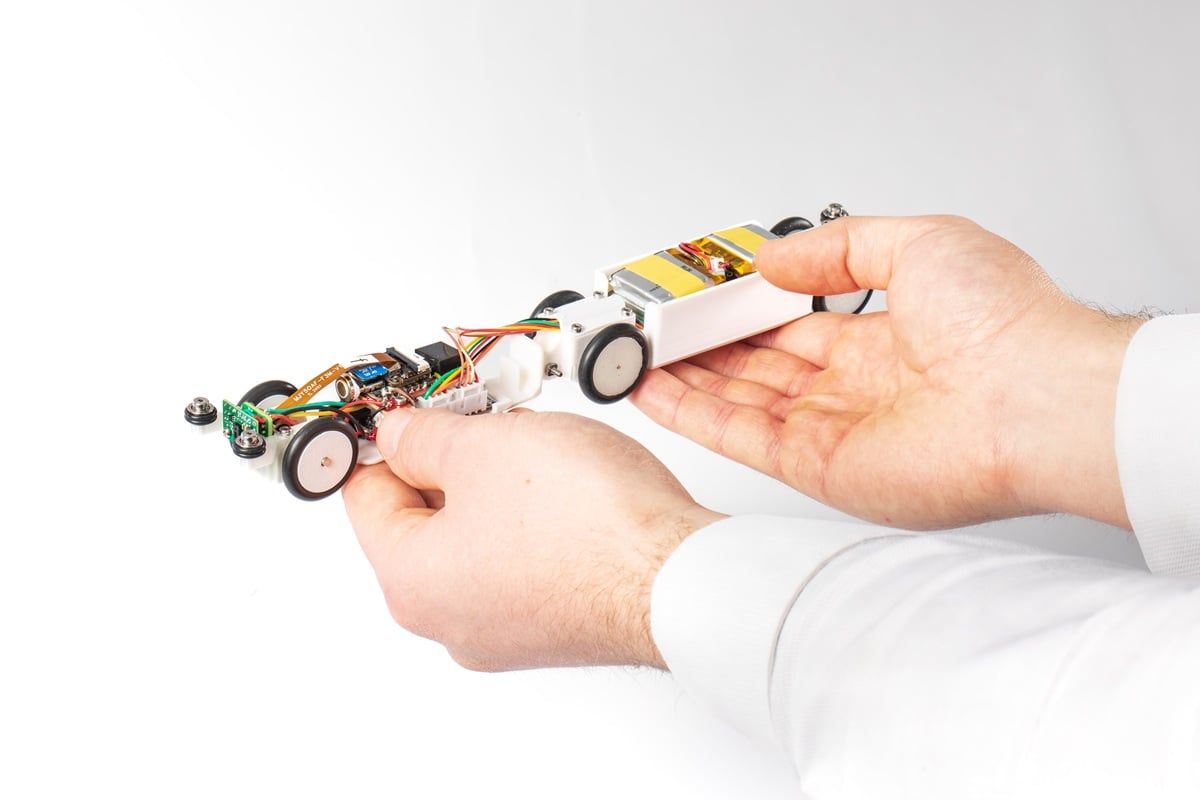
"PipeINEER can travel for up to six kilometers on battery power while capturing detailed images of each PIM, and uses an AI model trained to detect any abnormalities. If the robot detects an issue, it returns to its starting point and reports the exact location of the problem."
The UK Atomic Energy Authority and CERN jointly created PipeINEER, a small autonomous robot designed to inspect the Large Hadron Collider's 27-kilometer network of pipes. Operating in extreme conditions of -271°C and high vacuum, the robot travels up to six kilometers on battery power while capturing detailed images of approximately 2,000 plug-in modules. These modules manage thermal expansion and contraction, but their radio frequency fingers can deform and obstruct the beamline. PipeINEER uses an AI model to detect abnormalities and report their exact locations, eliminating the need for manual disassembly and endoscope inspections. This innovation enables engineers to efficiently address specific problem areas throughout the collider.
#robotics-innovation #large-hadron-collider #autonomous-inspection #artificial-intelligence #extreme-environment-engineering
Read at Theregister
Unable to calculate read time
Collection
[
|
...
]