OMG science
fromNature
1 week agoThe exotic particles that could finally break the Standard Model
The Standard Model of particle physics shows anomalies, particularly in B meson decays, suggesting potential new physics beyond its current framework.
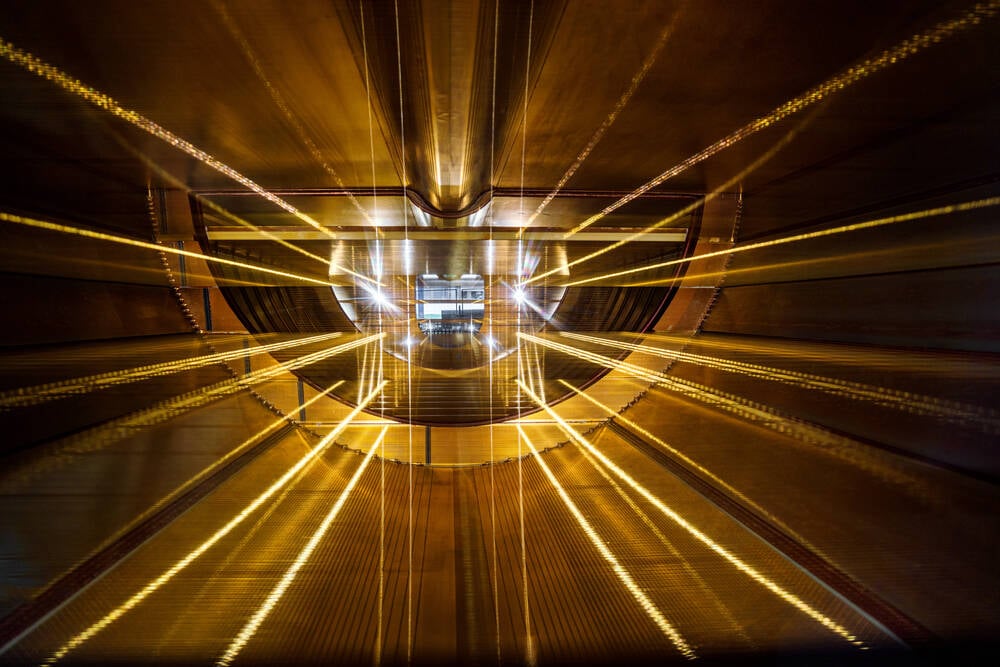
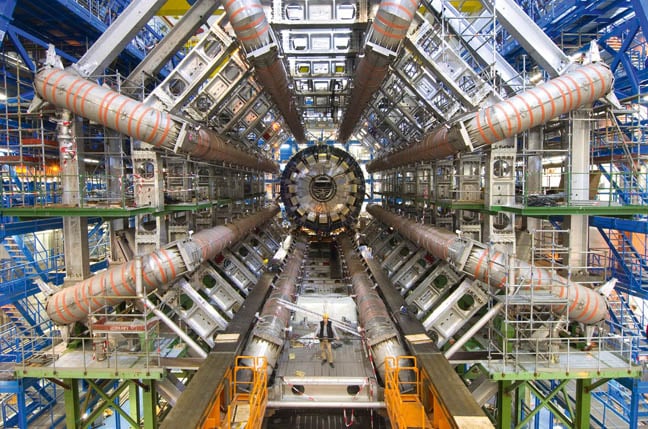
On 1 January, Thomson takes over as the director general of Cern, the multi-Nobel prizewinning nuclear physics laboratory on the outskirts of Geneva. It is here, deep beneath the ground, that the Large Hadron Collider (LHC), the largest scientific instrument ever built, recreates conditions that existed microseconds after the big bang. The machine won its place in history for discovering the mysterious Higgs boson, whose accompanying field turns space into a kind of cosmic glue.
On Sept. 10, 2008, the Large Hadron Collider at the European Organization for Nuclear Research (CERN) was powered up for the first time, successfully firing the first beam of protons through its 17-mile underground ring tunnel. Also on this date: In 1608, John Smith was elected president of the Jamestown colony council in Virginia. In 1846, Elias Howe received a patent for his sewing machine.
Matter and antimatter mirror each other in all respects but electric charge; physicists are excited by small differences in their behaviors. Recently, observations at the world's largest particle collider revealed a new class of antimatter particles breaking down differently than matter counterparts. This discovery contributes to the quest to understand why our universe consists of matter as opposed to an equal balance with antimatter, a situation suggested by early universe theories.