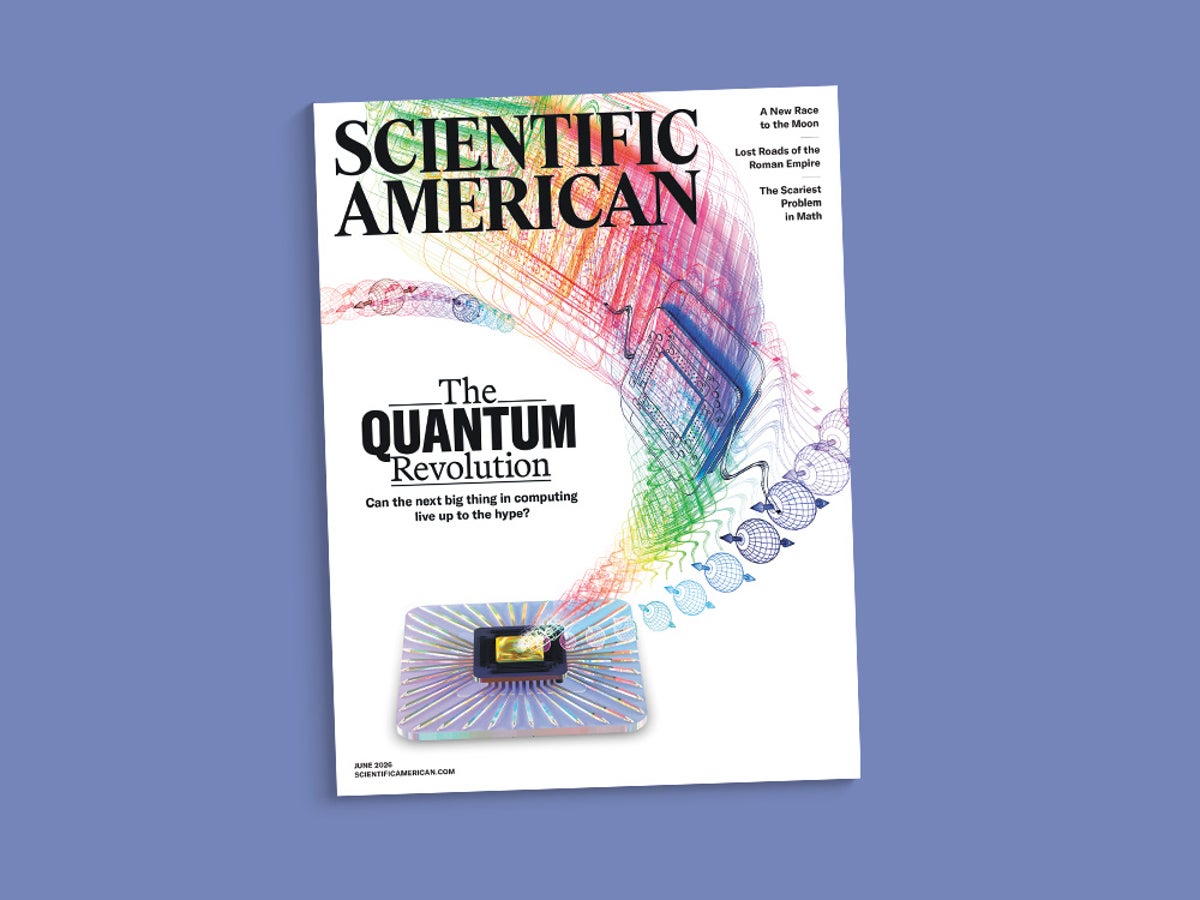
"Modern financeour entire economic system, reallyrelies on public-key cryptosystems that are essentially unbreakable. Even the consumer-level codes that encrypt your online banking are so hard to break that every computer on the planet working together would need longer than the age of the universe to brute-force them apart. A quantum computer could factor those integers and steal your mortgage payment in just a couple of hours."
"Despite huge advances in the field, we don't actually know how to build a functionally useful quantum computer or even if such a thing is possible at all. Of course, there's a catch, and it's a big one. Will quantum computers transform medicine, materials science and cybersecurity, or is the tech industry betting billions on a sci-fi fantasy?"
"One of the endemic illnesses of the American tech industry is an addiction to unsupported superlatives: Descriptors like revolutionary, game-changing or disruptive are applied to inventions that are at best incremental and at worst of no use at all. Despite the fact that I know this to be true, I now offer the following extraordinary statements: Quantum computing could change the world."
"A once-in-a-generation technology that shifts paradigms and ushers in a new era of innovation. A quantum leap, even. Here's one example why: Modern financeour entire economic system, reallyrelies on public-key cryptosystems that are essentially unbreakable."
Quantum computing is frequently described with sweeping, unsupported superlatives in the tech industry. Public-key cryptography underpins modern finance and is widely considered extremely difficult to break with brute force, even using all computers on Earth. A sufficiently capable quantum computer could factor large integers quickly and potentially compromise encryption used for online banking. However, major uncertainty remains because researchers do not know how to build a functionally useful quantum computer or whether one is possible at all. The promise is tied to cryogenically managed quantum systems, while the feasibility question determines whether impacts on medicine, materials science, and cybersecurity will materialize.
Read at www.scientificamerican.com
Unable to calculate read time
Collection
[
|
...
]