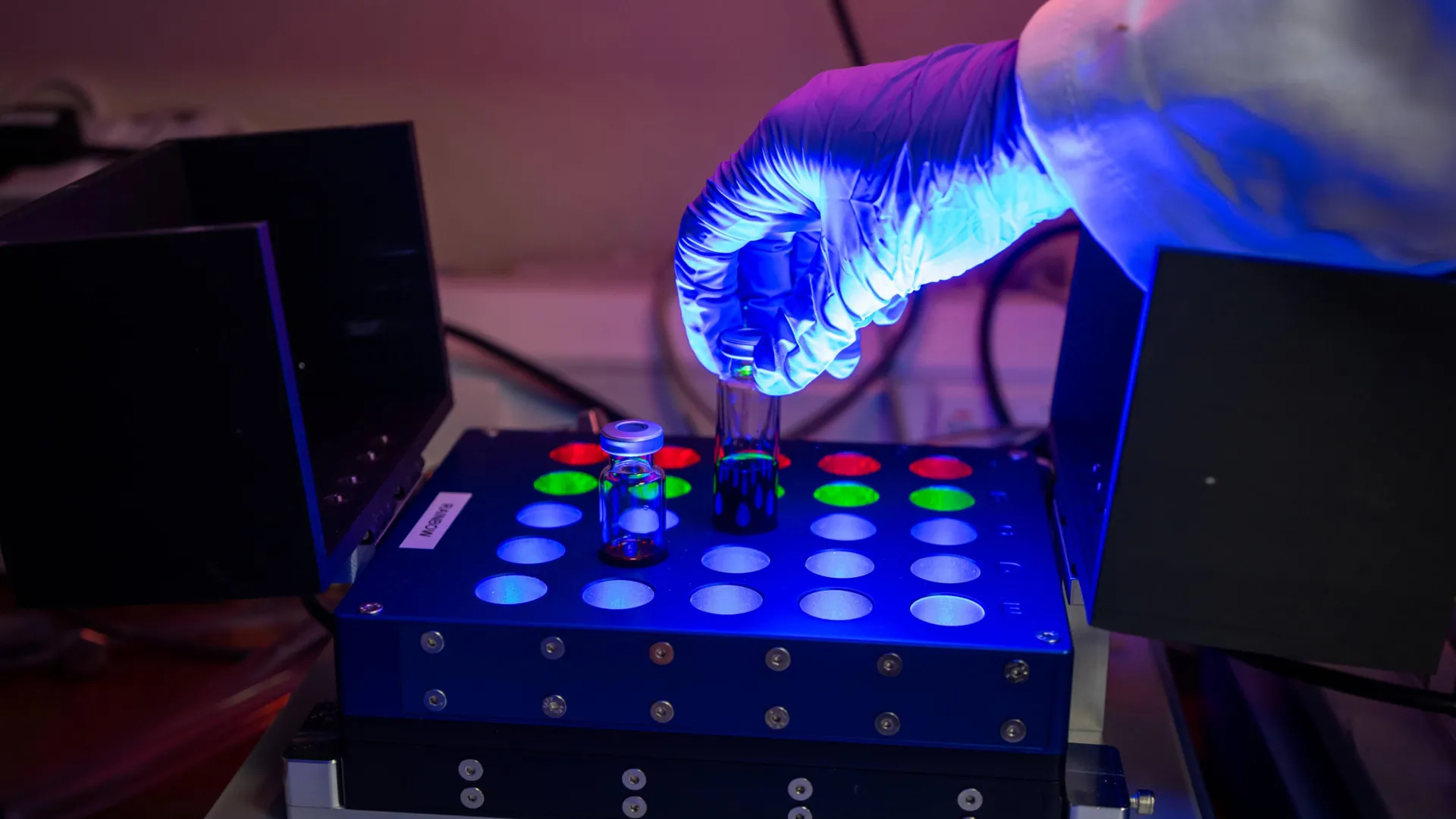
"The new Cambridge method turns that process around by allowing researchers to make changes to drug molecules much later in development. Instead of relying on heavy metal catalysts, the reaction is activated by an LED lamp at ambient temperature. When the light triggers the reaction, it sets off a self sustaining chain process that forms carbon-carbon bonds under mild conditions without toxic or costly reagents."
"We've found a new way to make precise changes to complex drug molecules, particularly ones that have been exceptionally difficult to modify in the past. Scientists can spend months rebuilding large parts of a molecule just to test one small change. Now, instead of doing a multistep process for hundreds of steps, researchers can make targeted modifications efficiently."
Researchers at the University of Cambridge have developed an innovative photochemical technique using LED light to modify complex drug molecules efficiently. The method, called an "anti-Friedel-Crafts" reaction, replaces traditional toxic chemicals and heavy metal catalysts with light activation at ambient temperature. When LED light triggers the reaction, it initiates a self-sustaining chain process that forms carbon-carbon bonds under mild conditions. This approach allows chemists to make precise modifications to drug molecules late in the development process, rather than dismantling and rebuilding them from scratch. The technique significantly reduces development time by eliminating months of multistep chemical processes previously required for molecular adjustments.
Read at ScienceDaily
Unable to calculate read time
Collection
[
|
...
]