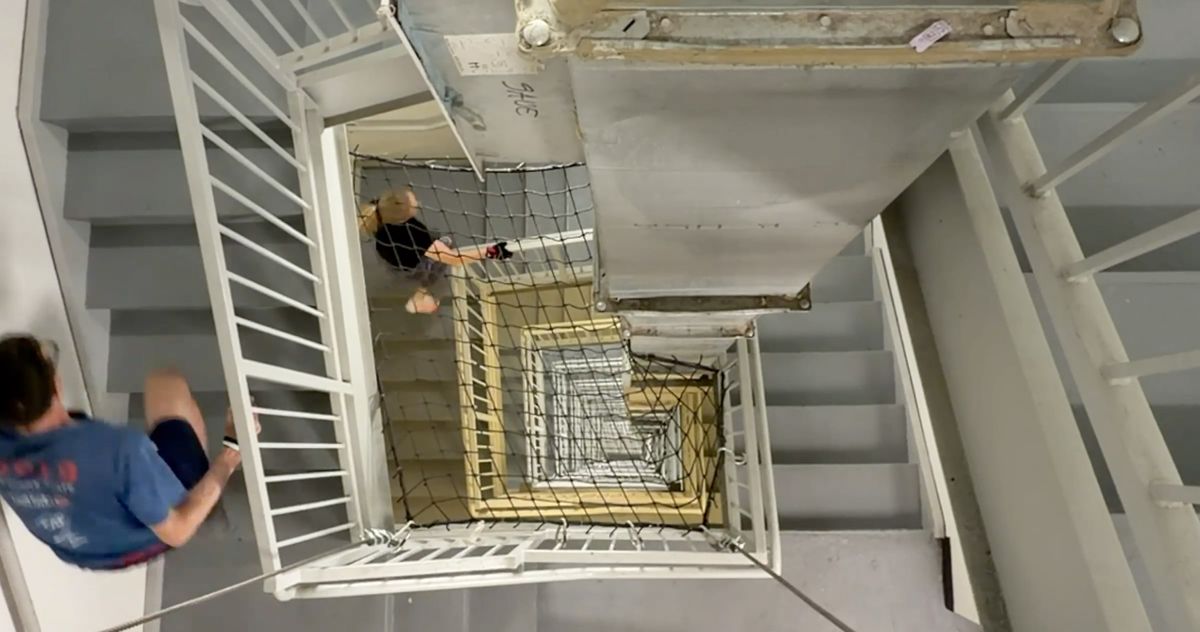
"The stairs at 30 Rock are extremely steep. Today, New York City zoning rules and the International Building Code generally cap stair height at seven inches, but the steps in the Art Deco tower, which opened to the public in 1933, measure in at 7.5. Half an inch doesn't sound like a lot, but it feels like a lot when you're taking them two at a time up 66 stories. It doesn't help that running 30 Rock is like navigating a vertical maze - there are hallway breaks and stairwells that change direction every few floors - that demands a constant recalibration of pace and focus, making it nearly impossible to establish a rhythm."
"I started racing skyscraper stairwells a little over a year ago and have since run a dozen buildings ranging from 25 to 105 stories. While this may sound like a possibly unhinged way to spend one's weekends, tower running, as it's officially called, is a real sport, with organized races, rankings, commentary, and a global following. And these races do more than test endurance. They reveal the hidden logic of these buildings, particularly the architectural nuances and eccentricities of their often unseen stairwells."
"For most, stairs are an afterthought, but they are designed with intention. (One developer I spoke to went so far as to call stairwell design an art form.) The 1901 building code devoted just three brief paragraphs to stair width, treads, and risers. By 1929, city regulations had expanded considerably to include stair construction, egress loads, and geometry. Even so, these were still works-in-progress. "High-rises hadn't been around that long," says Donald Friedman, a structural engineer with expertise in historic buildings. These old stairwells wind their way around changing floor-plate sizes, setbacks, and mechanical rooms."
"At 30 Rock, the railings sit along the interior, forcing you to work only one side as you pull yourself upward using the handrails. The Empire State Building's stairs are similarly steep but much narrower,"
Stairs in 30 Rock are unusually steep, with 7.5-inch risers compared with typical zoning and code limits of seven inches. The steepness becomes more punishing when climbing two steps at a time over many floors, especially because the building’s stairwells change direction frequently and include hallway breaks that disrupt pacing. Tower running is described as an organized sport with races, rankings, and global participation. Races reveal how stairwells are intentionally designed, with regulations evolving from brief early guidance to more detailed requirements for width, treads, risers, egress loads, and geometry. Historic stairwells also reflect changing floor plates, setbacks, and mechanical rooms, while specific features like interior rail placement alter how climbers use their hands.
Read at Curbed
Unable to calculate read time
Collection
[
|
...
]