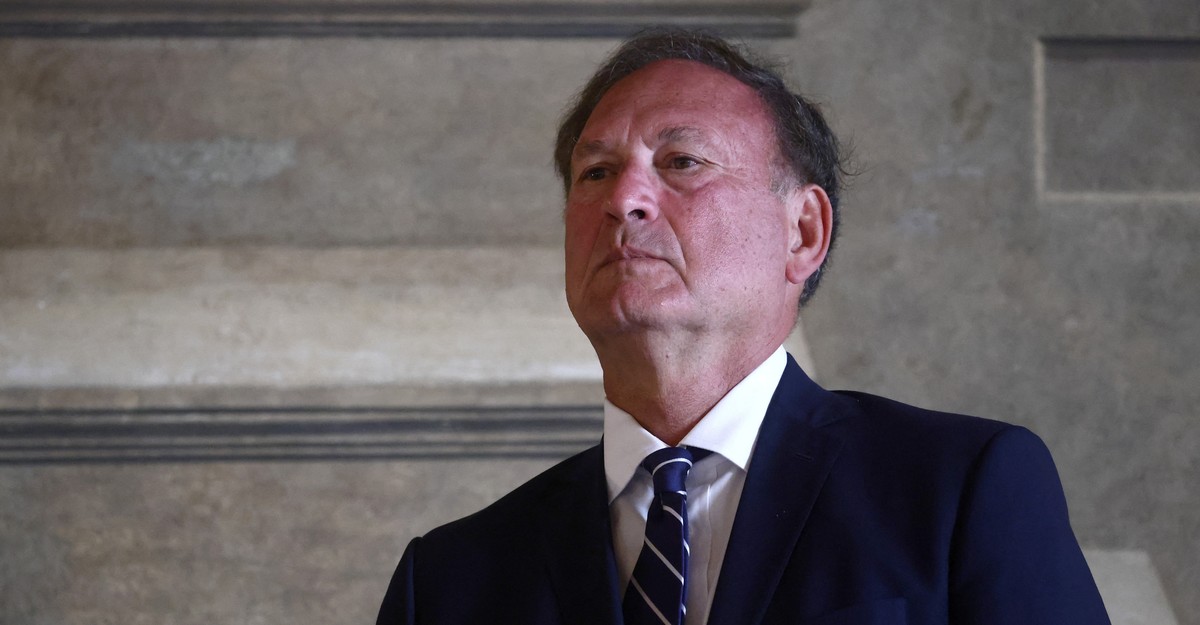
Samuel Alito has shown a tendency to express personal preferences in recent Supreme Court hearings, particularly regarding birthright citizenship and presidential powers. His comments suggest a departure from the original understanding of the Fourteenth Amendment. Alito's approach has drawn criticism from conservative outlets, indicating a shift in his judicial philosophy. This change may reflect a response to external pressures, including threats faced by justices. The current polarized dynamics of the Court are influencing justices to move away from impartiality in their rulings.
"What we're dealing with here is something that was basically unknown at the time the Fourteenth Amendment was adopted, which is illegal immigration. Alito's comment hints at a desire to sidestep the original understanding of the amendment, which was that people born on American soil are U.S. citizens."
"Even Alito's erstwhile admirers at the National Review objected when Alito started referencing other statutes, not cited by Trump, as justifications for the president's orders. The conservative outlet rebuked that it is not the Court's job to opine on powers the president has not invoked."
"Alito's more recent willingness to telegraph his preferences has coincided with more gruffness and edgier assertions in his interviews and speeches. Perhaps the justice is getting something off his chest; bluntness might be his protest against the straitjacketed propriety long expected of Supreme Court justices."
"For all the justices' honorable intentions and their promises to judge cases impartially, the fundamental dynamics of today's ever more polarized Court are pushing them in a much different direction."
Read at The Atlantic
Unable to calculate read time
Collection
[
|
...
]