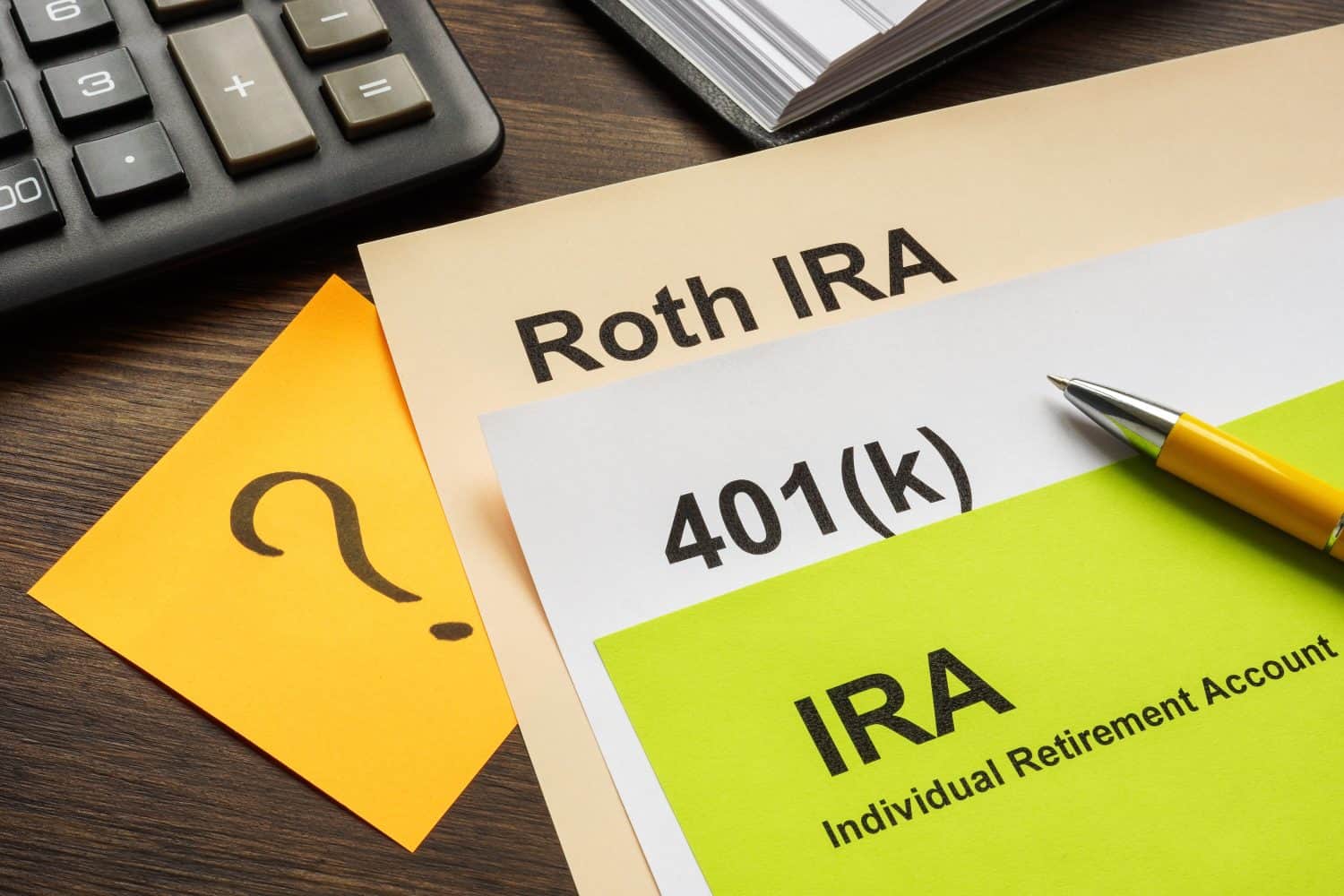
"The next dollar of retirement savings is where most high earners stop and route everything to a taxable brokerage. That decision can leave roughly $39,000 a year of Roth space sitting untouched inside one spouse's 401(k) plan document. The mechanic is the after-tax bucket plus an in-plan Roth conversion, often called the mega backdoor Roth. It only works if the plan's Summary Plan Description permits both pieces. When it does, the math is hard to ignore."
"The IRS section 415(c) limit caps total contributions to a single 401(k) at $72,000 for 2026, counting employee deferrals, employer match, and after-tax contributions together. In this household, the husband's plan allows after-tax contributions and same-plan Roth conversions. His numbers stack like this: Employee deferral: $24,500 (pre-tax or Roth, his choice) Employer match: $8,500 Combined toward the 415(c) cap: $33,000 Remaining after-tax headroom: $39,000"
"That $39,000 goes in with already-taxed dollars, the same as a brokerage deposit. The difference is what happens next. If the plan supports an in-plan Roth conversion executed within 30 days of each after-tax contribution, the taxable earnings on the after-tax basis stay near zero, and the entire $39,000 lands in Roth space with no conversion tax bill."
"Run the contribution forward at a 7% assumed return for 18 years, until age 65. The compounded balance is approximately $1,326,000 of tax-free Roth wealth, sitting on top of whatever the standard deferral path produces. The same $39,000 a year in a taxable brokerage compounds to the same gross figure, but the resemblance ends there. Every dividend gets taxed annually. Every rebalance triggers capital gains. And in retirement, those distributions land inside the modifi"
A high-income dual-income household already maxes employee deferrals in both spouses’ 401(k) plans. Additional retirement savings can be directed into a mega backdoor Roth strategy if the plan permits after-tax contributions and in-plan Roth conversions. The IRS section 415(c) limit caps total 401(k) contributions at $72,000 for 2026, including employee deferrals, employer match, and after-tax contributions. After accounting for deferrals and match, remaining headroom can be contributed with after-tax dollars. If the plan allows an in-plan Roth conversion within 30 days of each after-tax contribution, taxable earnings can be minimized, moving the full amount into Roth space. Over time, this can produce tax-free Roth wealth compared with taxable brokerage taxation on dividends, rebalancing gains, and retirement distributions.
#mega-backdoor-roth #401k-after-tax-contributions #roth-conversions #irs-section-415c-limits #taxable-brokerage-vs-roth
Read at 24/7 Wall St.
Unable to calculate read time
Collection
[
|
...
]