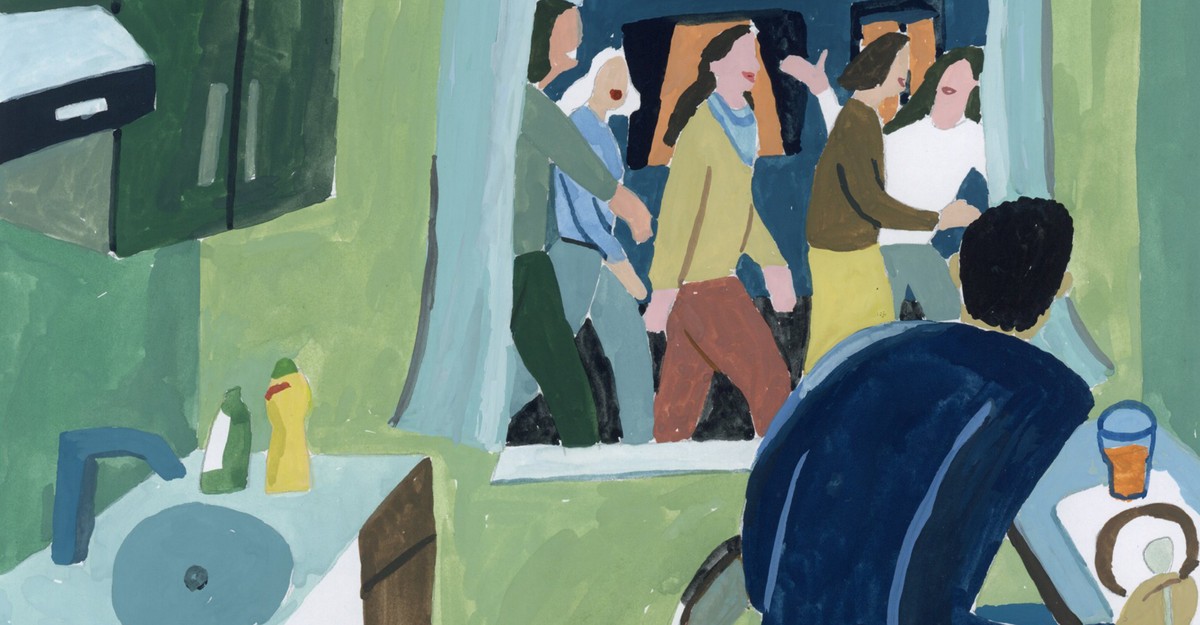
"My friendships exist in silos. Each hangout is a feverish one-on-one where we share fries and eye contact, confessions, rants, gossip, and mutual attempts at amateur therapy. This patchwork of get-togethers structures my week: a Wednesday happy hour with one friend, a Saturday-morning walk-and-talk with another, a Sunday coffee date with a third. It's exhilarating-we genuinely want to know how each other's moms are doing."
"Some days, though, I feel strangely lonely. While my social life looks like a loose archipelago of individuals, other people seem to operate in warm, robust units. I'm jealous when I see a circle of friends that looks like a miniature community. Groups seem like the norm if you watch sitcoms or use social media or just eat brunch at a restaurant. I too want to be forever laughing with half a dozen pals in one of our apartments on a random weekday,"
Friendships can take the form of intense, recurring one-on-one meetings that structure weekly life through shared activities, confessions, and informal therapy. Those dyadic connections feel exhilarating and caring while also sometimes provoking loneliness when compared with perceived warm, robust friend groups. Media portrayals and social comparisons increase jealousy for group camaraderie. A market has emerged to manufacture group hangs for people seeking circles rather than dyads. Social assumptions link close-knit groups to greater happiness, prompting some to view one-on-one networks as a shortfall even though friend groups may be less common than presumed.
Read at The Atlantic
Unable to calculate read time
Collection
[
|
...
]