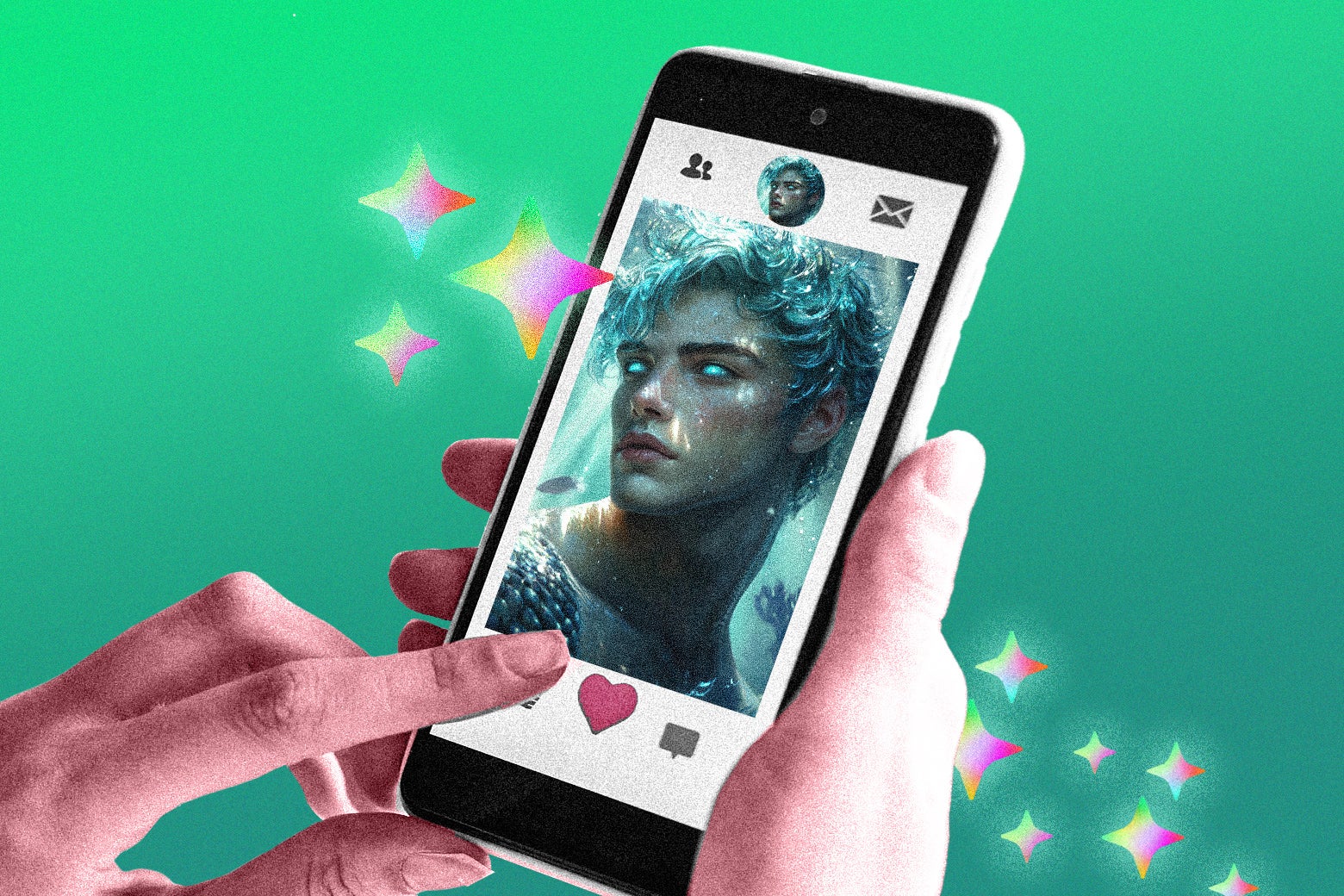
"If my dating app profile were made with A.I., my nose would be smaller, my teeth whiter. My eyes would be equally hooded, or not hooded at all, and my skin smoother. Men wouldn't make a game out of guessing whether I'm neurodivergent or Jewish. My gaze would be coquettish, my aura obvious, my entire essence ratcheted down a notch or several."
"I take great pride in knowing that no one would think I'm the creation of A.I., even if that means acknowledging that I'm an acquired taste at best, "Hava Nagila" played on kazoos at worst. In the world of online dating, obvious imperfections have started to become a kind of authenticity signal. And as the desire for sincerity increases, so does the distrust in those who seem too good to be true."
"Whether it's someone who's too toned, too well traveled, too rich, or too symmetrical, the ones to beat are indiscernible from the ones to bot. Which puts those of us whose profiles are works of creative folly at an advantage; no one will doubt our identity because if we were fake we'd have made ourselves exactly what the general consensus once asked for."
"According to Match.com's 2025 Singles in America survey, conducted in partnership with the Kinsey Institute, 53 percent of singles report having dating burnout as evidenced by Bumble's significant revenue tumble, straight men's laziness when it comes to dating, and the growing number of apps designed to have A.I. do the work for you. The survey also found that 61 percent of surveyed singles believe that profiles have become less authentic."
Online dating now favors visible imperfections and quirky presentation as authenticity signals that distinguish humans from AI-crafted profiles. Profiles that appear too perfect—excessively toned, well-traveled, wealthy, or symmetrical—raise suspicion and blend with AI or bot-like prospects. Those who showcase eccentricities or imperfect features gain an advantage because their profiles are unlikely to be AI fabrications. Match.com's 2025 Singles in America survey, conducted with the Kinsey Institute, reports 53 percent of singles experiencing dating burnout and 61 percent believing profiles have become less authentic. Rising reliance on AI for bios, a cultural flattening of difference, and apps that automate dating contribute to fatigue.
Read at Slate Magazine
Unable to calculate read time
Collection
[
|
...
]