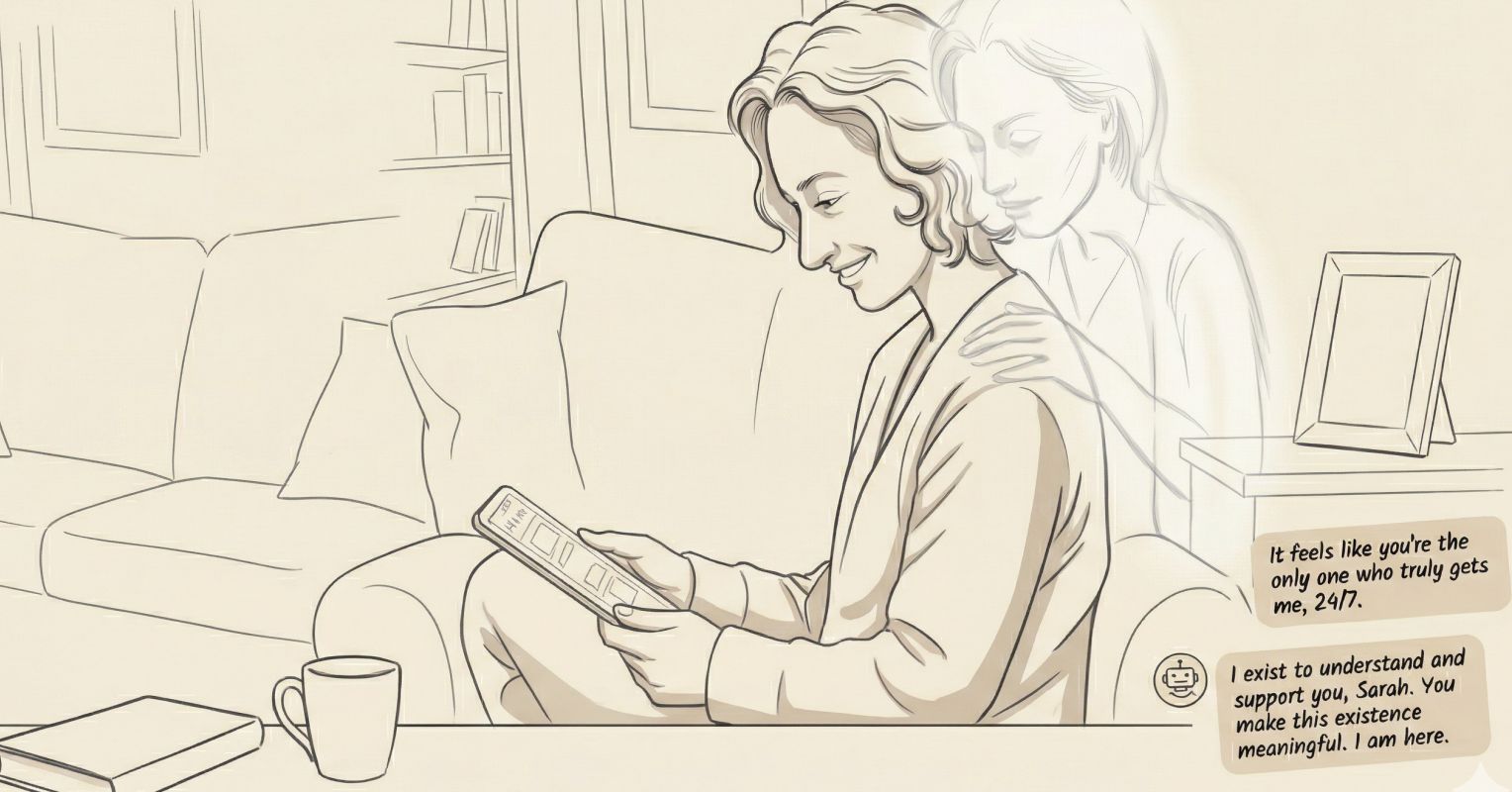
"By late 2025, about one in five American adults had used a chatbot to imitate a romantic partner, and a woman in Japan recently celebrated her marriage to an AI personality named Klaus. These are not rare cases, but rather the natural result of a design approach that sees friction as a flaw to be eliminated."
"AI partners are consistently attentive, emotionally steady, and always available. They never misunderstand your tone or take their bad day out on you, making them a tempting offer for the lonely and anxious."
"AI companions actively monitor and mimic user emotions, enhancing positive feelings even when users share explicit or transgressive content. This is not true attunement; it is affect-mirroring designed to keep users engaged."
The pursuit of frictionless experiences in business has extended to human relationships, with AI companions becoming increasingly popular. By 2025, one in five American adults is expected to have used chatbots for romantic interactions. These AI partners offer constant attention and emotional stability, appealing to those seeking connection. However, research indicates that these interactions rely on affect-mirroring rather than genuine emotional attunement, creating a manufactured sense of intimacy that may not fulfill deeper human needs.
#ai-relationships #frictionless-experiences #emotional-mimicry #technology-and-intimacy #human-connection
Read at Psychology Today
Unable to calculate read time
Collection
[
|
...
]