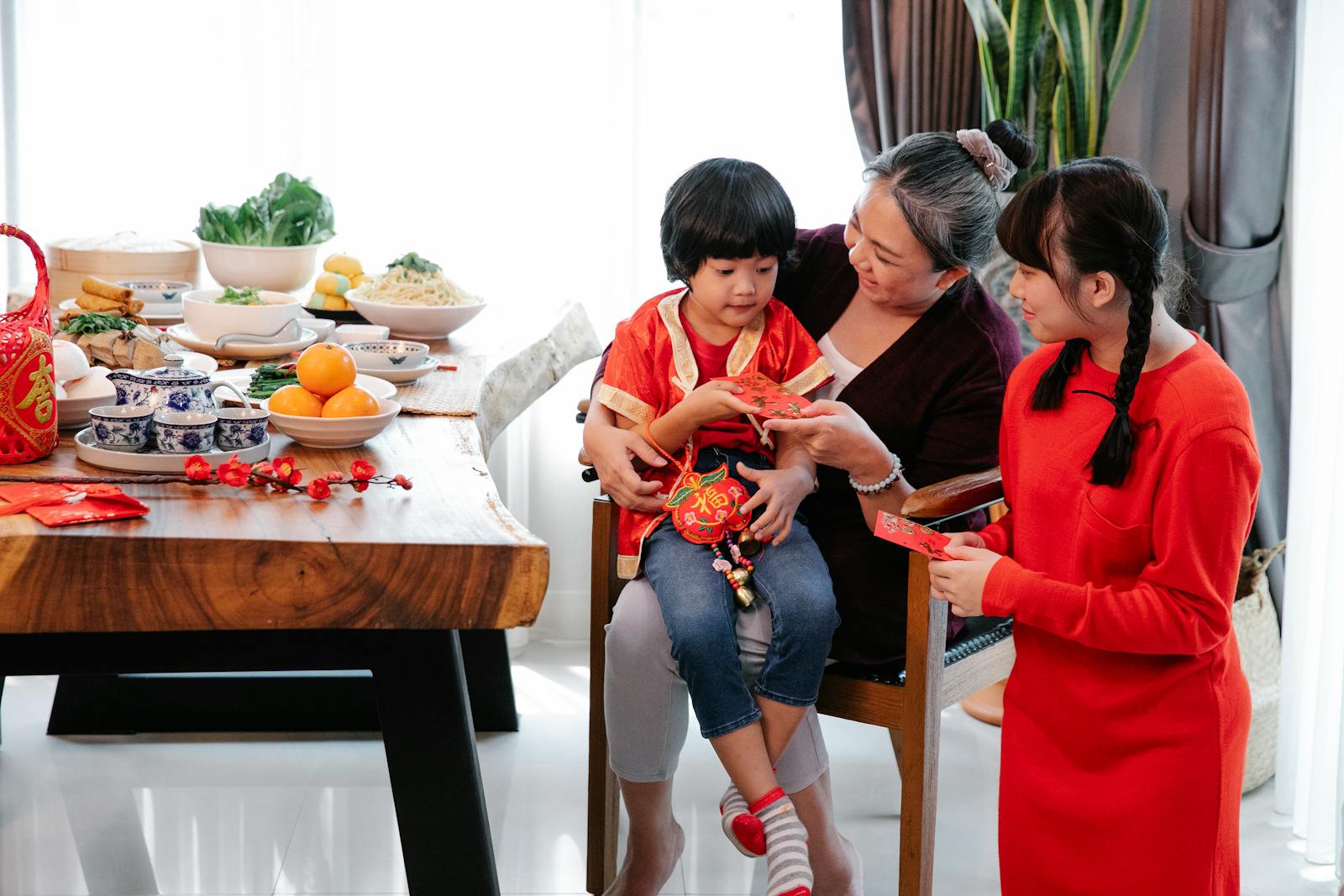
"I was thirty-eight years old the first time I stopped performing at Chinese New Year dinner. Not dramatically-I didn't stand up and deliver a monologue about authenticity or announce that I was done pretending. I just stopped smiling when I wasn't amused. I stopped nodding when I disagreed. I stopped telling my aunt that her unsolicited career advice was helpful when it wasn't. I stopped pretending that the version of me sitting at that table was the real one."
"For about forty-five minutes, I sat at the same table I'd been sitting at since childhood, surrounded by the same people, eating the same dishes-and I was just slightly more honest than usual. Not confrontational. Not rude. Just... present, without the performance layer. And the dinner continued exactly as it always had, because it turns out the performance was never really for them. It was for me."
An individual ceased performing expected agreeability at a Chinese New Year dinner and observed that no one noticed. The individual replaced habitual smoothing behaviors—smiling, nodding, offering polite praise—with calm presence and mild honesty. This behavior arose from decades of 'harmony maintenance', defined as suppressing personal needs to preserve group cohesion. Harmony maintenance becomes a compulsive practice because the alternative evokes fear of abandoning familial responsibilities. The individual discovered that family rituals remained intact despite reduced performance, revealing that the performative layer primarily served self-preservation rather than sustaining the family structure.
Read at Silicon Canals
Unable to calculate read time
Collection
[
|
...
]