"Why it matters: A sharp nationwide "decline in geographic mobility is the single most important social change of the past half century," The Atlantic's Yoni Appelbaum wrote earlier this year. In any decade, "the people who have moved have done better economically than the people who stayed behind," Appelbaum said on a podcast in August, discussing his book "Stuck." "The last 50 years, as we've stopped moving, have also seen [a] sudden atrophy and decay of our social and civic life.""
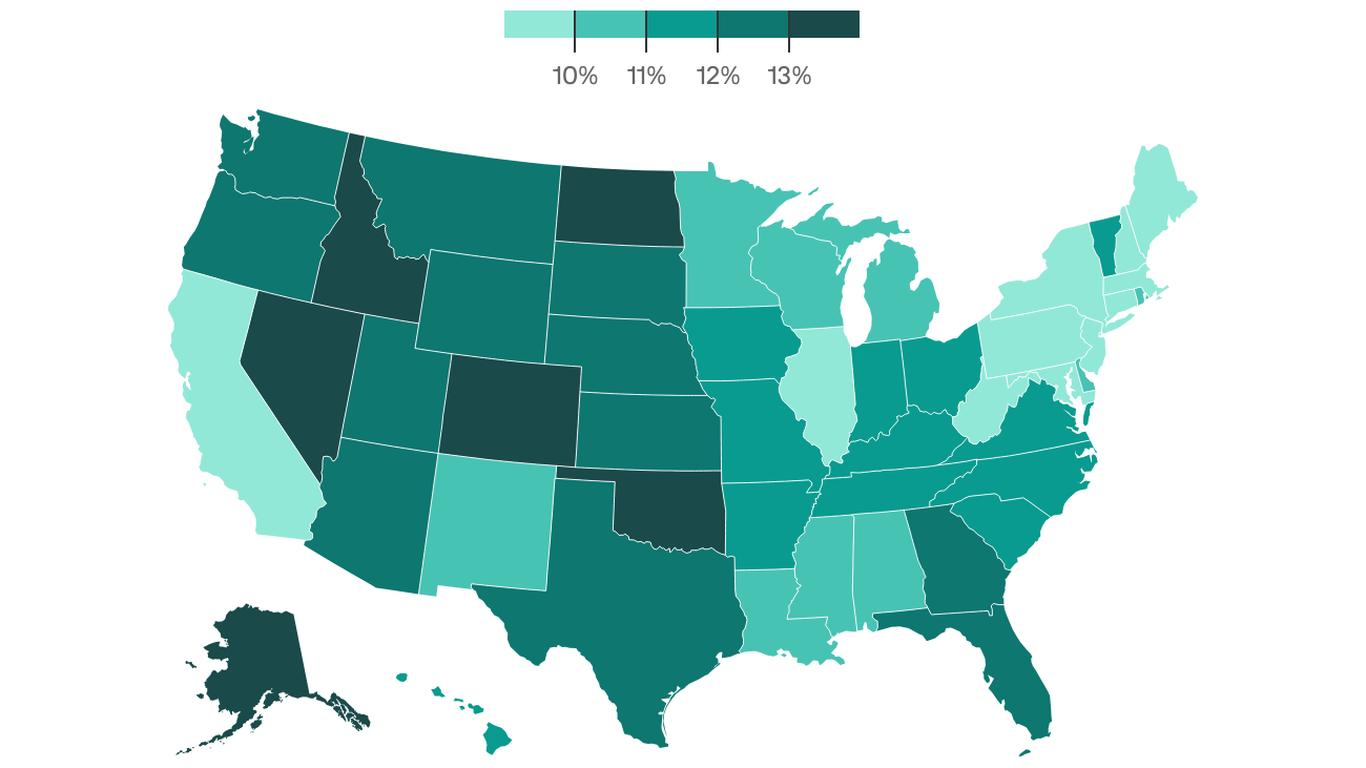
"Context: Appelbaum cites "discriminatory zoning laws" and "community gatekeeping" as major reasons mobility has stalled. What they're saying: "Falling mobility also affects economic resilience by limiting labor market flexibility, slowing wage growth and potentially reducing innovation as workers are less likely to move for better opportunities," per the report. State of play: New Jersey (8%) and New York (9%) had the lowest shares of movers in 2024, while residents moved most in Alaska, Oklahoma, and Colorado, each around 14%."
"Between the lines: Many who do moveare going further afield, usually for housing affordability, climate resilience, or job opportunities. 19% of movers in 2024 changed states, and over 71% relocated to a different city, per Point2Homes. Wyoming (36%) and New Hampshire (35%) recorded the highest shares of new residents from other states. The bottom line: Some people feel stuck - others are happy to stay put. Those living in San Antonio, San Diego and Raleigh, North Carolina, say they're particularly satisfied with their city, a new report finds."
Geographic mobility in the United States declined to about 11% in 2024, down from roughly 14% a decade earlier and 20% in the 1960s. Mobility decline has been linked to discriminatory zoning laws and community gatekeeping that restrict relocation and housing access. Falling mobility reduces labor market flexibility, slows wage growth, and may hinder innovation by keeping workers from moving to better opportunities. State-level variation is large: New Jersey and New York had the lowest mover shares, while Alaska, Oklahoma, and Colorado had the highest. Increasing shares of movers relocate for housing affordability, climate resilience, or job opportunities, while city satisfaction is high in several metros.
Read at Axios
Unable to calculate read time
Collection
[
|
...
]