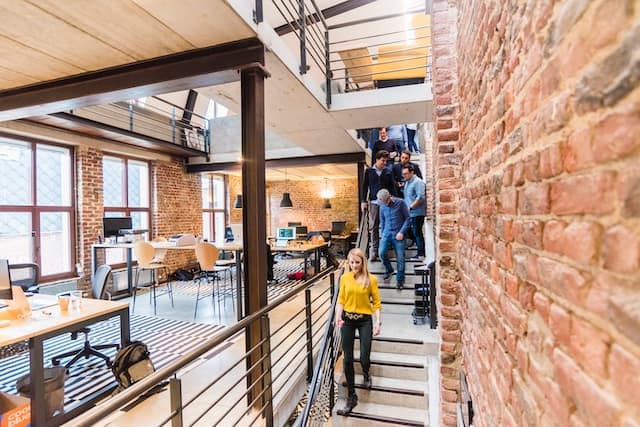
"Creating workplace facilities that reflect relevance to the constant evolving changes of working patterns. Organisations need to think about balancing flexibility with functionality by integrating technology that can simplify things without any complications, whilst designing spaces that are diverse when it comes to different working styles. As traditional office attendance makes make for hybrid models, facilities now need to reimagine their spaces as a purposeful destination rather than a default location."
"Build flexible, adaptable workspaces Static office layouts that are designed for permanent desk assignments, no longer match today's working environments, all thanks to hybrid-working. Features like moveable furniture, reconfigurable partitions, and reservable zones can each allow spaces to change according to the daily demands such as hosting large team workshop events one day to providing individual focus areas. With this type of adaptability, it can prevent the waste of paying for unused space, whilst avoiding overcrowding during peak attendance periods."
Workplace facilities should be reimagined as purposeful destinations that accommodate evolving hybrid working patterns. Flexible, adaptable workspaces with moveable furniture, reconfigurable partitions, and reservable zones enable rapid reconfiguration for workshops or individual focus. Such adaptability reduces wasted space and prevents overcrowding during peak periods, improving space utilisation efficiency compared to fixed layouts. Seamless technology integration, including occupancy sensors and reliable video conferencing systems, removes friction and supports planning and hybrid meetings. Increased adoption of smart building technology delivers operational efficiency and improved user experience. Sustainability and energy efficiency remain priorities for modern facilities planning.
Read at London Business News | Londonlovesbusiness.com
Unable to calculate read time
Collection
[
|
...
]