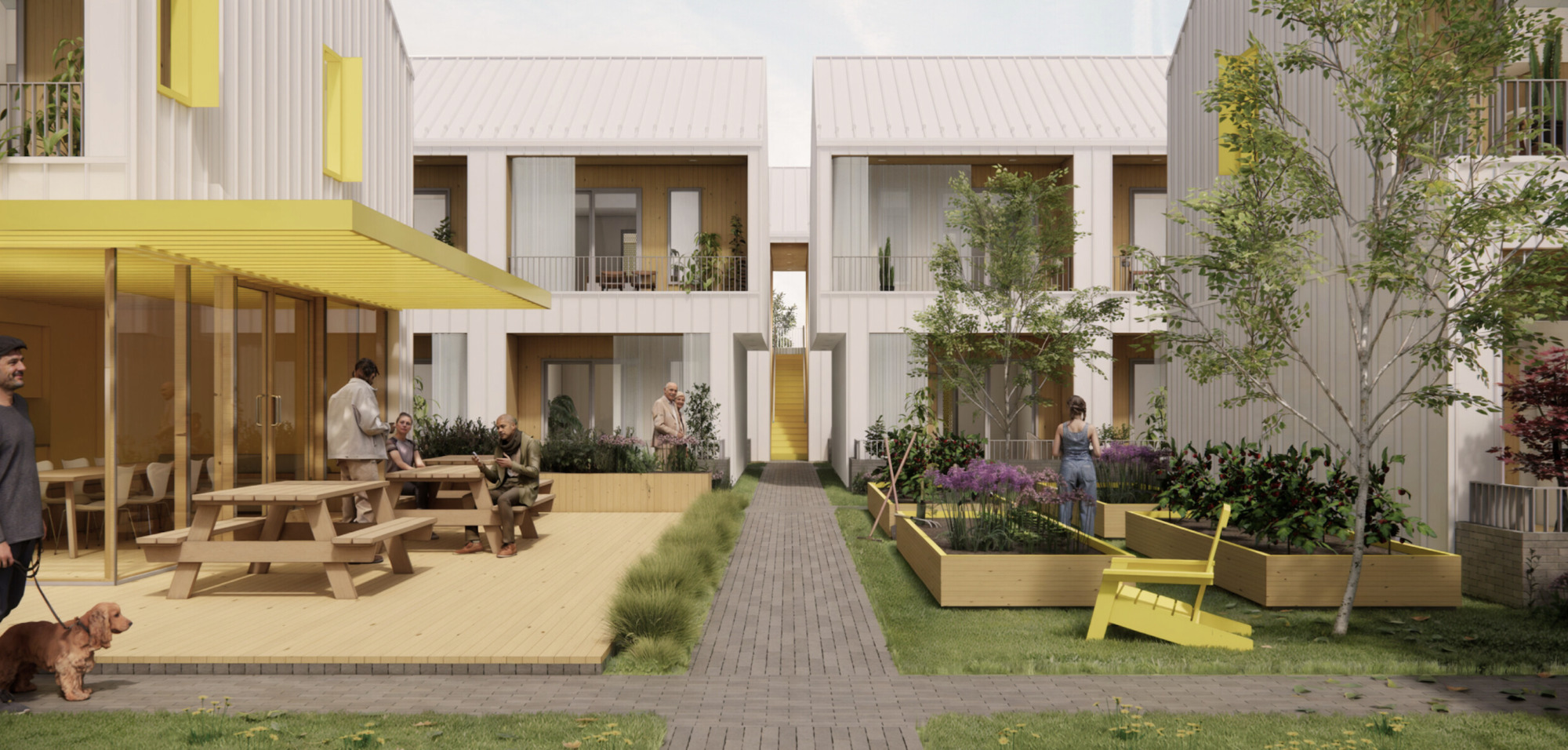
"As the nineteenth edition in Buildner's Affordable Housing Challenge series, the competition invited architects and designers from around the world to respond to Denver's housing crisis through proposals operating at architectural, urban, and systemic scales. The brief did not prescribe a single site or typology but, rather, encouraged flexible strategies capable of addressing affordability, climate resilience, and community impact while contributing positively to Denver's urban identity."
"The winning projects reflect a wide range of approaches united by a shared ambition to elevate affordable housing beyond minimum compliance and toward long-term civic value. From carefully calibrated, gentle-density infill and courtyard-based missing-middle housing to ambitious modular frameworks that treat incremental growth as a form of urban repair, the awarded proposals demonstrate that affordability, adaptability, and architectural quality are not mutually exclusive."
"Several winning entries engage directly with existing neighborhoods, transforming single-family lots and underutilized urban spaces into shared, community-oriented environments without erasing local character. Others operate at a broader urban scale, proposing expandable systems and 15-minute neighborhood frameworks that challenge conventional development models while remaining conceptually rigorous and visually precise."
Buildner partnered with the City and County of Denver and AIA Colorado to run an international ideas competition addressing Denver's housing crisis. The nineteenth edition invited global architects and designers to propose solutions at architectural, urban, and systemic scales without prescribing a single site or typology. Proposals emphasized affordability, climate resilience, adaptability, and community impact while reinforcing Denver's urban identity. Winning entries include gentle-density infill, courtyard-based missing-middle housing, modular frameworks for incremental growth, and 15-minute neighborhood concepts. Several projects retrofit single-family lots and underutilized spaces into community-oriented environments, offering both immediate building strategies and long-term urban systems.
Read at ArchDaily
Unable to calculate read time
Collection
[
|
...
]