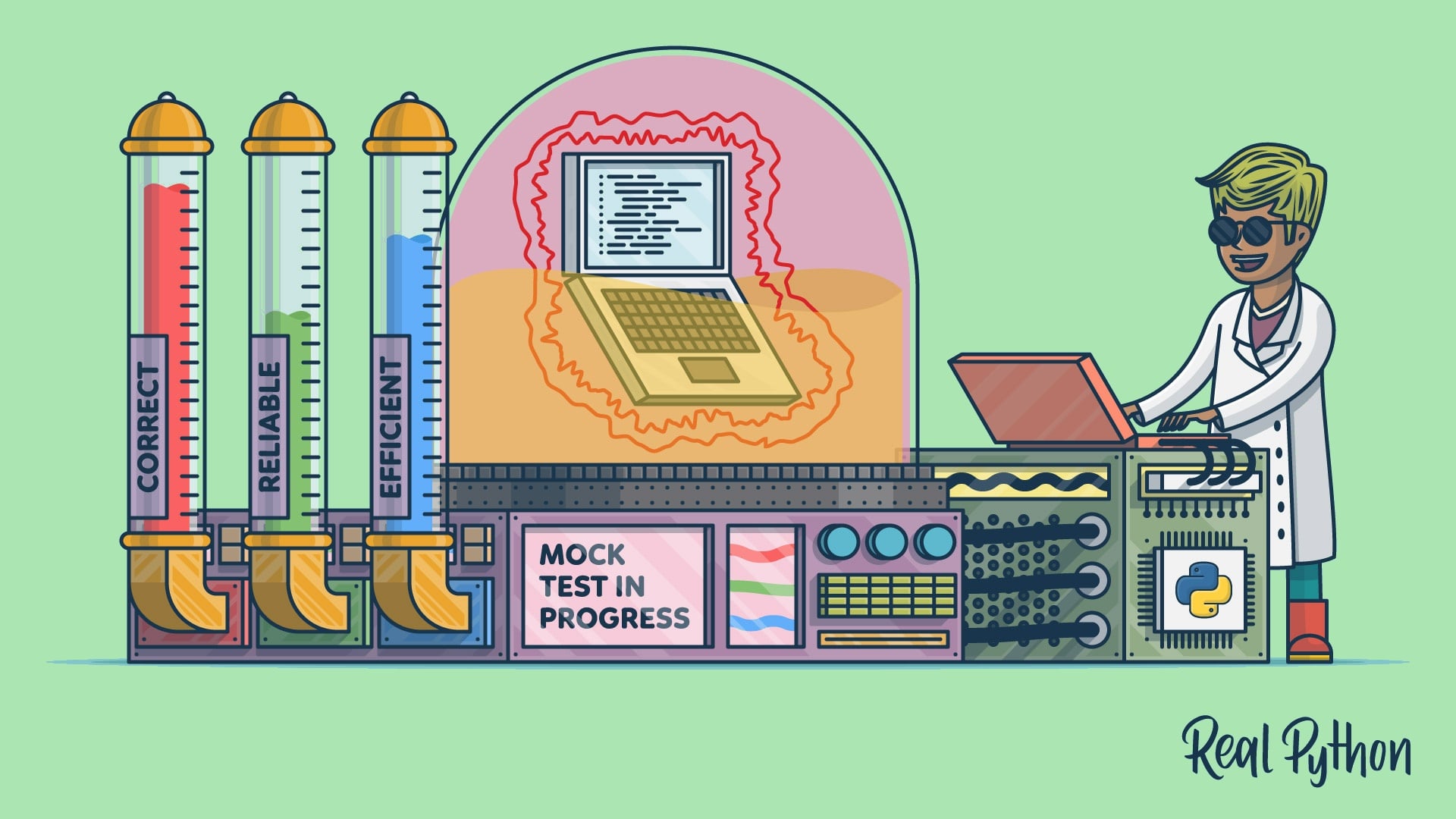
Mocking isolates code by replacing dependencies with controllable stand-ins so tests verify application logic without external unpredictability. The unittest.mock library provides mechanisms to create Mock objects, inspect call and usage data, configure behavior, and assert intended interactions. patch() enables substituting mocks for real objects during tests. Proper mocking avoids common pitfalls such as over-specification or fragile tests tied to implementation details. Learning to use Mock, inspect usage, configure mocks, and apply patch() increases test reliability and clarity while simplifying verification of complex logic and external dependencies. Downloadable resources and related learning paths support practical application.
"When you're writing robust code, tests are essential for verifying that your application logic is correct, reliable, and efficient. However, the value of your tests depends on how well they demonstrate these qualities. Obstacles such as complex logic and unpredictable dependencies can make writing valuable tests challenging. The Python mock object library, unittest.mock, can help you overcome these obstacles. By the end of this course, you'll be able to:"
"Create Python mock objects using Mock Assert that you're using objects as you intended Inspect usage data stored on your Python mocks Configure certain aspects of your Python mock objects Substitute your mocks for real objects using patch() Avoid common problems inherent in Python mocking You'll begin by learning what mocking is and how it will improve your tests! What's Included: Downloadable Resources: Related Learning Paths:"
Read at Realpython
Unable to calculate read time
Collection
[
|
...
]