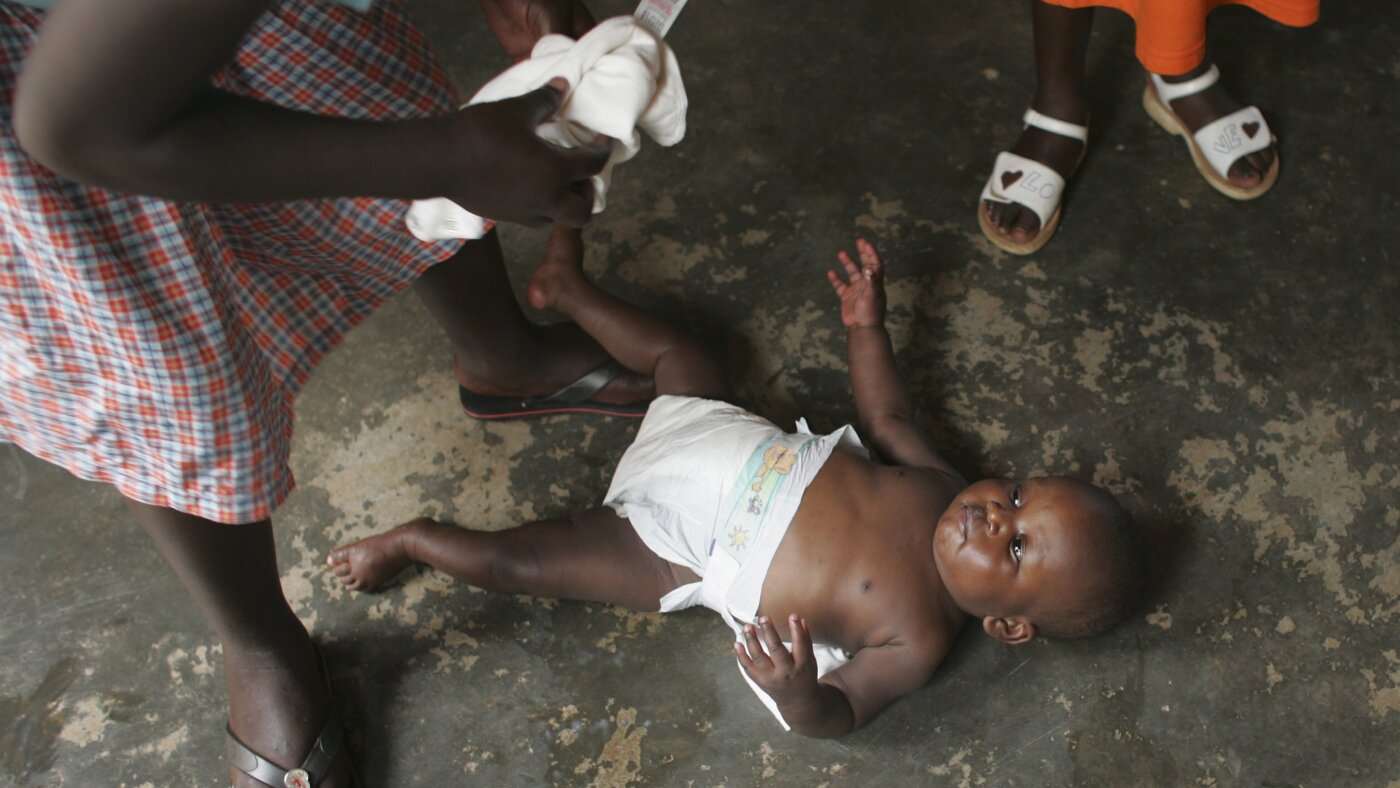
""I'm about 70 now," says study co-author Dr. David Serwadda of Makerere University in Uganda. "I've never seen a program intervention that has had this huge impact." Serwadda was working in Uganda during the mid-1990s, when the HIV pandemic was claiming more than 100,000 lives each year. "I remember visiting what looked like an abandoned household, we just kept shouting 'is anybody home,'" he says. "Three children came out, aged 9, 7 and 6. "We asked, 'Where are the parents?' The parents were gone.""
"Back then, a child whose mother had HIV was about 20 times more likely to become orphaned than a child with an HIV-negative mom. Kids orphaned by AIDS suffer many consequences, says Aleya Khalifa, an epidemiologist at Columbia University and study co-author. They're more likely to face stigma, drop out of school or live in poverty, she says. "You start to see a cycle of vulnerability.""
Orphanhood in southern Uganda declined from nearly one in four children in the early 2000s to 6% in 2022. The decline was driven by HIV foreign aid programs, primarily the U.S. President's Emergency Plan for AIDS Relief (PEPFAR). Adult access to antiretroviral drugs substantially reduced parental mortality. A child whose mother had HIV was about 20 times more likely to become orphaned in the mid-1990s; that excess risk has fallen so that children with HIV-positive mothers are now roughly twice as likely to be orphaned. Children orphaned by AIDS face stigma, school dropout, and poverty, creating a cycle of vulnerability.
Read at www.npr.org
Unable to calculate read time
Collection
[
|
...
]