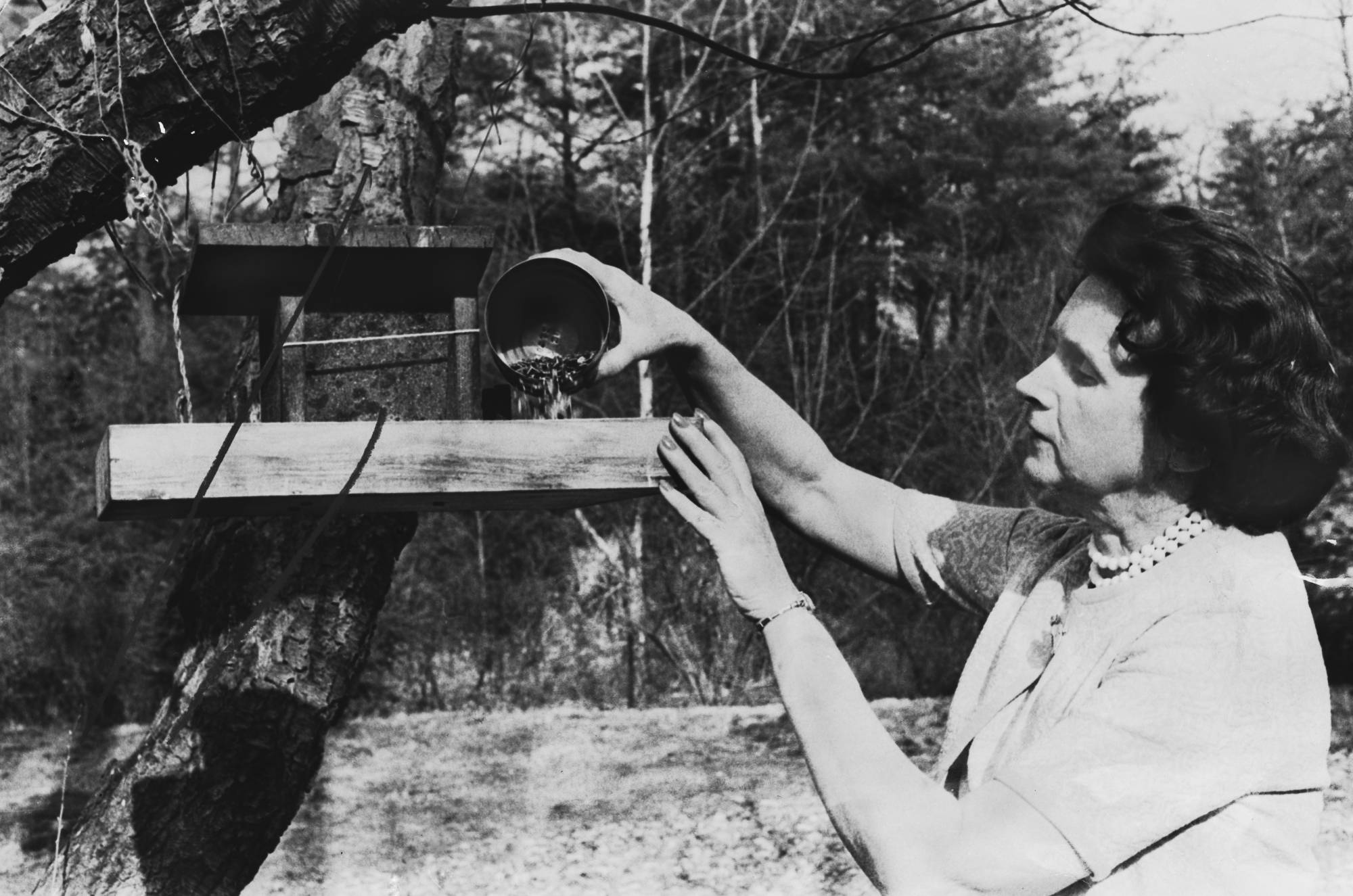
"Rachel Carson's book pointed at ways to engage people, how you engage people who care about pets, people who are bird watchers, people who care about what's in breast milk they're feeding to their children."
"Carson explored how manufactured chemicals found in the environment were appearing in wildlife, in household pets and in our bodies, like no other writer had."
"Polsky has spent years protecting vulnerable people and communities from harmful chemicals. She has represented communities contaminated by PFAs, stubborn 'forever chemicals' used to make food packaging."
"As a deputy attorney general for California, she helped get formaldehyde-laden Brazilian blowout chemicals off the market here."
MAHA and Robert F. Kennedy Jr. exhibit skepticism towards corporate power and concern for environmental toxins, reminiscent of Rachel Carson's Silent Spring. However, Kennedy's anti-vaccine stance and the Trump administration's leniency on pesticide regulation contrast with Carson's principles. Claudia Polsky, director of the Environmental Law Clinic at UC Berkeley, emphasizes Carson's ability to engage diverse audiences on environmental issues. Polsky's work focuses on protecting communities from harmful chemicals, including PFAs and formaldehyde-laden products, reflecting Carson's legacy in environmental advocacy.
Read at Kqed
Unable to calculate read time
Collection
[
|
...
]