"The thought is that donating blood reduces iron levels and makes the blood less viscous; thicker blood is associated with a higher risk of blood clots and heart attacks. Further, blood donation directly contributes to your community. It is a civic responsibility. Once you donate blood, it is taken to a lab, where it is separated into three components: platelets, re"
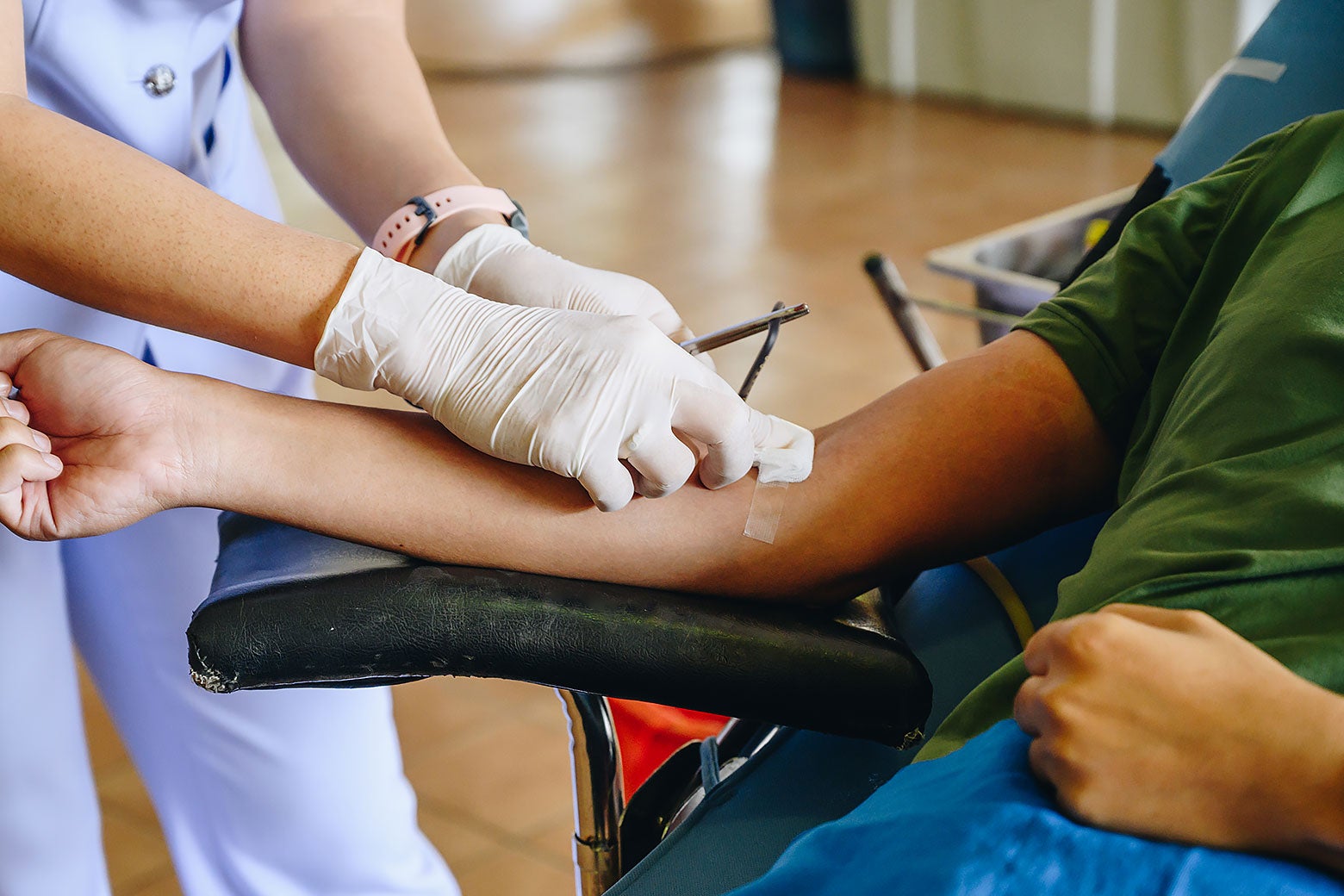
Blood donation begins with check-in, vital measurements such as iron levels, blood pressure, and pulse, and a questionnaire to confirm eligibility. Donors then lie back while a needle draws blood from an arm into a tube, filling a pint-size bag in about ten minutes. During the process, donors may watch provided television or use a phone. Afterward, donors receive snacks and a sticker, though some may plan a meal afterward. Research indicates blood donation can temporarily lower PFAS levels, commonly called “forever chemicals.” Studies also suggest potential heart-health effects, including reduced heart-attack risk for men who donate annually and lower mean blood pressure for people with hypertension who donate regularly. Donated blood is processed into components such as platelets for medical use in the community.
Read at Slate Magazine
Unable to calculate read time
Collection
[
|
...
]