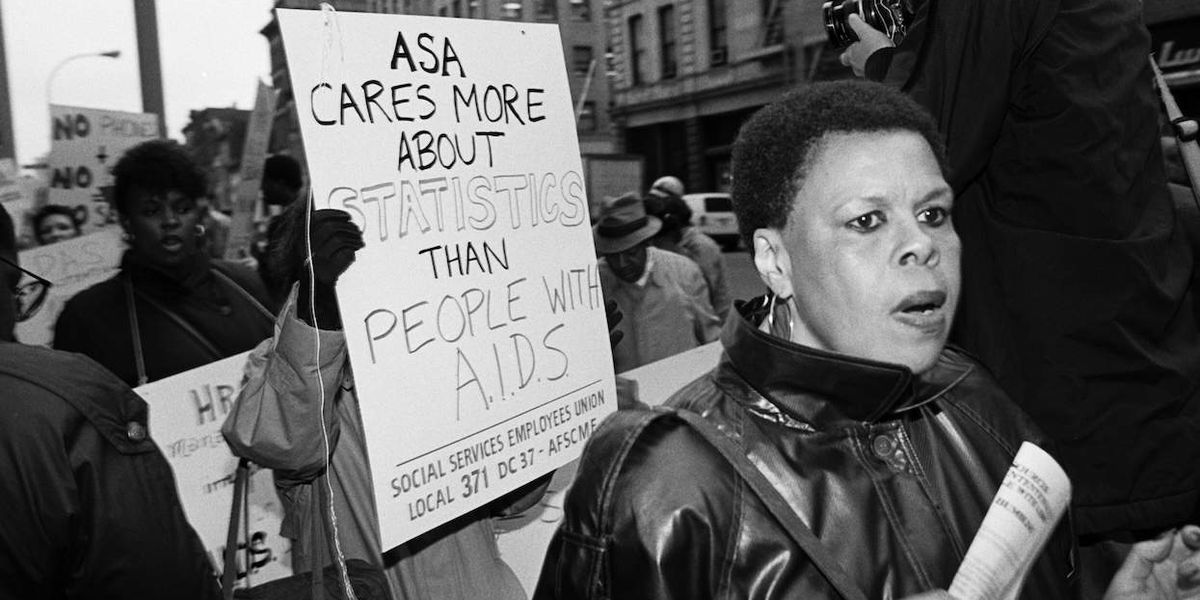
""This is the first thing that came across. We didn't have access to medical care. We didn't have access to what few drugs were available. We didn't have access to appropriate housing and support, and not a handout but a hand up. HIV AIDS exposed the worst things that could happen to our community, and that's what happened. It was a disaster in the making.""
""The result? Within a decade of HIV emerging first as a threat to gay white men, Black patients made up the largest group of new infections in the late 1980s, a trend that could continue through the 1990s and beyond. But federal systems offered little help. It fell on the Black community itself to set up systems of relief.""
Early AIDS epidemic lacked effective treatments and no pre-exposure prophylaxis (PrEP) existed to prevent HIV transmission. Institutional racism within public health systems routinely excluded Black patients from care and resources. Black communities experienced limited access to medical care, available drugs, appropriate housing, and supportive services, which heightened vulnerability and mortality. Within a decade of HIV emerging, Black patients constituted the largest group of new infections in the late 1980s and continued to face disproportionate risk into the 1990s. Federal systems provided minimal assistance. Grassroots Black community organizations and activists established relief and support structures to meet urgent medical and social needs.
Read at Advocate.com
Unable to calculate read time
Collection
[
|
...
]