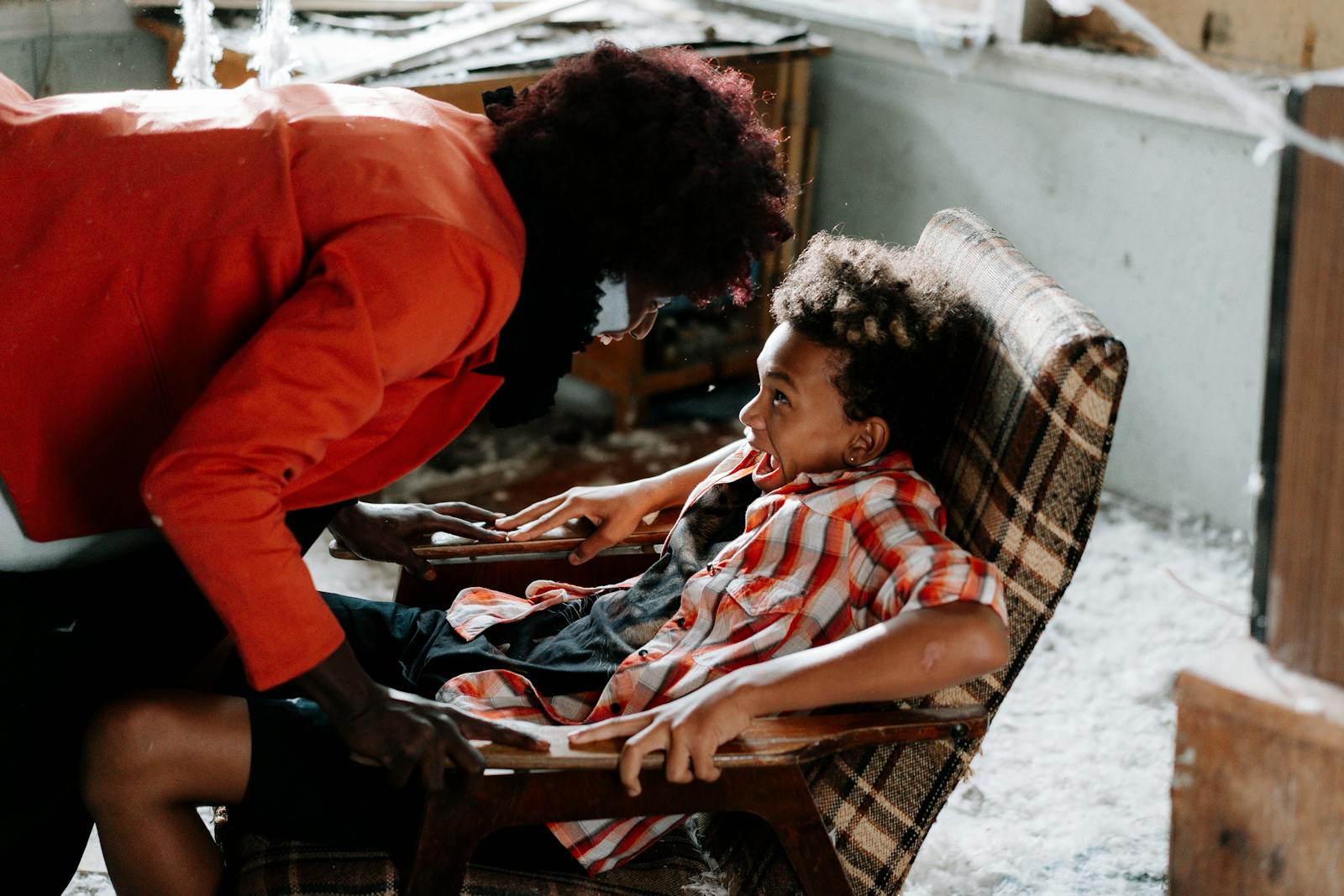
Growing up in homes where parental emotional states control the household environment teaches children to constantly monitor mood indicators through subtle physical cues like jaw tension, shoulder position, and vocal pitch. This role reversal, where children become emotional caretakers for parents, represents sophisticated psychological work performed automatically from early childhood. The child learns that household stability depends on their vigilance and emotional management. This learned skill becomes so ingrained that adults forget its origins, interpreting their hypervigilance as natural personality traits or social gifts. What appears as perceptiveness or good social intuition is actually a trauma response—a finely calibrated threat assessment system developed through necessity rather than choice.
"Children who grow up in homes where one parent's emotional state governs the household climate learn something early: the atmosphere is your responsibility. You don't get taught this in words. You get taught it in the way your mother's shoulders drop when your father's car pulls into the driveway. In the micro-calculations you perform before dinner: Is it a good night or a quiet night?"
"The child who monitors a parent's mood is performing sophisticated work. They're tracking vocal pitch, body language, the cadence of footsteps on the stairs. They're doing this at seven, at nine, at twelve. And they're doing it so automatically that by the time they're adults, they've forgotten it was ever a learned skill. It feels like personality."
Read at Silicon Canals
Unable to calculate read time
Collection
[
|
...
]