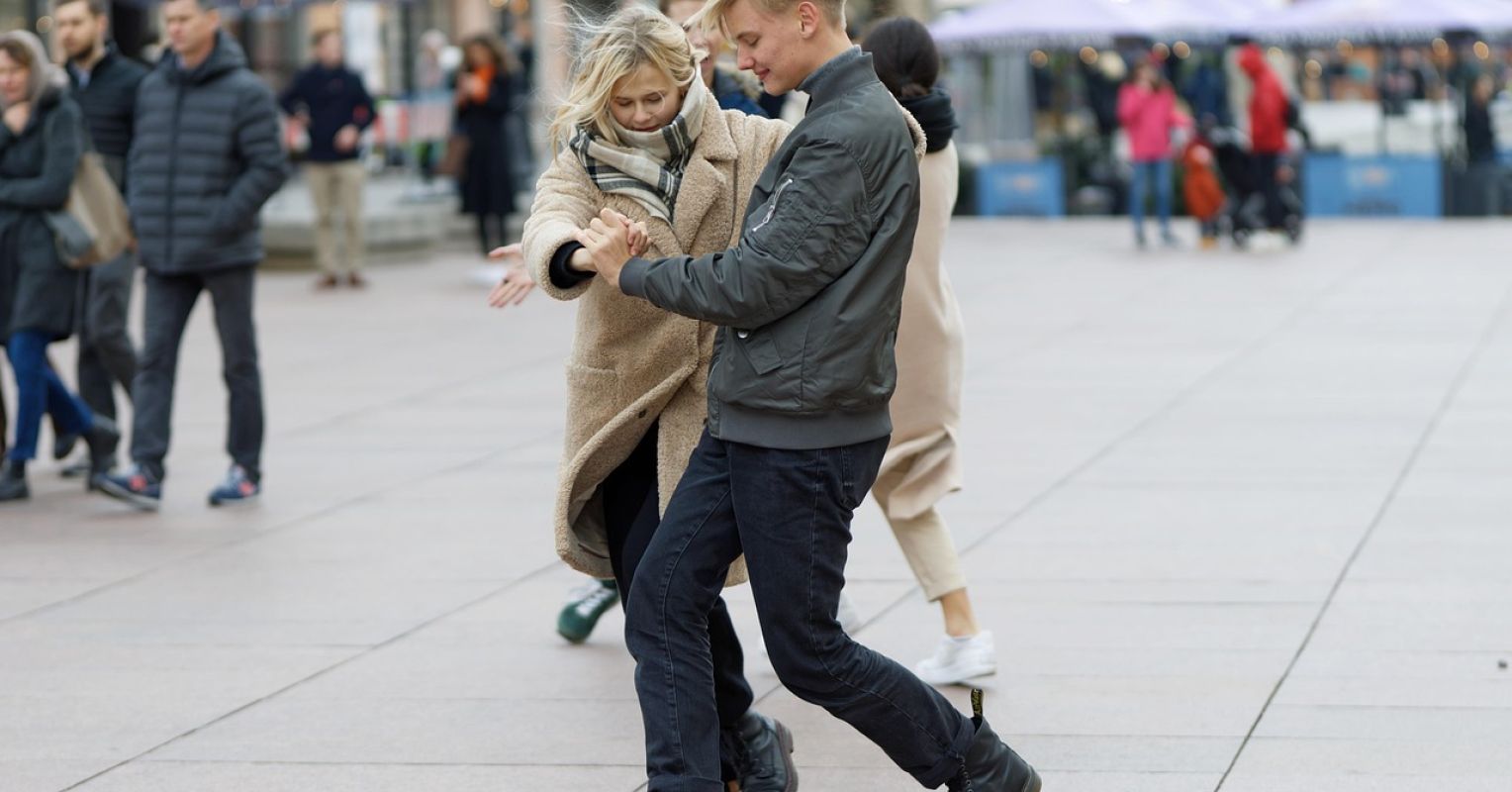
"Humans spontaneously synchronize to a broad range of stimuli: synchronized walking, turn-taking in conversation, marching, dancing, and the in-unison singing of "Happy Birthday." Synchronization is shown especially in dance, where planned coordination is the goal. Dancers' sophisticated timing skills are particularly important for coordinating with other dancers in duet or group choreography/improvisation. The term entrainment is usually paired with the notion of coordinated rhythmic movement. It describes a phenomenon in which two or more independent rhythmic processes synchronize with each other."
"Social connection is a key to healthier and happier lives. Music is a powerful tool that can bring individuals together and promote trust, empathy, and relief from stress. Music and dance are intrinsically social activities that are more meaningful when done together with others. When we dance and sing together, there is a sense of community, in which everyone moves together with shared intentions and a mutual goal. We feel the power of tribe (Wöllner and London, 2022)."
Synchronization leads to feelings of connectedness and social closeness. Music and dance bring individuals together and promote trust, empathy, and stress relief through shared rhythmic activity. Humans spontaneously synchronize in many behaviors, including walking, conversational turn-taking, marching, dancing, and group singing. Entrainment refers to coordinated rhythmic movement in which independent rhythmic processes synchronize with one another. Successful coordination requires sensitivity to others' movement, effort, and mutual attention so partners can tune to rhythmic features and adjust motor behavior. Dancers' precise timing skills support duet and group choreography, enabling coordinated action and collective intention.
Read at Psychology Today
Unable to calculate read time
Collection
[
|
...
]