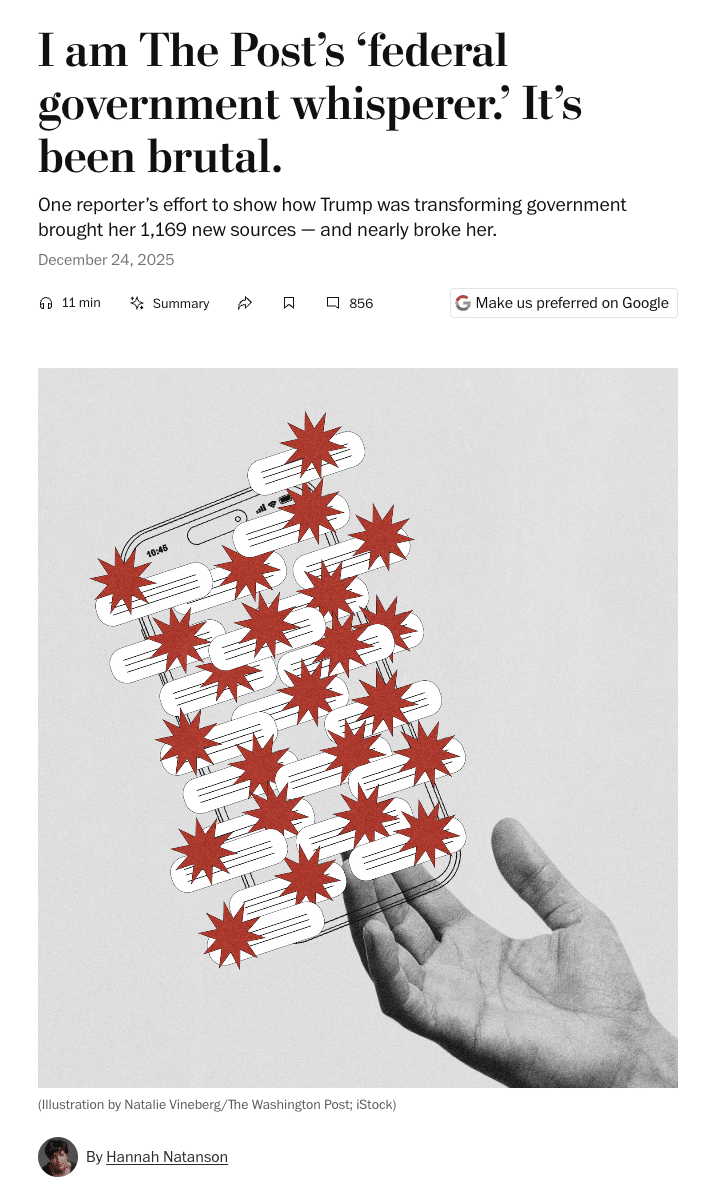
"After consulting Post lawyers, I developed what we felt was the safest possible sourcing system. If I planned to use someone in a story, I asked them to send me a picture of their government ID, then tried to forget it. I kept notes from reporting conversations in an encrypted drive, never writing down anyone's name. To Google-check facts and identities, I used a private browser with no search history. I retitled every Signal chat by agency - "Transportation Employee," "FDA Reviewer," "EPA Scientist" -"
"I started copying and pasting tips there as fast as I could, scraping out identifying details. Then, phone buzzing every few seconds, I speed-walked around the building until I found Mike. Skipping with grace over the fact we'd never met (and I didn't work for him), he ferried me to every corner of the seventh floor: Meet the team covering technology. The team covering national security. The White House editors."
Federal employees sent Signal messages expressing severe despair, suicidal thoughts, and calculations of personal worth after prolonged workplace stress. A reporter collected tips through an internal Slack channel and by coordinating with editors, copying and redacting identifying details and rapidly sharing information across desks. A specialized beat was created to cover the transformation of government, making fielding encrypted tips central to reporting. After legal consultation, a sourcing system required a photo of government ID, encrypted note storage without names, private-browser verification of facts, and retitling Signal chats by agency to reduce risk of exposing identities.
Read at emptywheel
Unable to calculate read time
Collection
[
|
...
]