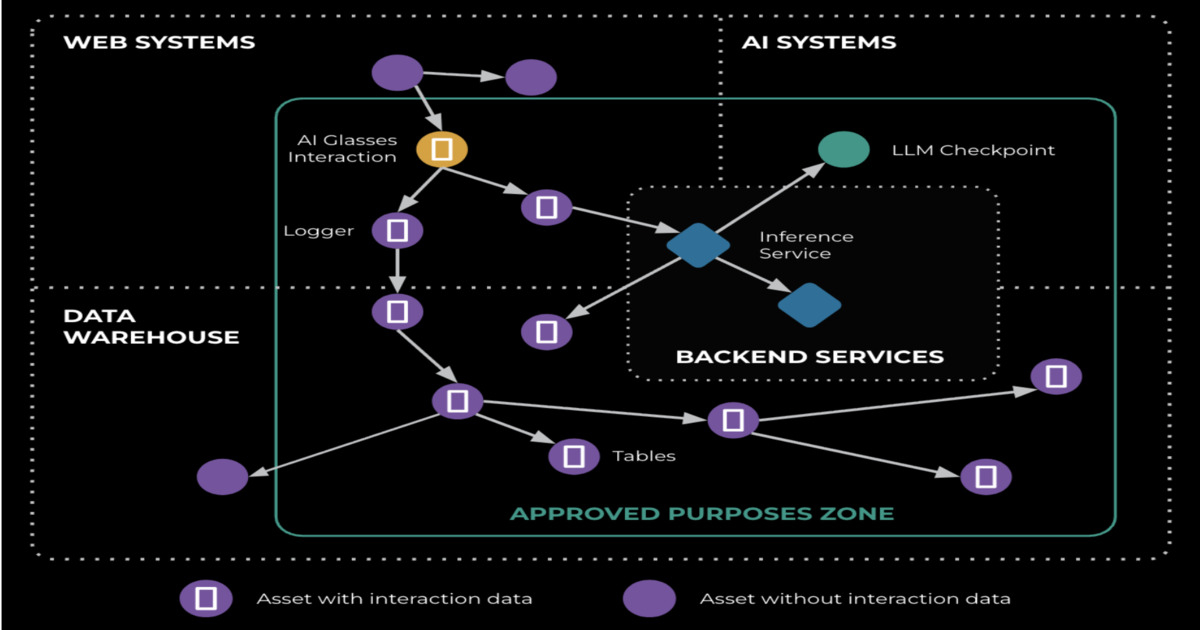
"Meta engineers emphasized that generative AI workloads introduce new challenges for privacy enforcement, including increased data volumes, new data modalities, and faster iteration cycles. They explained that traditional review and approval processes were not designed to operate at this scale or pace, particularly in environments where data moves across thousands of interconnected services and pipelines. To address these constraints, Privacy-Aware Infrastructure (PAI) was expanded to include a set of shared services and libraries that embed privacy controls directly into data storage, processing, and generative AI inference workflows."
"To support lineage at scale, a shared privacy library, PrivacyLib, is embedded across infrastructure layers. Engineers detailed how the library instruments data reads and writes, and emits metadata linked into a centralized lineage graph. Standardizing the capture of privacy metadata allows policy constraints to be evaluat"
Generative AI workloads increase data volumes, introduce new data modalities, and accelerate iteration cycles, creating challenges for privacy enforcement and traditional review processes. Privacy-Aware Infrastructure (PAI) now includes shared services and libraries that embed privacy controls into data storage, processing, and generative AI inference workflows. Large-scale data lineage provides visibility into data origins, propagation, and downstream consumption, enabling continuous evaluation of privacy policies across batch, real-time, and inference pipelines. A shared privacy library, PrivacyLib, instruments data reads and writes, emits metadata to a centralized lineage graph, and standardizes privacy metadata capture for consistent policy constraint evaluation.
Read at InfoQ
Unable to calculate read time
Collection
[
|
...
]